
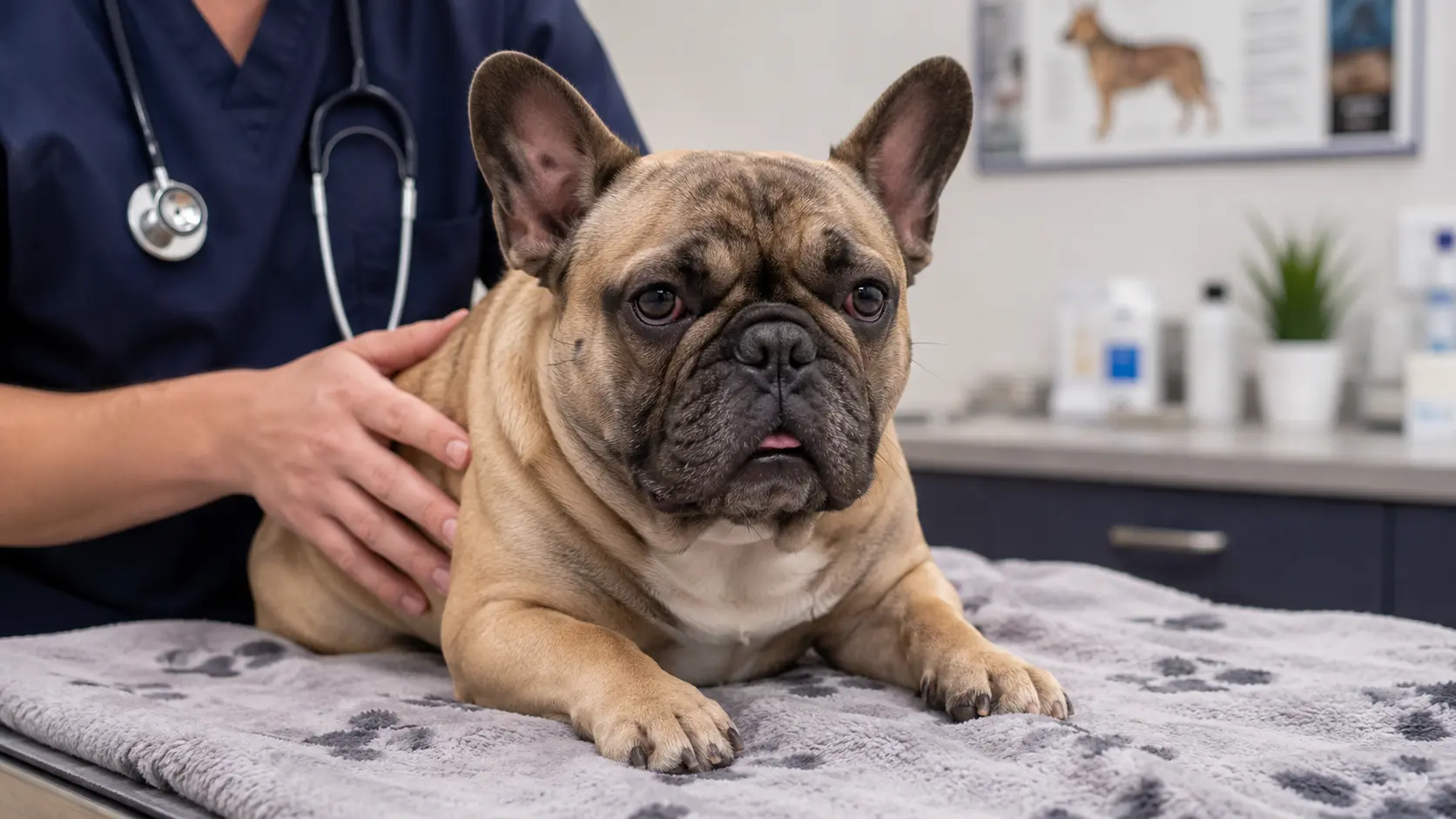
French Bulldog health problems are something every buyer needs to understand before they fall for those big bat ears and that wrinkly face. Frenchies are one of the most popular breeds in the world right now, and it’s easy to see why. They are small, affectionate, and full of personality. But behind the charm, this breed carries a long list of health issues that come straight from how it was bred. If you are thinking about bringing one home, you deserve the full picture, not just the cute Instagram version.
This guide walks through the most common health problems in French Bulldogs, why they happen, and what you should ask before you buy. It is written for real owners, not breeders trying to make a sale.
Why French Bulldogs Have So Many Health Issues
Most French Bulldog health problems trace back to one thing: their body shape. Breeders selected for a flat face, a compact body, and a short spine because people find that look appealing. The problem is that this same shape puts pressure on the airway, the spine, the eyes, and the skin.
A large UK veterinary study following thousands of French Bulldogs found that over 72 percent of them had at least one diagnosed health disorder during a single year of care. That is not a small number. It means health issues are the rule for this breed, not the exception.
Understanding this helps you go into ownership with realistic expectations, and it should shape how you choose a breeder or whether you consider adoption instead.
Breathing Problems (BOAS)
This is the single biggest issue tied to French Bulldogs. Their short skull leads to a condition called Brachycephalic Obstructive Airway Syndrome, or BOAS. It happens because the dog has the same amount of soft tissue as a longer nosed dog, but it is all packed into a much shorter space.
Dogs with BOAS often have:
- Narrow nostrils that restrict airflow
- An elongated soft palate that blocks part of the throat
- A narrower windpipe than normal
- Loud snoring, snorting, and heavy breathing even at rest
In mild cases, this just means your dog sounds noisy when it sleeps. In more serious cases, dogs struggle to breathe during exercise, play, or hot weather, and some need surgery to open up their airway. Heat and humidity can turn into an emergency fast because Frenchies cannot pant efficiently to cool themselves down.
If you already have a Frenchie or are getting one, keep walks short in warm weather, avoid strenuous exercise after meals, and never leave your dog in a hot car or a stuffy room.
Skin and Allergy Issues
French Bulldogs are prone to skin fold dermatitis, which happens when moisture and bacteria build up in the folds around the face and tail. If those areas are not cleaned regularly, they get irritated, red, and can start to smell.
On top of that, Frenchies commonly deal with allergies, whether from food, pollen, dust, or fleas. Owner surveys report skin problems and allergies as some of the most frequently mentioned issues in the breed, often affecting more than a third of dogs at some point.
Signs to watch for include:
- Constant scratching or licking of the paws
- Red or irritated skin folds
- Recurring ear infections linked to allergies
- Hot spots or bald patches
Regular cleaning of the skin folds, a good quality diet, and early vet visits for any skin flare up can prevent small issues from turning into chronic ones.
Eye Problems
The same flat face that causes breathing trouble also puts the eyes at risk. French Bulldogs have shallow eye sockets, which means their eyes sit more exposed than in other breeds. This raises the risk of:
- Corneal ulcers from scratches or debris
- Cherry eye, where a gland in the eyelid pops out of place
- Dry eye due to reduced tear production
Eye injuries in this breed can escalate quickly, so any redness, squinting, or cloudiness should be checked by a vet right away rather than waiting to see if it clears up on its own.
Spine and Joint Problems
French Bulldogs often have a naturally malformed spine because of the same genes responsible for their short, curled tail. This can lead to spinal deformities and a condition called intervertebral disc disease, or IVDD, where the discs between the vertebrae bulge or rupture and press on the spinal cord.
Recent veterinary research has specifically flagged French Bulldogs, alongside Pugs, as having a higher predisposition to spinal disease compared to other breeds. Symptoms of a spinal problem include:
- Reluctance to jump or climb stairs
- A hunched back or unusual posture
- Weakness or wobbliness in the back legs
- Signs of pain when touched near the spine
Patellar luxation, where the kneecap slips out of place, is also common in the breed and can cause a skipping or hopping gait.
Ear Infections
Frenchies have narrow ear canals, which makes it easier for wax, moisture, and debris to get trapped. This leads to a higher rate of ear infections compared to many other breeds. Regular ear checks and gentle cleaning, especially after baths or swimming, go a long way toward preventing this.
Heat Sensitivity and a Shorter Lifespan
Because of their airway structure, French Bulldogs struggle to regulate their body temperature. Heatstroke is a real and serious risk, even on days that don’t feel extremely hot to us. Studies looking at lifespan across breeds have found that French Bulldogs tend to live shorter lives than most other dogs, with some research placing their average lifespan among the lowest of any breed.
This does not mean every French Bulldog will have a short life. It means owners need to be proactive about heat safety, weight management, and regular vet checkups rather than waiting for symptoms to show up.
Reproductive and Birthing Complications
Most French Bulldogs cannot give birth naturally. Their narrow hips relative to puppy head size mean the vast majority of litters are delivered by planned cesarean section. If you are considering breeding your dog at any point, this is something to discuss seriously with a vet beforehand, since natural birth can put both the mother and puppies at serious risk.
Questions to Ask Before You Buy a French Bulldog
A responsible breeder will not be offended by health questions. In fact, their willingness to answer honestly tells you a lot about them. Before you commit, ask:
- Can I see health clearance records for both parents, including hip, spine, and eye screening?
- What is the BOAS grading of the puppy’s parents?
- Has this breeder ever dealt with dystocia or emergency cesarean births in their dogs?
- Can I meet the puppy’s parents in person to see how they breathe and move?
- What ongoing health guarantees does the breeder offer?
If a breeder cannot or will not answer these questions, treat that as a red flag. It is also worth looking into rescue organizations, since many French Bulldogs end up needing new homes and adoption can be a genuinely good option.
Budgeting for Vet Care
Given everything above, pet insurance is worth serious consideration for this breed. Airway surgery, spinal treatment, and skin condition management can all add up quickly. Setting aside a health fund or getting insurance early, before any pre-existing conditions show up, can save you from difficult decisions down the road.
More Info: Vet Visit Cost Without Insurance
Final Thoughts
French Bulldogs make wonderful companions for the right owner, someone who understands the breed’s needs and is ready for the vet visits that come with it. Going in informed means you can catch problems early, budget properly, and give your dog the best possible quality of life. If you already love the breed, none of this should scare you away. It should just make you a better prepared owner.
If you want more breed specific health guides and practical pet care tips, keep exploring petslifesecrets.com.