
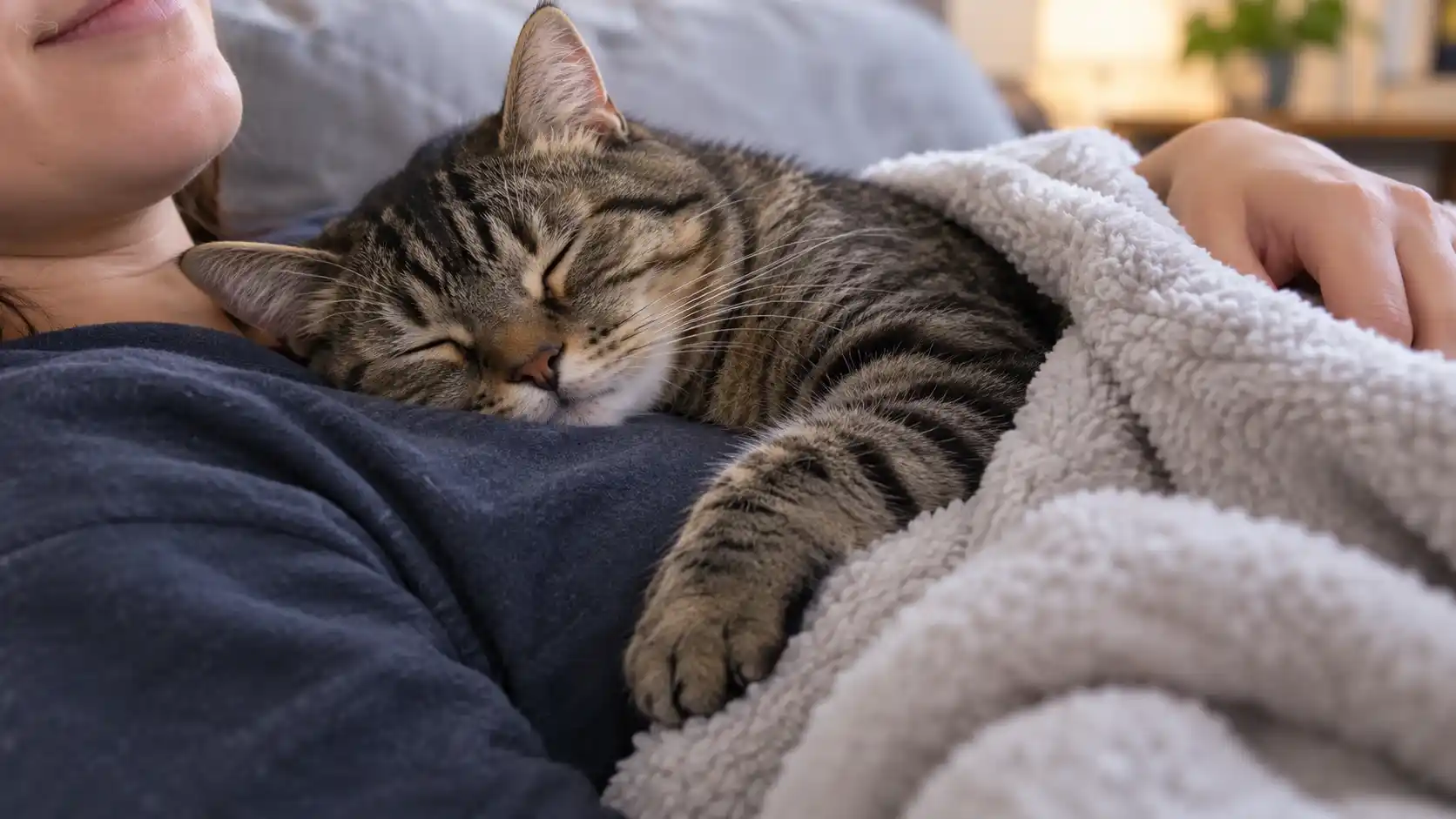
You lie down at night, and within minutes your cat jumps up, circles once or twice, and settles right on your chest. It feels sweet, but it also leaves you wondering why does my cat sleep on my chest and not on the bed, the couch or a perfectly good cat bed.
The short answer is that your cat feels warm, safe and close to you there. The full answer has a few more layers, and some of them can help you tell when this habit is simple affection and when it needs a closer look.
This guide walks you through the main reasons, what the vets and behaviorists say, when to be careful, and how to change the habit if you need to.
The Quick Answer
Cats sleep on your chest mostly for five reasons:
- Your body gives off steady heat.
- Your heartbeat and breathing are calming.
- Your scent makes them feel secure.
- They trust you enough to sleep in front of you.
- They have learned that it works, whether they want a nap, attention or breakfast.
Most of the time, it is a healthy and loving behavior. Now let’s look at each reason in more detail.
1. Your Chest Is Warm
Cats love heat. A cat’s comfortable temperature range is higher than ours, which is why you find them in sunny spots and on top of laundry. Your chest is one of the warmest parts of your body, and it stays that way all night.
If your cat only does this in winter, warmth is probably the main reason. A heated cat bed or a soft blanket near your bed can sometimes take over that job, as animal behaviorist Debbie Bryon points out.
2. Your Heartbeat and Breathing Are Soothing
Kittens spend their first weeks pressed against their mother, surrounded by her heartbeat and the slow rhythm of her breathing. That sound means safety.
Your chest copies it well. The steady thump and the gentle rise and fall can relax your cat fast. Many vets describe this as one of the top reasons cats choose the chest over other spots.
3. Your Cat Trusts You
Cats sleep a lot, up to 16 hours a day, and sleep is when they are most open to danger. In the wild, a cat that sleeps in the wrong place can become prey.
So when your cat falls asleep on you, it is making a big statement. Veterinary behaviorist Dr. Wailani Sung says sleeping is one of the times cats feel most vulnerable, which is why choosing you says a lot.
Other signs of trust include:
- Slow blinking at you
- Showing you their belly
- Sleeping with their back toward you
- Purring while they settle
4. Your Scent Makes Them Feel Secure
Cats read the world through smell. Your scent is the one they know best, and it tells them the space is safe and familiar.
Lying on you also lets them mix their scent with yours. Cats have scent glands in their cheeks, paws and chin, so when your cat rubs its face on you or kneads your shirt, it is quietly marking you as part of its group.
5. Kneading and Purring Come From Kittenhood
Does your cat knead you before it falls asleep? That habit starts when kittens press on their mother to bring down milk. Adult cats keep doing it when they feel happy and relaxed.
Some cats also suck or chew on clothing while they rest. This is usually a comfort habit left over from kittenhood. If your cat suddenly starts doing it and never did before, mention it to your vet, since new habits can sometimes point to stress.
Purring adds to the effect. Many people find a cat’s purr steady and calming, almost like white noise. The weight of a cat on your chest can feel a bit like a weighted blanket too, which is why some people fall asleep faster with a cat on them.
6. They Want Attention, Food or Routine
Cats are smart about routines. If your cat once got petted, talked to or fed after climbing on your chest, it will remember.
This is common in the morning. You are still lying down, you are easy to reach, and breakfast is on your mind, or at least it is on theirs. If your cat sits on your chest and stares at your face, it may be asking for something rather than just resting.
7. They Feel Stressed or Unsettled
Cats often look for closeness when something changes. PetMD notes that cats may lie on their owners more during big changes such as moving, a new family member, construction or bad weather.
If your cat started doing this out of nowhere, look at what changed at home. A new pet, a new work schedule or even rearranged furniture can make a cat want to stay close to its person.
Why the Chest and Not Your Legs?
Some cats like your legs, and some like your head or neck. The chest tends to win for three reasons. It is warm, it is close to your heartbeat, and it is close to your face, where your scent is strongest.
Personality matters too. Some cats are cuddlers, and others prefer to sit next to you rather than on you. Neither is better. It just comes down to the cat.
Is It Safe to Let Your Cat Sleep on Your Chest?
For most healthy adults, yes. A cat on your chest is generally fine unless it makes you uncomfortable. There are a few cases where you should be careful.
- Allergies or asthma: Cat dander near your face all night can trigger symptoms and disturb your sleep.
- Breathing problems: A large cat, such as a Maine Coon, can feel heavy and make it harder to breathe comfortably.
- Weak immune system: If your immune system is weak, talk to your doctor about sleeping close to pets. The CDC advises keeping your cat’s vaccines and vet visits up to date to lower the chance of passing on illness.
- Babies: Never let a cat sleep near a baby. Vets warn that a cat could accidentally block a baby’s breathing.
- Poor sleep: Cats are most active at dawn and dusk. If yours wakes you with kneading, pouncing or loud purring, your sleep will suffer.
If you are a light sleeper, a cat on your chest may simply not work for you, and that is a fair reason to change the habit.
When to Worry
Chest sleeping is normal for most cats. A change in behavior is what matters. Call your vet if your cat starts doing this suddenly and you also notice any of these:
- Changes in appetite or weight
- Less energy or more hiding
- Litter box problems
- Open-mouth breathing, wheezing or a lasting cough
- Over-grooming or new sucking and chewing habits
Cats hide pain well, and extra clinginess can be one of the early signs that something is wrong. When in doubt, a quick check-up is worth it.
How to Stop Your Cat From Sleeping on Your Chest
If you want your chest back, you can change the habit with patience. Here is what works for most people.
- Pick a better spot. Place a soft, warm bed or blanket next to you on the bed. Cats like to be near their person, so staying close helps.
- Add warmth. A heated pad made for pets can copy the warmth your chest gives off.
- Move your cat calmly. Gently lift them off every time, without scolding. Consistency matters more than anything.
- Reward the new spot. Give a small treat or a few pets when they settle in the bed you chose.
- Play before bedtime. A short play session and a small meal in the evening can help your cat sleep through the night instead of waking you.
It may take a few weeks. Letting your cat on your chest some nights and not others will slow things down, so try to stay steady.
Frequently Asked Questions
Does my cat love me if it sleeps on my chest?
Yes, in most cases. Sleeping on you shows trust, comfort and a strong bond. Cats do not do this with people they feel unsure about.
Why does my cat purr and knead on my chest?
Both are leftover kitten habits tied to comfort. They usually mean your cat is happy and relaxed.
Why does my cat only sleep on my chest and not on other family members?
Cats often pick one favorite person. It could be the person with the strongest scent bond, the warmest lap, or the one who feeds and pets them most.
Why did my cat suddenly stop sleeping on my chest?
It could be the weather, a new sleeping spot, or a change at home. If your cat also seems tired, picky with food or withdrawn, call your vet.
more info: Why Does My Cat Knead Me? The Real Reason Behind This Habit
Final Thoughts
So, why does my cat sleep on my chest? Because you are warm, familiar and safe. Your heartbeat reminds them of kittenhood, your scent tells them they are home, and sleeping in front of you is the highest form of cat trust.
Enjoy it when it works for you. If it stops being comfortable, a few simple changes can give both of you a good night’s sleep. And if the behavior ever changes suddenly, trust your instincts and check in with your vet.