
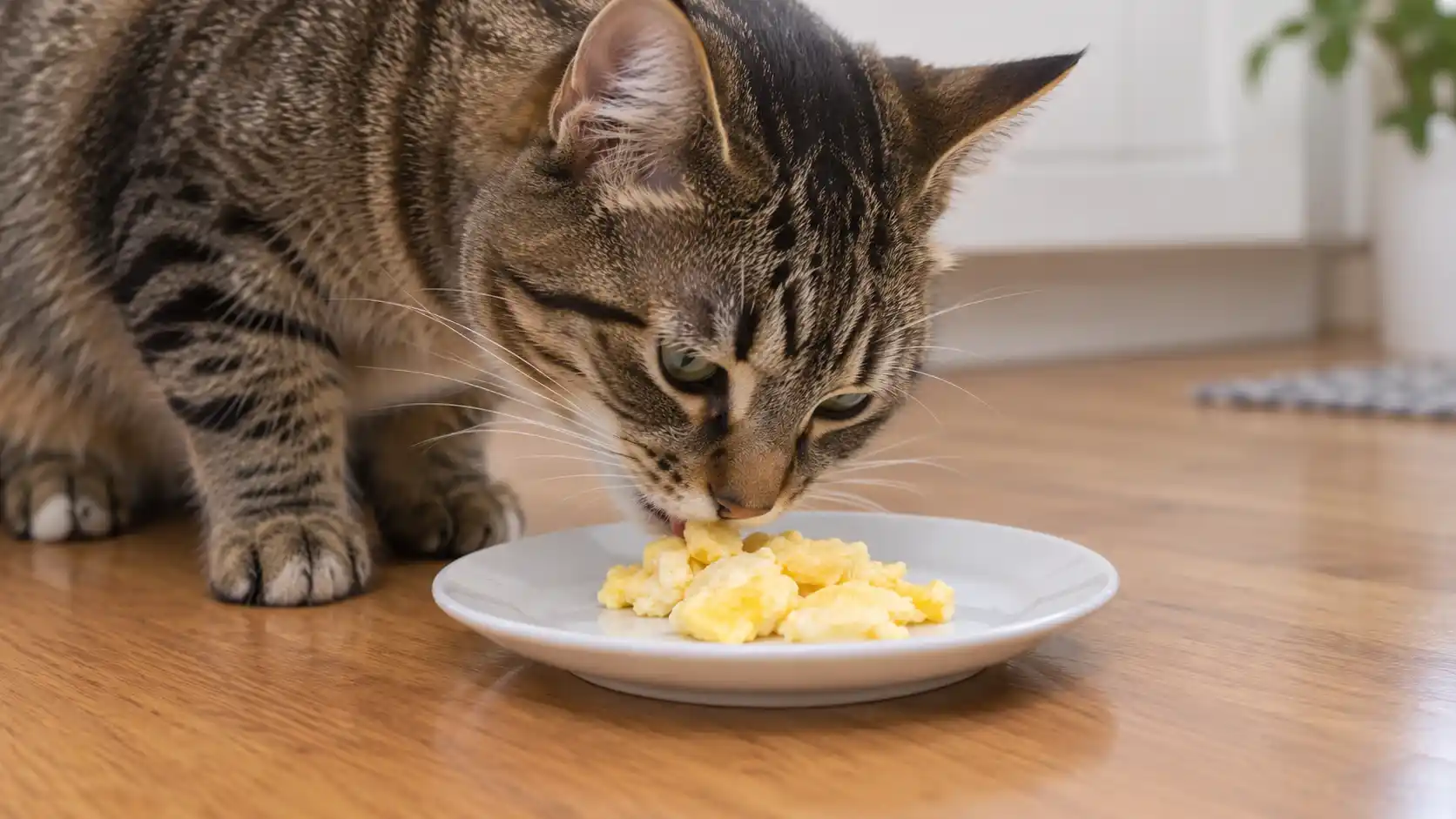
Can cats eat eggs? Yes, most healthy cats can eat eggs, as long as the egg is fully cooked and served plain. That short answer comes with a few rules that really matter. Raw eggs carry real risks, seasoning can hurt your cat, and too much egg adds up fast in a small body.
This guide pulls together what veterinary sources and pet nutrition experts say about eggs for cats. You will learn how to cook them, how much is safe, which cats should skip them, and what to do if something goes wrong.
Are Eggs Safe for Cats?
Plain, fully cooked eggs are generally safe for healthy adult cats in small amounts. Scrambled, boiled, and poached eggs all work. Think of egg as a treat, not a meal. Your cat still needs a complete and balanced cat food as the main part of every day.
Preparation is where most problems start. A cooked egg with nothing added is a great snack. An egg fried in butter, mixed with cheese, or cooked with onion or garlic is a different story. Keep it boring and you keep it safe.
Why Eggs Can Be Good for Cats
Cats are obligate carnivores, which means they need animal protein to thrive. Eggs fit that need well. Here is what a cooked egg offers:
- High-quality protein that most cats digest easily
- Amino acids that help maintain lean muscle
- Fats that supply energy
- Vitamins and minerals, including biotin once the egg is cooked
That said, an egg is not a complete diet. It lacks some nutrients cats need every day, which is why vets treat it as a small extra. If you ever want to add minerals or supplements, talk to your vet first.
Can Cats Eat Raw Eggs?
No. This is the one rule every vet source agrees on. The American Veterinary Medical Association advises against feeding raw or undercooked animal-source proteins to cats, and eggs fall into that group.
The Bacteria Risk
Raw eggs can carry Salmonella and E. coli. These bacteria can cause vomiting, diarrhea, lethargy, and dehydration in cats. The bacteria can also get inside the egg itself, so even a clean-looking shell does not guarantee a safe egg. Farm-fresh eggs carry the same risk.
There is a risk for you too. Salmonella can pass from pets to people through bowls, countertops, and a cat’s mouth. Young children, older adults, and anyone with a weak immune system face the highest danger. Wash your hands and your cat’s bowl after handling raw eggs.
The Avidin and Biotin Problem
Raw egg white contains a protein called avidin. Avidin binds to biotin, a B vitamin that supports healthy skin and coat, and keeps your cat from absorbing it. Over time, too much raw egg white can lead to biotin deficiency. Signs include dry skin, a poor coat, and hair loss.
Cooking solves this. Heat breaks down avidin, so a fully cooked egg does not block biotin the way a raw one does.
How to Cook Eggs for Cats
Cook the egg until the white and the yolk are firm. Vet sources recommend an internal temperature of 160 degrees Fahrenheit. Runny yolks are not safe for cats.
Follow these simple steps:
- Boil the egg hard, or scramble it in a dry non-stick pan
- Skip the butter, oil, salt, pepper, and milk
- Let it cool completely before serving
- Chop it into tiny pieces
- Throw away leftovers after a day or two in the fridge
Never add onion, garlic, chives, or seasoning blends. These ingredients belong to the allium family, and they can damage a cat’s red blood cells.
How Much Egg Can a Cat Eat?
Not much. Treats should make up no more than 10 percent of your cat’s daily calories. A large egg has roughly 70 calories, and a typical 10-pound cat needs around 250 calories a day. One whole egg could eat up almost a third of that.
Here is a practical guide for fully cooked egg:
- Cats between 5 and 10 pounds: about 1 teaspoon
- Cats between 10 and 15 pounds: about 2 teaspoons
- Frequency: once or twice a week at most
Daily egg is too much, even when it is cooked and plain. Extra calories lead to weight gain, and obesity brings its own health problems, from diabetes to sore joints.
Egg Yolk vs Egg White
Both parts are fine once cooked. They just do different things.
The yolk holds most of the fat and calories. It tastes rich, which cats tend to love, but it adds up quickly. Keep yolk portions very small.
The white is mostly protein and has fewer calories. It makes a lighter treat for cats that need to watch their weight. Cooked white is the better pick for many cats. Raw white is never okay because of the avidin issue.
Can Kittens Eat Eggs?
Kittens can have a tiny amount of cooked egg once they are eating solid food. Still, eggs are not the best choice. Kittens need very few treat calories, and their growing bodies need a complete kitten food for the right balance of nutrients. Their immune systems are also still developing, which makes bacteria from raw egg even more dangerous.
If you want to offer a taste, keep it to a pinch of plain, well-cooked egg and check with your vet first.
When Cats Should Not Eat Eggs
Some cats should skip eggs altogether. Talk to your vet before offering egg if your cat falls into one of these groups.
Cats With Food Allergies
Egg is among the foods that can trigger allergies in cats, along with chicken, beef, fish, and dairy. The most common sign is constant itching, often around the face, ears, and neck. Some cats also vomit or have diarrhea. If you see these signs after your cat eats egg, stop feeding it and call your vet. Vets usually confirm a food allergy with a strict elimination diet, since blood tests are not reliable for cats.
Cats With Kidney Disease
Whole eggs are high in phosphorus, and cats with kidney disease usually need a low-phosphorus diet. Egg whites have a lower phosphorus-to-protein ratio than whole eggs, but your vet should decide whether any egg fits your cat’s plan.
Overweight Cats and Cats With Fat-Sensitive Conditions
Egg yolk is rich in fat. Cats on a weight loss plan, or cats with digestive trouble or a history of pancreatitis, may not handle it well. Ask your vet before adding any new treat.
What to Do If Your Cat Eats Something Unsafe
Stay calm and act based on what your cat ate.
- If your cat ate raw or undercooked egg, call your vet for advice, especially if your cat is a kitten, a senior, or has a long-term illness
- If the egg contained onion, garlic, chives, or heavy seasoning, contact your vet right away
- Watch for vomiting, diarrhea, weakness, loss of appetite, or hiding
- Seek urgent care if symptoms are severe or last more than a day
When in doubt, a quick call to your vet or an animal poison hotline is always worth it.
Safer Treat Ideas to Rotate With Egg
Cats love variety, and egg is only one option. Plain cooked chicken, boneless cooked white fish, and small pieces of cooked turkey also suit a carnivore. Rotate them so no single treat crowds out your cat’s regular food.
Frequently Asked Questions
Can cats eat scrambled eggs?
Yes, if you scramble them plain in a dry pan with no butter, oil, milk, or salt. Serve a small spoonful.
Can cats eat hard-boiled eggs?
Yes. Hard-boiled egg is one of the simplest and safest ways to serve it. Peel it, chop it small, and serve a teaspoon or two.
Can cats eat eggs every day?
No. Daily eggs bring too many calories and do not give a balanced diet. Once or twice a week is plenty.
Do cats need eggs in their diet?
No. A complete and balanced cat food gives your cat everything it needs. Egg is a bonus, and if your cat does not like it, nothing is lost.
more info: Can Cats Eat Chicken Every Day?
Final Thoughts
So, can cats eat eggs? Yes, in small amounts, fully cooked, and plain. Keep portions tiny, serve egg only once or twice a week, and never offer it raw. Check with your vet first if your cat has allergies, kidney problems, a weight issue, or a sensitive stomach.
Every cat is different. Start with a small taste, watch how your cat reacts, and let your vet guide the rest. A little cooked egg can be a fun, protein-rich treat when you do it the right way.