
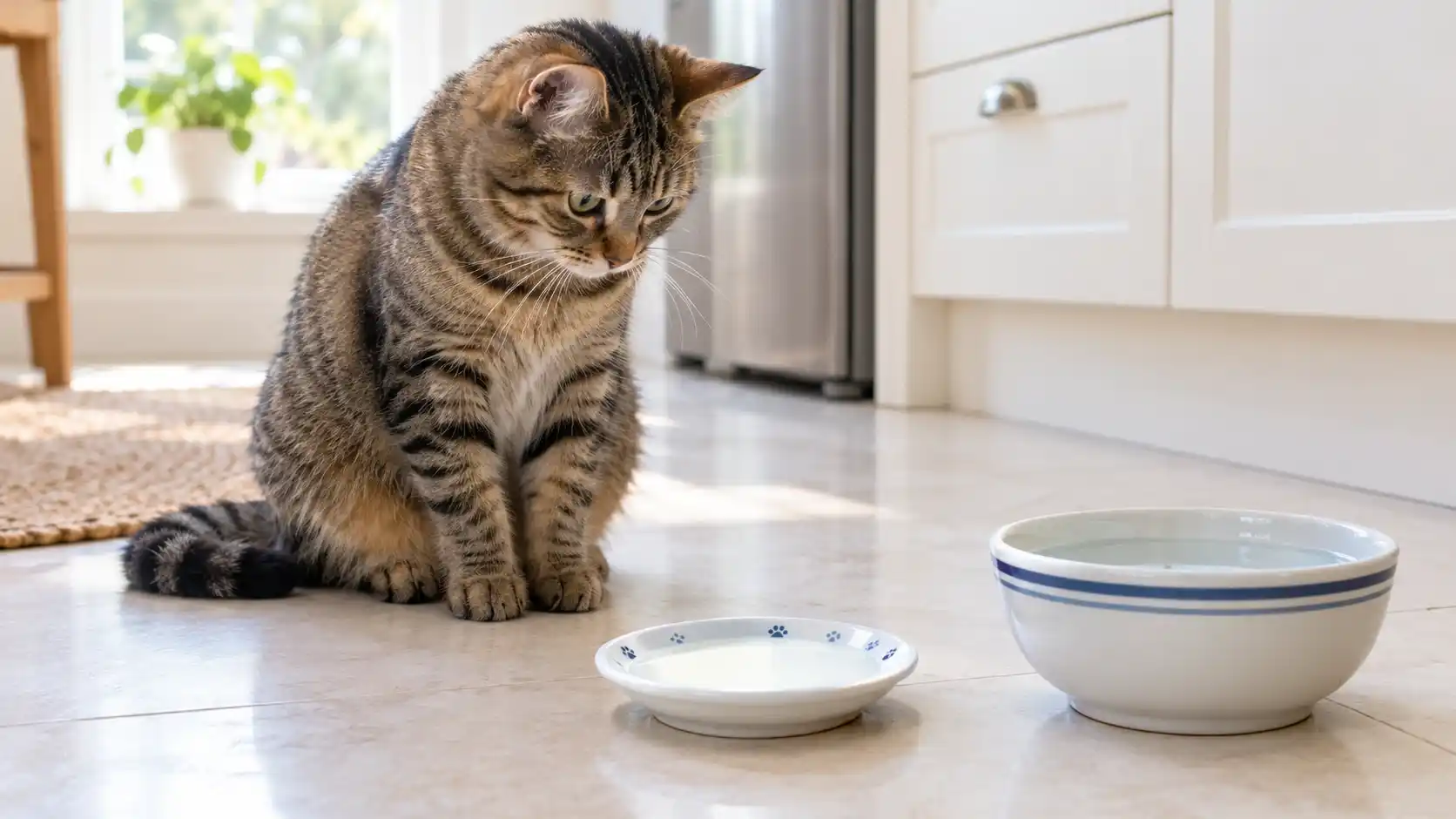
Can cats drink milk? Most of us grew up believing the answer is a happy yes, thanks to cartoons that show a cat lapping milk from a saucer. Real life is not that simple. Many adult cats cannot digest milk well, and a small bowl can leave them with an upset stomach. This guide explains why that happens, which cats can handle a little dairy, what kittens need, and what you can offer your cat instead.
Can Cats Drink Milk Safely?
The short answer is that most adult cats should not drink cow’s milk. It is not poison, and one sip will not harm a healthy cat. But milk gives your cat nothing it needs, and it often causes trouble.
Veterinary sources, including WebMD and Daily Paws, say the same thing. Cats do not need milk, and the risks usually outweigh any benefit. Some cats show no signs at all after drinking it, which is why the myth lives on. Still, no sign today does not mean milk is a good habit.
Here is the quick version:
- Adult cats do not need milk in their diet.
- Many cats get diarrhea, gas or an upset stomach from it.
- Kittens should never get cow’s milk.
- Water and a complete cat food cover everything your cat needs.
Why Milk Upsets Many Cats
The problem is lactose, the natural sugar in milk. To digest it, the body needs an enzyme called lactase. Kittens make plenty of lactase while they nurse. After weaning, the body makes much less of it, and many adult cats make very little.
When lactase is low, lactose stays undigested. It pulls water into the intestines, and gut bacteria ferment it. That process creates gas, bloating and loose stools. It is the same reason many adult humans feel sick after a big glass of milk.
Cats are also obligate carnivores. Their bodies are built to get nutrients from animal protein, not from the milk of another species. Cow’s milk is made for calves, so it does not match what a cat needs.
Signs Your Cat Reacted to Milk
Symptoms usually show up within 8 to 12 hours after drinking milk. Watch for these:
- Diarrhea or soft stools
- Vomiting
- Gas and a swollen belly
- Stomach cramps, such as hiding or crying
- Less interest in food
Some cats hide their discomfort well. Outdoor cats may also react without you noticing, since they use the bathroom outside. If your cat has a mild upset after milk, stop giving it and offer fresh water. Most mild cases settle within a day.
Call your vet if the diarrhea lasts more than a day, if your cat vomits repeatedly, or if your cat seems weak or tired. Severe diarrhea can lead to dehydration, and that sometimes needs fluids from a vet. Kittens, seniors and cats with other health problems need extra care, so call sooner for them.
Do Some Cats Tolerate Milk?
Yes, some do. Not every cat reacts the same way, and a few seem fine with small amounts. That does not make milk a healthy choice. It still adds calories without the balanced nutrition of cat food, and Daily Paws points out that milk is not nutritionally complete for cats.
If you want to see how your cat handles dairy, WebMD suggests a simple test. Offer one or two tablespoons and wait. If nothing happens within a day, a small amount now and then may be fine as a treat. If you see any symptoms, stop and do not try again.
Watch the Calories
This part gets missed a lot. Even when milk does not upset the stomach, it carries calories. A cup of whole milk has about 149 calories, and a cup of skim milk has about 83. That is far more than a small cat needs from a treat.
Vets usually say treats should stay under 10 percent of daily calories. For many cats, that is only about 20 to 30 calories a day. A few licks of milk fit inside that limit. A full saucer does not. Obesity is one of the biggest health concerns for cats, so extra calories add up fast.
Can Kittens Drink Milk?
Kittens need more care than adult cats. Cow’s milk is a poor match for them. It has too much lactose for their small supply of lactase, and its protein balance is wrong for a growing kitten. In very young kittens, it can cause diarrhea and dehydration quickly.
A kitten still nursing should get its mother’s milk. If the mother is not around, use a kitten milk replacer, often called KMR. This formula is built to match cat milk more closely than anything from the grocery store. Powder and ready-to-use liquid versions both exist, and your vet can help you choose one.
Plant milks do not solve the problem. Soy and nut milks lack the amino acids cats need, and most vets also advise against goat milk because better kitten formulas are available.
A Quick Look at Weaning
Most kittens start weaning around 4 to 5 weeks of age, though this changes from kitten to kitten. Baby teeth coming in is a good sign that a kitten is ready.
- Mix canned or dry kitten food with formula to make a soft slurry.
- Offer it in a shallow bowl and expect a mess.
- Over about a week to 10 days, add more food and less formula.
- If the kitten loses weight, stops eating or seems tired, go back to formula for 3 to 5 days before trying again.
If you are caring for orphaned kittens, talk to a vet early. Tiny kittens can get sick fast, and they need guidance on feeding amounts and schedules.
What About Lactose-Free Milk and Cat Milk?
Lactose-free milk is a better choice than regular milk, since the lactose has already been broken down. Some sources note that it can still contain a small amount of lactose, so start slowly. It also has the same calories and the same lack of balanced nutrition. Think of it as a rare treat, never a meal.
Store-bought cat milk is made for cats and is usually lactose-free. It can be a fun treat, but the same rules apply. It adds calories, and it does not replace real food. Daily Paws recommends talking to your vet before making any milk product a regular habit.
Cheese and yogurt are another option people ask about. Cultured dairy has less lactose than milk, and some studies suggest cats may handle it better. A tiny piece is plenty, and plain, unsalted types are best. Skip anything with garlic, onion, chives or added sugar.
Better Drinks for Your Cat
Fresh water is the best drink for a cat. Many cats do not drink enough, so make it easy and appealing.
- Put water bowls in several places around your home.
- Change the water every day and wash the bowl often.
- Try a pet fountain, since many cats like moving water.
- Keep water away from the litter box and loud appliances.
- Add wet food to the diet, since it contains a lot of water.
For a special treat, choose something cats actually need, such as a few pieces of plain cooked chicken or a vet-approved cat treat. These give you the same moment of bonding without the stomach trouble.
Frequently Asked Questions
Can cats drink milk every day?
No. Daily milk adds extra calories and can cause ongoing digestive trouble. Water and a complete cat food should make up your cat’s diet.
Is almond milk or oat milk safe for cats?
These are not toxic in tiny amounts, but they do not give cats the nutrients they need. Many also contain sweeteners or additives, so check the label and ask your vet before offering any.
What should I do if my cat drank milk?
Stay calm. Offer fresh water and watch your cat for the next 12 hours or so. If your cat gets diarrhea or vomits, skip milk in the future. Call your vet if signs last more than a day.
more info: Can Cats Eat Eggs? A Vet-Backed Guide to Feeding Them Safely
Final Thoughts
So, can cats drink milk? Some can handle a little, but most adult cats do better without it. The lactose can upset their stomach, the calories add up, and milk offers nothing a good cat food does not already provide. Kittens need a proper kitten formula, never cow’s milk. When in doubt, pour fresh water and talk to your vet, because they know your cat’s health best.