
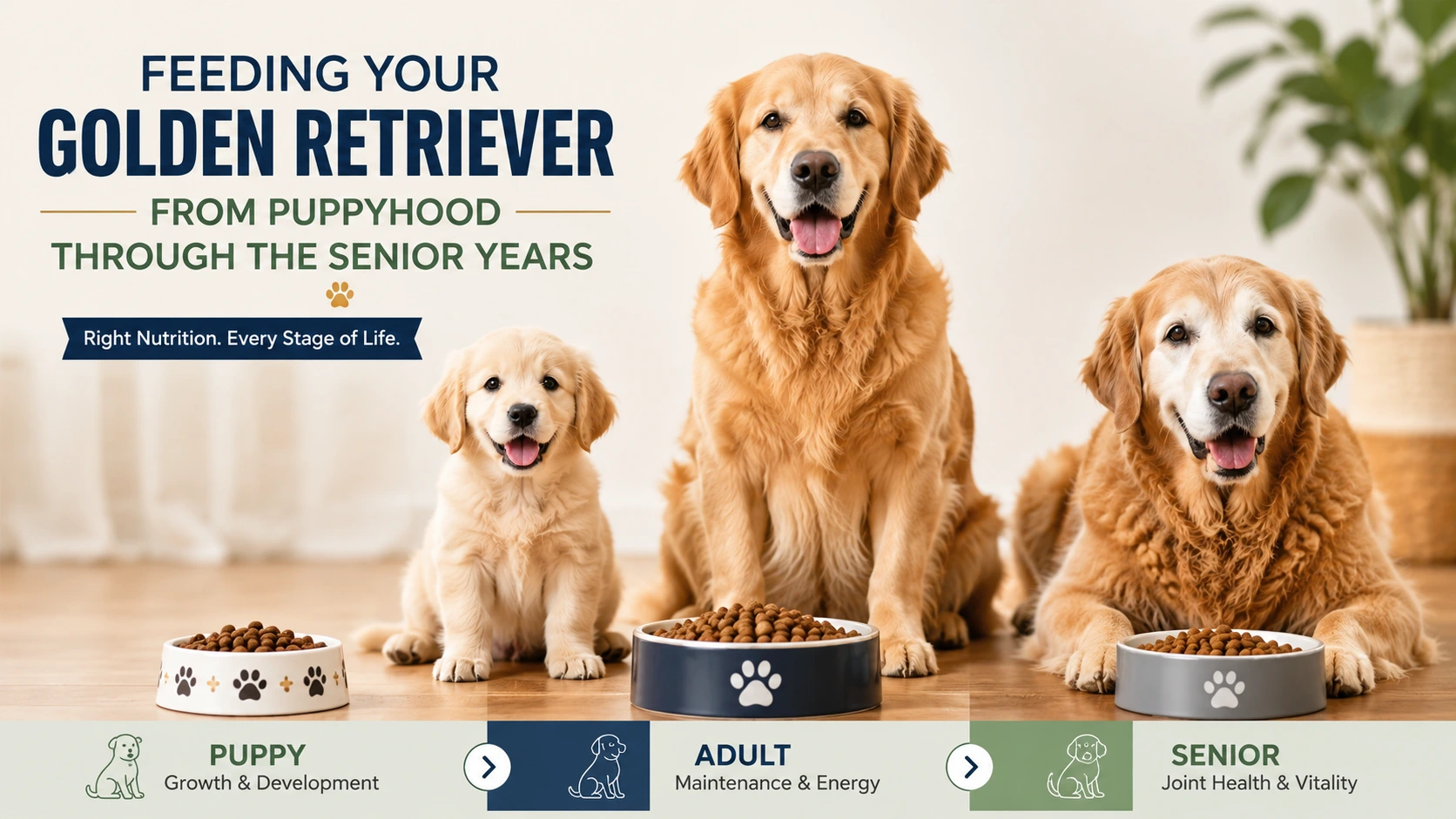
If you just brought home a Golden Retriever puppy or you are trying to fine tune meals for your older dog, getting the golden retriever feeding schedule by age right matters more than most new owners realize. Goldens are big, food motivated dogs who will happily eat past the point of full. That makes portion control and timing one of the most important things you can do for their joints, weight, and long term health.
This guide walks you through exactly what to feed and when, from the eight week old puppy stage all the way to the senior years. No confusing charts, no guesswork. Just a clear plan you can actually follow.
Why a Feeding Schedule Matters So Much for Goldens
Golden Retrievers are prone to a few specific health issues that a good feeding routine can help prevent. Hip and elbow dysplasia, bloat, and obesity are all more common in this breed, and diet plays a direct role in every one of them.
Feeding too much, too fast, especially during puppyhood, pushes a Golden’s bones and joints to grow faster than they should. That extra weight on developing joints is one of the biggest contributors to orthopedic problems later in life. On the other end, an adult or senior Golden who eats without any structure can slide into obesity quietly, since this breed rarely turns down food even when it is not hungry.
A consistent schedule also helps with house training in puppies, digestion at every age, and giving you an easy way to notice if something is off. If a Golden who normally finishes every meal suddenly skips food two days in a row, that is often the first sign something needs a vet visit.
Puppy Stage: 8 Weeks to 6 Months
This is the fastest growth period of your Golden’s life, and it is also when feeding mistakes cause the most long term damage.
At eight weeks old, most puppies eat around one to one and a half cups of large breed puppy food a day, split across three to four small meals. As they grow toward three months, that usually increases to about two to three cups daily, still divided into three meals.
Between four and six months, puppies typically need two and a half to three and a half cups a day. Growth is rapid here, so weigh your puppy weekly if you can and adjust portions instead of sticking to a fixed number regardless of how they look.
A few rules that make a real difference during this stage:
- Feed three meals a day until around six months old, spaced evenly through the day.
- Always choose a large breed puppy formula. Regular puppy food grows Goldens too fast.
- Check body condition weekly. You should be able to feel the ribs easily without seeing them, and there should be a slight waist when you look down at your puppy.
- Avoid free feeding. Set meal times and pick up the bowl after fifteen to twenty minutes.
- Never exercise heavily right after a meal. Wait at least an hour to lower the risk of bloat.
If your puppy always acts starving, that is normal Golden behavior, not a sign you are underfeeding. This breed acts hungry at almost any weight.
Six to Twelve Months: The Transition Phase
Somewhere around six months, growth starts to slow down a little, even though your Golden will still look like a puppy for a while longer. This is the point where most owners move from three meals a day down to two.
Daily food amounts during this stage usually range from three to four cups, with males on the higher end and females slightly lower. A seven month old Golden might need close to four cups if active, while a female of the same age may do fine on three.
Keep puppy food going until your vet gives the green light to switch, which is typically somewhere between twelve and fifteen months for this breed. Goldens mature slower than smaller breeds, so switching to adult food too early can shortchange their nutrition during a period when bones and muscle are still developing.
Watch the ribs and waist the same way you did as a young puppy. If you start losing that waist definition, cut portions back by about ten percent and reassess in two weeks.
Adult Golden Retrievers: 1 to 7 Years
Once your Golden reaches full adult size, feeding gets simpler. Most adult Goldens do well on two meals a day, spaced about ten to twelve hours apart, such as one in the morning and one in the evening.
Daily amounts generally fall between two and three and a half cups, depending on weight, activity level, and whether the dog is spayed or neutered. Neutered dogs tend to need slightly fewer calories than intact ones, since their metabolism runs a bit slower. A working or highly active Golden who swims, runs, or does agility regularly may need closer to the top of that range or even a bit more.
A few things to keep in mind for the adult years:
- Stick to two meals rather than one large meal. This spreads digestion out and reduces bloat risk in a breed already prone to it.
- Recalculate portions if your dog gains or loses even a few pounds. Small weight changes matter more in dogs than we tend to assume.
- Keep treats under ten percent of total daily calories. It is easy to lose track of treat calories with a breed this food driven.
- Reassess food needs after any change in activity, such as an injury, a new exercise routine, or a move to a less active lifestyle.
This is also the stage where owners tend to get a little lax about measuring food. Going back to a proper measuring cup instead of eyeballing portions is one of the simplest ways to keep an adult Golden at a healthy weight.
Senior Golden Retrievers: 7 Years and Up
Golden Retrievers are generally considered senior starting around seven years old, sometimes a little earlier for larger, heavier dogs. Metabolism slows down at this stage, and activity usually drops too, even in Goldens who still act playful.
Most senior Goldens do well on about two to two and three quarter cups a day, still split into two meals. The exact amount depends heavily on how active your individual dog remains and whether they have any joint issues limiting movement.
A senior specific or weight management formula often makes sense here, since these foods are built with fewer calories per cup along with added support for joints, such as glucosamine and chondroitin. If your dog has kidney, heart, or joint conditions, your vet may recommend a therapeutic diet instead of a standard senior formula, so it is worth a checkup before making changes.
Things to watch for in senior Goldens:
- Weight gain from lower activity paired with the same old portion size. This sneaks up quickly in dogs over seven.
- Reduced appetite, which can be a normal part of aging but should still be mentioned to your vet if it lasts more than a couple of days.
- Softer food or smaller kibble if dental issues make chewing harder.
- More frequent, smaller meals if digestion seems to be slowing down.
Senior dogs benefit from twice yearly vet visits rather than the standard annual checkup, and your vet can help you adjust the feeding schedule as health needs shift year to year.
Quick Reference by Life Stage
- Puppy, 8 weeks to 6 months: 1 to 3.5 cups a day, 3 to 4 meals
- Puppy, 6 to 12 months: 3 to 4 cups a day, 2 to 3 meals
- Adult, 1 to 7 years: 2 to 3.5 cups a day, 2 meals
- Senior, 7 years and up: 2 to 2.75 cups a day, 2 meals
These numbers are starting points, not fixed rules. Every Golden is different, and factors like exact weight, food brand, calorie density, and activity level all shift the real number for your dog. Two dogs eating the same brand of food can still need different amounts.
More Info: Do Fall Fruits and Vegetables fit My Dog?
A Few Habits That Help at Every Age
Regardless of what stage your Golden is in, a handful of habits make feeding easier and safer.
Always have fresh water available, especially around meal times. Feed in a calm space away from heavy foot traffic, since Goldens can eat too fast when they feel rushed or excited. Split large meals into two rather than one, particularly for deep chested dogs like this breed, since it lowers bloat risk. And check in with your vet at least once a year, or twice a year for seniors, to confirm the current feeding plan still fits your dog’s weight and health.
Feeding a Golden Retriever well is not complicated once you understand the pattern. Portions go up through the growth years, level off in adulthood, and taper down again as your dog slows into their senior years. Pay attention to how your dog actually looks and feels rather than chasing an exact number on a bag, and you will keep your Golden at a healthy weight through every stage of life.
If you are ever unsure about the right amount for your specific dog, a quick conversation with your vet will save you a lot of guesswork and keep your Golden happy and healthy for years to come.