
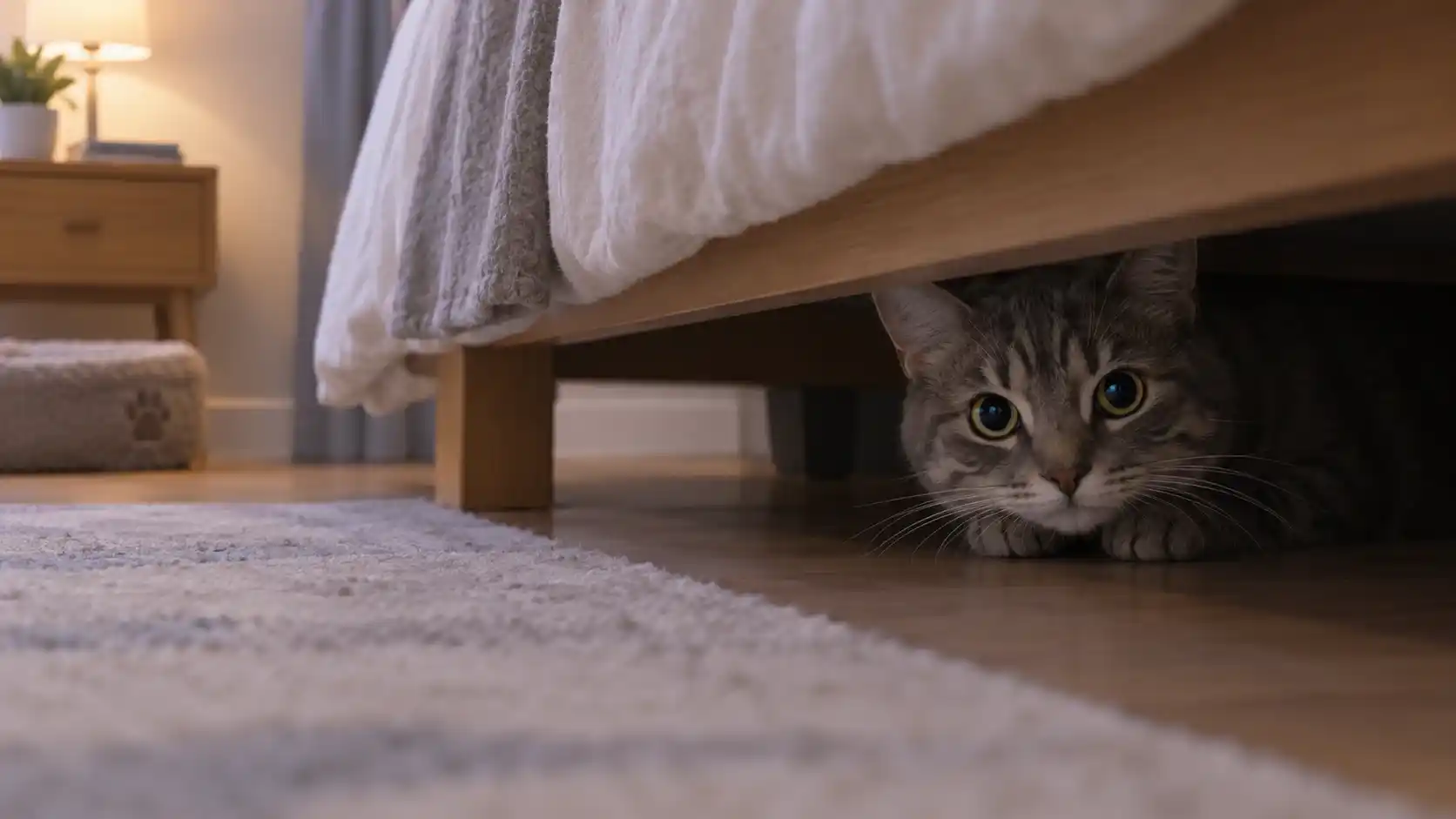
You call your cat for dinner and nothing happens. You check the sofa, the window ledge, and the usual sunny spot. Then you find two eyes staring at you from under the bed. If you are asking yourself why is my cat suddenly hiding, you are not alone, and your worry makes sense.
Hiding can be harmless. It can also be one of the first signs that your cat is in pain or feels unsafe. This guide helps you tell the difference, so you know when to relax and when to call the vet.
Is It Normal for a Cat to Hide?
Yes, up to a point. Cats love small, dark, quiet spaces. Boxes, closets, and laundry baskets all feel safe to them. This habit comes from their wild side. A cat is both a hunter and a small animal that bigger animals might hunt, so it likes to see without being seen.
Some cats hide every day and always have. That is just their personality. The real concern is a change. If your friendly cat now vanishes for hours, or your usual hider is staying out of sight longer than normal, pay attention.
Why Is My Cat Suddenly Hiding? 8 Common Causes
1. Pain or illness
This is the one to rule out first. In the wild, a sick animal is an easy target, so cats evolved to hide weakness. Your cat may feel awful and still act normal in front of you. Hiding is often the only clue.
Pain from a sore tooth, a urinary problem, an upset stomach, arthritis, or an injury can all send a cat under the bed. Many vets suggest ruling out a medical cause before blaming stress or mood.
2. Stress from a change in routine
Cats love routine. A new work schedule, rearranged furniture, a new cleaning product, or a change in food can unsettle them. You may see the change as small. Your cat does not.
3. Loud noises and visitors
Fireworks, thunderstorms, construction, a vacuum, or a house full of guests can make a cat bolt for cover. This kind of hiding usually ends soon after the trigger goes away.
4. A new pet or a cat outside
A new dog, kitten, or baby can make a cat feel crowded in its own home. Even a stray cat strolling past the window can scare an indoor cat. If your cat hides most when another animal is nearby, that is a strong clue.
5. Moving to a new home
A new house smells wrong to a cat. Everything familiar is gone, so hiding is a natural response. Many cats hide for days after a move, and some take longer. Never drag them out. Pulling a cat from its hiding place teaches it that the new home is not safe.
6. Pregnancy or nesting
An unspayed female cat that goes outdoors, or lives with an unneutered male, may hide because she is pregnant. She is looking for a quiet place to give birth. If this could be the case, a vet visit is a good idea.
7. Bad memories
Cats remember scary events. A rough trip to the vet, a loud accident, or a fight with another pet can leave a lasting fear. Your cat may start hiding when it sees the carrier, hears a certain sound, or meets a certain person.
8. A simple comfort
Sometimes the answer is boring. Your cat found a warm, cozy spot and likes it. If your cat eats well, plays, uses the litter box, and comes when you call, a new favorite nap spot is probably no big deal.
Signs That Hiding Might Be a Health Problem
Hiding alone does not tell you much. Hiding plus other changes tells you a lot. Watch for these:
- Eating or drinking less, or not at all
- Vomiting or diarrhea
- Peeing or pooping outside the litter box, or straining in the box
- A messy, greasy, or matted coat from poor grooming
- Limping, wobbling, or trouble jumping
- Hunched posture or sensitivity when touched
- Faster or heavier breathing, even at rest
- The third eyelid, the pale flap in the corner of the eye, showing more than usual
- Heavy purring while hiding, since cats also purr to soothe themselves when they hurt
- Hissing or growling when you approach, which is not like your cat
Appetite deserves special attention. A cat that stops eating can develop a serious liver problem called hepatic lipidosis. Many vets suggest calling within a day if your cat is not eating, and certainly before two days pass without food.
How Long Is Too Long for a Cat to Hide?
There is no perfect number, but these rules of thumb help:
- A few hours after a loud noise or visitors is usually fine.
- A day or two of extra hiding with no other symptoms is worth watching closely.
- Hiding for more than a day alongside other warning signs calls for a vet visit.
- Any hiding with no eating, trouble breathing, or sudden weakness needs care right away.
If you are unsure, call your vet. A short phone call costs little, and cats can go downhill fast.
What to Do When Your Cat Is Hiding
Stay calm and take these steps:
- Do not force your cat out. Pulling a scared cat out can raise its stress and may get you scratched.
- Put food, fresh water, and a litter box near the hiding spot. Your cat should not have to cross the house to meet basic needs.
- Check the basics. Look for signs of injury, a recent change at home, or something that may have scared your cat.
- Watch from a distance. Note when your cat eats, drinks, and uses the litter box. Write it down if you can.
- Keep the room quiet. Turn down the TV, limit visitors, and keep other pets away for a while.
- Offer a favorite treat or toy, and let your cat come out on its own terms.
- Call the vet if you see any warning signs from the list above.
How to Help a Stressed Cat Feel Safe Again
If your vet finds nothing wrong, stress is the likely cause. These steps help:
- Give your cat safe hiding spots. A cardboard box, a covered bed, or a cat tree with a hidey-hole lets your cat retreat without feeling trapped.
- Add high spots. Shelves and cat trees let cats watch the room from above, which helps them feel in control.
- Stick to a routine. Feed, play, and clean the litter box at the same times each day.
- Try a pheromone diffuser. Products made for cats may help some cats feel calmer, though results vary.
- Play daily. A few short play sessions with a wand toy burn off nerves and rebuild trust.
- Introduce changes slowly. New pets, new homes, and new furniture go better when your cat can get used to them in small steps.
- Set up a safe room. After a move or when a new pet arrives, give your cat a quiet room with food, water, a litter box, bedding, and familiar items that smell like home. Let your cat explore the rest of the house at its own pace.
Many cats explore at night, when the house is quiet. If your food bowl is a little emptier in the morning, that is a good sign.
What to Tell Your Vet
Your notes will help the vet find the cause faster. Be ready to share:
- When the hiding started and how it has changed
- Eating, drinking, and litter box habits
- Any vomiting or diarrhea
- Medications, supplements, or new foods
- Any chance your cat ate something toxic or got hurt
- Recent changes at home, like a move, a new pet, or visitors
If the vet finds no medical cause, ask about a referral to a veterinary behaviorist. They can build a plan around your cat’s specific fears.
Quick Answers to Common Questions
Why is my cat hiding and not eating?
This combination is a red flag. It can point to pain or illness. Call your vet the same day or the next day, since cats should not go long without food.
Why is my cat hiding under the bed all of a sudden?
Under the bed is a classic safe spot. The cause could be fear, stress, or pain. Look for other changes in behavior to figure out which one it is.
Will my cat come out on its own?
Often, yes. A cat that is scared of a visitor or a noise usually comes out within hours. A cat that is stressed by a big change, like a move, may need days. A cat that is sick may not come out at all, so do not wait too long if you see warning signs.
more info: Why Does My Cat Sleep on My Chest? 7 Real Reasons and What to Do
Final Thoughts
Now you know the answer to why is my cat suddenly hiding: it could be fear, stress, or a hidden health problem. Most of the time, a calm home, a few cozy hiding spots, and a little patience help your cat bounce back. But cats hide pain very well, so trust your gut. If something feels off, or the hiding comes with changes in eating, litter box habits, or breathing, call your vet. You know your cat best, and acting early is almost always the kinder choice.