If you just brought home a Great Dane puppy, or you already have a gentle giant lounging on your couch, you probably already know that feeding this breed is not the same as feeding a Labrador or a Beagle. A great dane feeding guide by age matters more for this breed than almost any other dog, because Great Danes grow faster and bigger than nearly any other breed on the planet, and that speed comes with real risks if the diet is not managed carefully.
Get the feeding plan right, and you set your Dane up for strong joints, steady growth, and a long, comfortable life. Get it wrong, especially during the puppy months, and you could be looking at joint problems, bone issues, or bloat down the road. This guide walks you through exactly what to feed a Great Dane at each stage of life, from the first weeks home to the senior years, in plain language you can actually use.
Why Great Danes Need a Different Feeding Approach
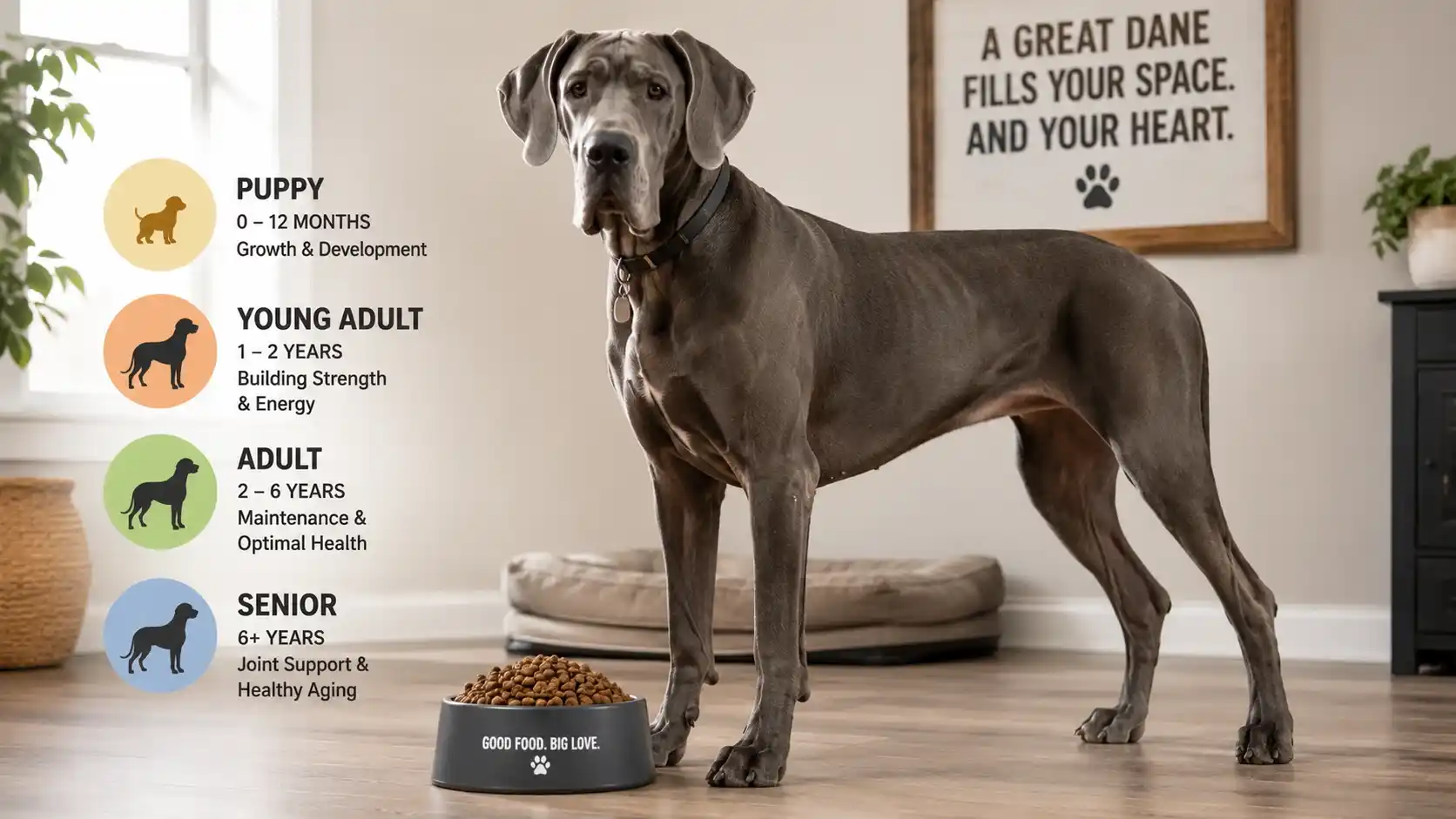
Most dog breeds finish growing within a year. Great Danes are still filling out in muscle and bone until they are 18 to 24 months old. During the first year especially, their skeleton is doing an enormous amount of work in a short window of time.
This is exactly why feeding a Great Dane puppy the wrong food, or simply too much of the right food, can cause lasting damage. Overfeeding, too much calcium, or food that is too calorie dense can push growth faster than the bones and joints can handle. This is a major reason Great Danes are more prone to conditions like hip dysplasia and other orthopedic problems when their diet is not managed well early on.
The goal at every stage is not to grow your Dane as fast as possible. The goal is slow, steady, controlled growth that gives bones and joints time to develop properly.
Feeding a Great Dane Puppy: Birth to 6 Months
This is the stage where feeding choices matter the most.
8 to 12 Weeks
Puppies at this age should already be weaned and eating solid food exclusively. Look for a large breed puppy formula with controlled calcium, generally in the 0.7 to 1.2 percent range on the label. This is one of the most important numbers to check when picking food for a Dane puppy, since too much calcium during this window is linked to skeletal problems later.
Feed three meals a day at this stage, and stick to the amount recommended on the food label for your puppy’s current weight. Free feeding, meaning leaving food out all day for your puppy to graze on, is not a good idea for this breed. Portion control from the very beginning helps prevent the kind of rapid weight gain that stresses growing joints.
3 to 6 Months
This is the fastest growth period of your Dane’s entire life. Your puppy will look like it is changing shape every single week, and in some ways it is.
Keep feeding a large breed puppy formula, and resist any urge to feed more just because your puppy looks lanky or seems hungry all the time. Giant breed puppies often look like they need more food than they actually do. Stick to the label guidelines for your puppy’s weight, and check in with your vet if you are unsure whether your pup is gaining too quickly.
Three meals a day still works well here. Splitting food into smaller, more frequent meals is easier on digestion and may help lower the risk of bloat, which is a serious concern for deep chested breeds like Great Danes throughout their lives.
Feeding an Adolescent Great Dane: 6 to 14 Months
By six months, your Dane’s growth starts to slow down a bit, though it certainly does not stop. Height gain typically slows first, while your dog continues filling out in muscle and frame for months to come.
You can usually move to two meals a day at this stage instead of three. Continue with a large breed puppy formula rather than switching to adult food too early. Many owners make the mistake of switching to adult food around this age because their Dane looks nearly full grown, but the skeleton is still developing and still benefits from the controlled nutrient profile of a puppy formula.
Keep a close eye on body condition during adolescence. You should be able to feel your dog’s ribs without pressing hard, and there should be a visible waist when you look down at your Dane from above. If you cannot feel the ribs easily, it is worth cutting back the portion slightly rather than letting the extra weight sit on those growing joints.
Exercise also plays a role in this stage. Structured, high impact exercise should stay limited until the growth plates close, which typically happens between 18 and 24 months. Short, gentle walks are fine, but avoid long runs, repeated jumping, or rough play on hard surfaces during adolescence.
Feeding a Growing Dane: 15 to 18 Months
Somewhere between 15 and 18 months, most Great Danes are ready to transition to adult food. This is not a switch you should make overnight. Mix a small amount of adult food into the puppy food and gradually increase the ratio over 7 to 10 days. This slow transition helps avoid stomach upset, which is especially important for a breed already prone to digestive sensitivity.
Before making the switch, it helps to look at your individual dog rather than just going by a calendar date. A leaner, still visibly growing Dane may benefit from staying on puppy food a bit longer, while a Dane that has clearly filled out can move to adult food closer to the 15 month mark.
Feeding an Adult Great Dane: 18 Months and Up
Once your Dane reaches adulthood, the feeding approach shifts from managing growth to maintaining a healthy, stable weight for the long haul.
Look for a good quality adult large breed formula, generally moderate in both protein and fat rather than extremely high in either. Two meals a day remains the standard recommendation for adult Danes, and this is not just about convenience. Splitting food into two smaller meals rather than one large one is considered safer for digestion and may reduce bloat risk, which stays a lifelong concern for this breed due to their deep chest shape.
Portion sizes will vary quite a bit depending on your individual dog’s size, activity level, and metabolism, so use the feeding chart on your dog food bag as a starting point and adjust based on body condition rather than sticking rigidly to a number. An adult Dane at a healthy weight should have visible waist definition and ribs you can feel without digging through fat.
A few habits worth keeping as your Dane settles into adulthood:
- Feed at consistent times each day rather than leaving food out
- Avoid vigorous exercise for at least an hour before and after meals to help lower bloat risk
- Use a slow feeder bowl if your Dane tends to gulp food quickly
- Recheck body condition every few weeks and adjust portions as needed
Feeding a Senior Great Dane
Great Danes are considered seniors earlier than most dogs, often by around 6 to 7 years of age, simply because giant breeds tend to have shorter lifespans than smaller dogs.
As your Dane ages, activity levels usually drop, and metabolism slows down along with it. This is the point where many owners need to reduce daily food intake to prevent weight gain, since extra pounds put more strain on joints that may already be showing signs of wear.
Two smaller meals a day still works well for seniors. Some owners look for senior specific formulas with joint supporting ingredients like glucosamine and chondroitin, or add a vet approved joint supplement separately. If your senior Dane is losing muscle mass or seems less interested in food, a conversation with your vet is worth having, since older giant breed dogs can develop health issues that affect appetite and digestion.
General Feeding Tips That Apply at Every Age
A few rules apply across the entire lifespan of a Great Dane, regardless of what stage your dog is in.
- Always feed a large breed specific formula rather than a generic dog food, since large breed formulas are built with joint and growth considerations in mind
- Never free-feed a Great Dane at any age, since portion control is one of your best tools against both rapid growth problems and adult obesity
- Split daily food into at least two meals rather than one large meal, at every life stage
- Watch body condition rather than relying only on the scale, since a lean Dane with visible ribs and a waist is healthier than a heavier one that looks impressive
- Avoid vigorous exercise right before or after meals to help reduce bloat risk
- Talk to your vet before adding any calcium or vitamin supplements, since extra calcium during growth can do more harm than good
- more info: Best Low-Budget Dog Food That’s Actually Healthy (Under $30/Month
Final Thoughts
Feeding a Great Dane well is really about patience. The puppy months move fast, and it can be tempting to feed more or switch foods early because your dog already looks so big. But slow, steady, well portioned feeding at every stage gives your Dane the best shot at strong joints, a healthy weight, and fewer health problems later in life.
Whether you are just starting out with a Dane puppy or adjusting the diet of an older dog, the same idea holds true at every stage. Feed the right formula for the life stage, watch body condition closely, and make changes gradually rather than all at once. Your gentle giant will thank you for it with years of good health by your side.