
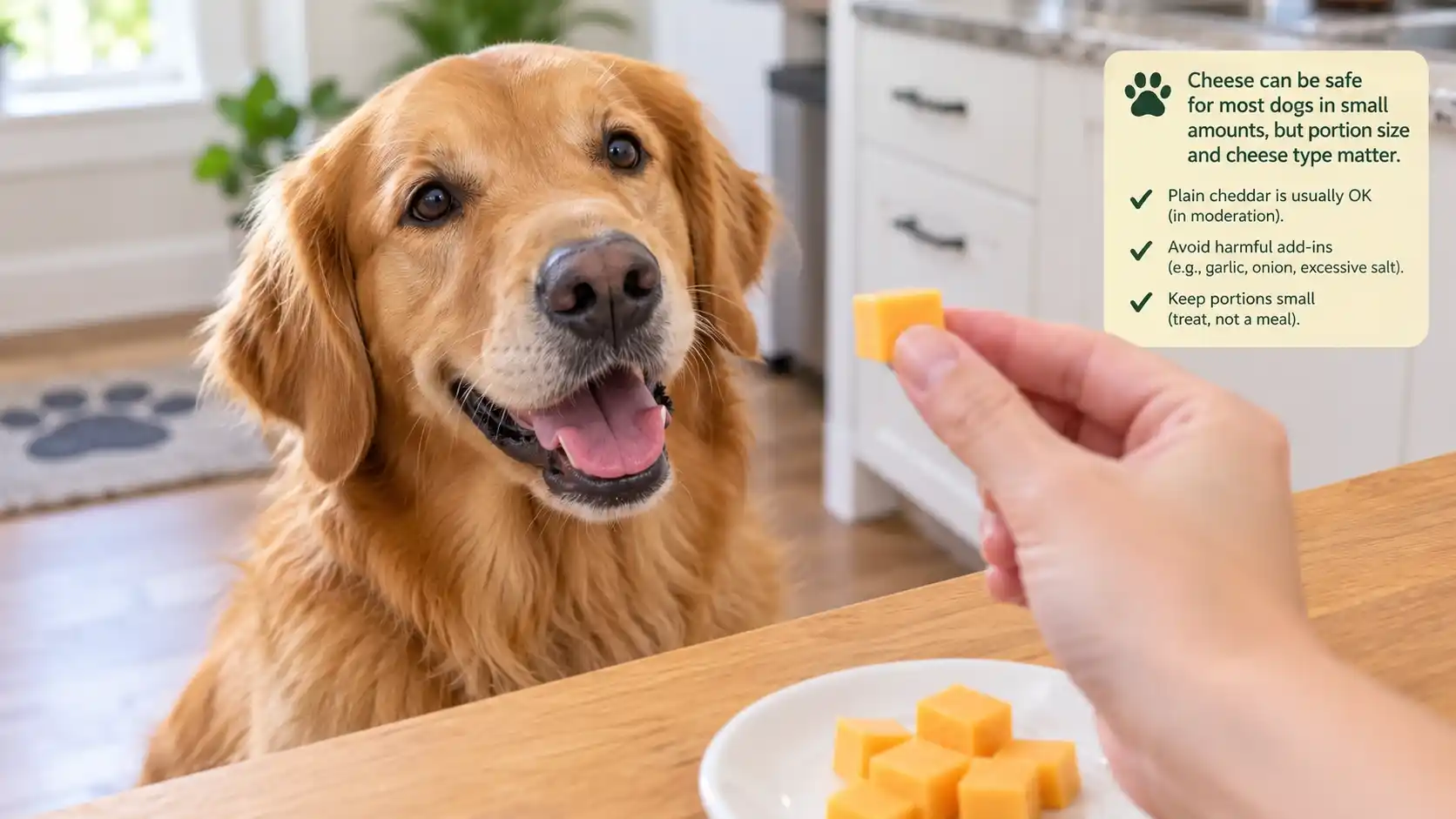
Can dogs eat cheese? Yes, most dogs can have a small piece now and then. Cheese is not toxic to dogs, and plenty of them would trade a walk for a cube of cheddar. But the full answer comes with a few catches. Some dogs cannot digest dairy well, cheese is high in fat and salt, and one type, blue cheese, can make a dog seriously sick.
This guide covers which cheeses are safe, which ones to avoid, how much is okay, and when your dog should skip cheese completely. You will also find simple ways to use cheese as a treat without upsetting your dog’s stomach.
Is Cheese Safe for Dogs?
For a healthy adult dog, plain cheese in small amounts is generally safe. Think of it as a treat, not a meal. A complete dog food already gives your dog the protein, calcium, and vitamins that cheese contains, so cheese adds more fun than nutrition.
Three things decide whether cheese is a good idea for your dog: lactose, fat, and whatever else is mixed into the cheese. Let’s take them one at a time.
Why Some Dogs Struggle With Cheese
Puppies make plenty of lactase, the enzyme that breaks down lactose, which is the natural sugar in milk. As dogs grow up, they make less of it. Without enough lactase, dairy can cause gas, bloating, and loose stools.
Cheese has less lactose than milk, and aged cheeses have even less. That is why many dogs do fine with a small bite. Less lactose is not the same as no lactose, though, so every dog reacts a little differently.
Signs your dog may not tolerate cheese include:
- Gas or a gurgling belly
- Loose stool or diarrhea
- A bloated or uncomfortable stomach
- Vomiting
These signs often show up within hours. If you notice them, stop giving cheese and talk to your vet.
The Fat and Calorie Problem
Cheese is dense. A single ounce of cheddar has roughly 110 calories, which is a lot for a small dog. Veterinarians commonly advise keeping treats to 10 percent or less of your dog’s daily calories. A small dog that eats around 400 calories a day gets about 40 calories of treats. That is barely a third of an ounce of cheddar, and it has to cover every other snack too.
Extra calories add up fast and lead to weight gain. Fat is also a bigger deal than most owners realize. Pancreatitis is an inflamed pancreas, and rich, fatty foods are a known trigger. Signs include belly pain, vomiting, dehydration, and low energy. Dogs that have had pancreatitis before, and dogs that are overweight, should not eat cheese unless their vet says it is fine.
Which Cheeses Are Safer for Dogs
If your dog tolerates dairy, these are the better picks. Always choose plain versions with no added flavors.
- Cottage cheese: Lower in fat and salt than most cheeses, and a bit lower in lactose. Pick plain, low-fat, low-sodium.
- Mozzarella: Mild and usually lower in fat and salt than harder cheeses. Part-skim is a good choice.
- String cheese: Made from mozzarella and easy to tear into tiny pieces. Check the label for garlic or other seasoning.
- Cheddar: Fine in small bits. It is low in lactose but high in fat, so keep portions tiny.
- Swiss: Low in lactose, but it can be salty. Tiny pieces only.
- Soft goat cheese: Some dogs digest it more easily than cow’s milk cheese. Plain only.
Cheeses and Cheese Foods to Avoid
Not every cheese belongs in your dog’s bowl. Here is what to keep away.
Blue cheese is the big one. Blue-veined cheeses such as Stilton, Roquefort, Gorgonzola, and Danish blue are made with mold that can produce a substance called roquefortine C. Dogs can be very sensitive to it. Signs of trouble include vomiting, diarrhea, fever, muscle tremors, and in serious cases, seizures. Severe reactions are uncommon, but the risk is not worth it. If your dog eats blue cheese, call your vet.
Flavored cheese is the next problem. Cheese with garlic, onion, chives, or herbs can be toxic to dogs. Cheese mixed with raisins or spicy peppers is also a bad idea.
Very rich or salty cheeses can cause stomach upset and add a lot of fat. Brie, Camembert, feta, and cream cheese fall into this group. Processed cheese slices are not toxic, but they are salty and not a great choice either.
Cheesy human foods are worth a mention too. Mac and cheese, pizza, and cheesy dips often contain onion, garlic, salt, and plenty of fat. If you use vegan cheese, read the ingredient list first.
How Much Cheese Can Dogs Eat?
There is no single right amount, because dog size, age, and health all matter. Use the 10 percent treat rule as your ceiling, then start much smaller. These are rough starting points, not vet-approved doses:
- Toy and small dogs under 20 pounds: a few pea-sized pieces
- Medium dogs from 20 to 50 pounds: one or two thumbnail-sized pieces
- Large dogs over 50 pounds: a small cube
Keep cheese to an occasional treat, not a daily habit. Count it toward your dog’s total treats for the day. Your vet knows your dog’s weight and health, so they can give you a more exact number.
How to Introduce Cheese Safely
If your dog has never had cheese, go slowly.
- Start with one tiny piece of plain cheese.
- Wait a full day and watch for gas, loose stool, or vomiting.
- If your dog seems fine, offer small amounts now and then.
- Cut pieces small enough to prevent choking, especially for small dogs.
- Choose low-fat, plain cheese over rich or flavored types.
If anything looks off, stop and check in with your vet.
Can Puppies Eat Cheese?
Puppies have sensitive stomachs and are still learning how to handle new foods. A tiny bit of plain cheese as a training reward is usually okay for a healthy puppy, but ask your vet first. Puppies need balanced nutrition for growth, and treats should never crowd out their regular food. Keep cheese rare and portions very small.
Using Cheese for Training and Pills
Cheese works well as a high-value reward, especially in distracting places like a busy park. Use pea-sized bits so training sessions do not turn into a calorie bomb.
Many owners also hide pills in a small piece of cheese. It often works, but check with your vet or pharmacist first. Dairy can affect how some medicines are absorbed, and certain pills need to be given on an empty stomach.
When Your Dog Should Skip Cheese
Some dogs are better off without it. Skip cheese if your dog:
- Has shown signs of lactose intolerance
- Has had pancreatitis
- Is overweight or on a weight loss plan
- Eats a prescription or low-fat diet
- Has kidney problems or a known dairy allergy
If you are not sure which group your dog falls into, ask your vet before offering cheese.
What to Do If Your Dog Eats Too Much Cheese
Dogs are good at stealing a block of cheese off the counter. If it happens, stay calm and watch your dog closely. Mild stomach upset, like gas or a loose stool, often passes on its own.
Call your vet if your dog has repeated vomiting, belly pain, diarrhea that lasts more than a day, or very low energy. Call sooner if your dog is small, older, or has a history of pancreatitis. If the cheese was blue cheese or contained garlic, onion, or chives, call right away.
Quick Answers to Common Questions
Can dogs eat cheddar cheese? Yes, in small amounts. Choose plain, mild cheddar and keep the portion tiny.
Can dogs eat cottage cheese? Yes. Plain, low-fat, low-sodium cottage cheese is one of the gentler options.
Can dogs eat cream cheese? A small lick is not harmful for most dogs, but it is high in fat and lactose, so it is not a good regular treat.
Can dogs eat cheese every day? It is better not to. Daily cheese adds fat, salt, and calories, and it raises the risk of weight gain and stomach trouble.
Is cheese bad for dogs? Not for every dog. It becomes a problem when the portion is large, the cheese is blue or flavored, or the dog has lactose intolerance, weight issues, or pancreatitis.
more info: Can Dogs Eat Peanut Butter? A Safe Feeding Guide
Final Thoughts
So, can dogs eat cheese? For most healthy dogs, yes, as a small and occasional treat. Stick to plain, lower-fat options like cottage cheese and mozzarella. Keep blue cheese and anything with garlic or onion far away from your dog. Start with a tiny piece, watch how your dog reacts, and keep treats under 10 percent of daily calories.
Every dog is different, and this article is general information, not a replacement for your vet’s advice. When in doubt, a quick call to your vet is the safest move.