
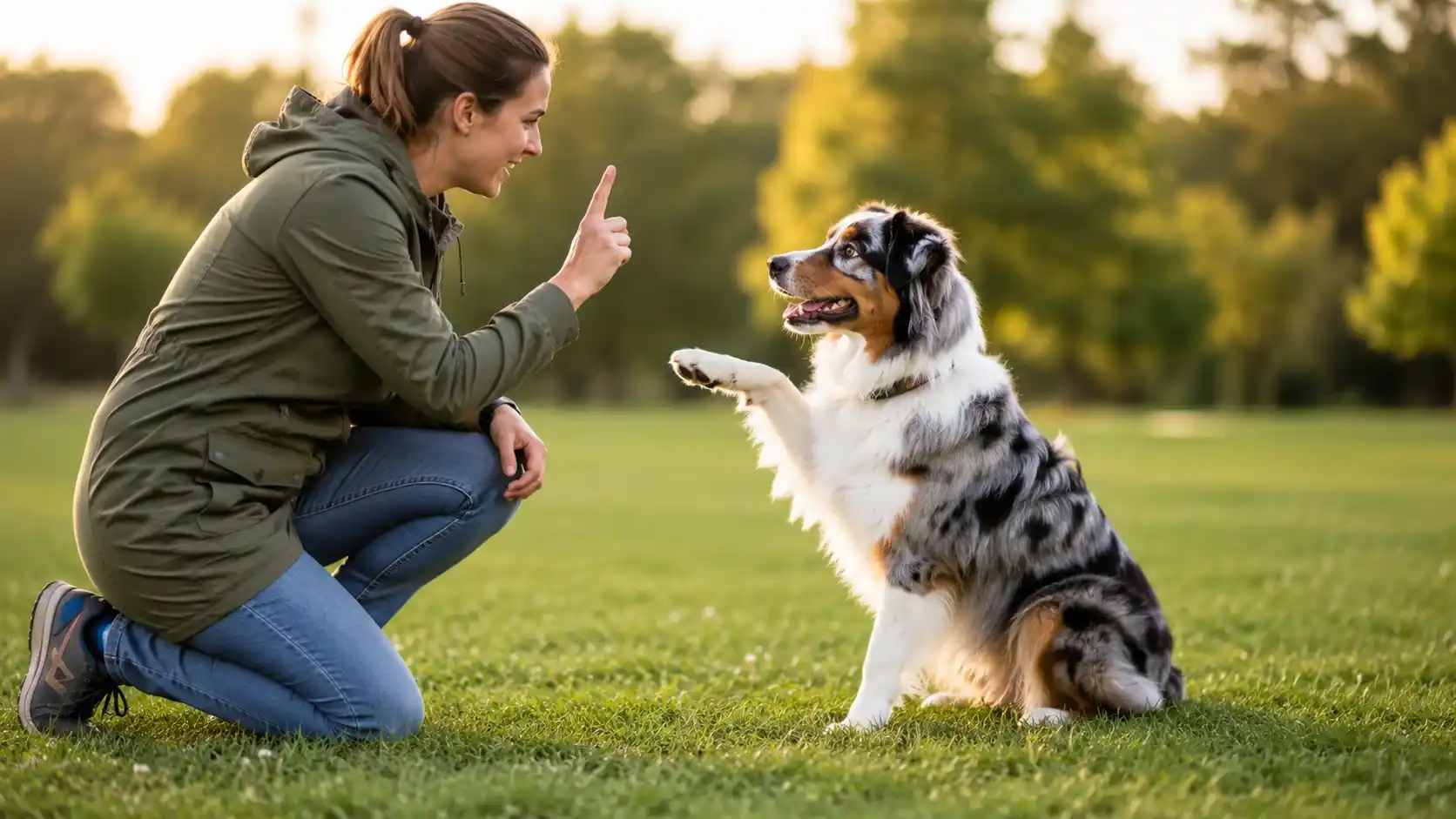
If you just brought home an Aussie or you are still deciding if this breed fits your life, Australian Shepherd training is the one thing you cannot skip. This is not a dog that does well with a short walk and a bit of couch time. Aussies are smart, driven, and built for movement. Get the training right early, and you end up with a loyal, well behaved companion who fits right into your busy household. Get it wrong, and you may end up with a dog that barks too much, chews everything in sight, or tries to herd your kids around the living room.
This guide walks you through what Australian Shepherd training actually looks like for a real, active family. No fluff, just practical steps that work.
Why Australian Shepherds Need a Different Approach
Aussies were bred to work all day on ranches, moving livestock across large areas. That history did not disappear just because your Aussie now lives in a house with a yard. Their brain still expects a job to do.
This is why basic training alone will not cut it. A dog that learns to sit and stay but gets nothing else to think about will find its own way to stay busy. That usually means digging holes, chewing furniture, or barking at everything that moves outside the window.
Understanding this changes how you approach training. You are not just teaching commands. You are giving this dog a purpose every single day.
Start Training Early, Even Before You Think They Are Ready
A lot of new owners wait until their Aussie is a few months old before starting real training. That is a mistake. You can begin the moment your puppy comes home.
At eight weeks old, your puppy can start learning:
- Their name and basic attention cues
- Potty training routines
- Gentle handling for grooming and vet visits
- Crate training as a safe space, not a punishment
Once your puppy hits four to six months, you can move into more structured obedience work like sit, stay, come, and loose leash walking. This is also the age where recall training around distractions becomes important, especially if you plan to let your Aussie off leash at parks or trails later.
Waiting too long to start does not ruin your dog, but it does make things harder. Puppies form habits fast, and it is easier to build good ones from day one than to fix bad ones later.
How Much Exercise Does an Aussie Actually Need
This is where a lot of families underestimate the breed. Most healthy adult Australian Shepherds need somewhere between one and two hours of exercise every day. Some high drive lines need closer to three hours, especially if they come from working bloodlines.
That number can feel intimidating, but it does not have to happen in one long session. Split it up:
- A brisk walk or jog in the morning
- A game of fetch or frisbee in the afternoon
- A short training session or puzzle activity in the evening
Puppies need less structured exercise since their joints are still developing. A simple guide many trainers use is about five minutes of exercise per month of age, done twice a day. So a three month old puppy gets around fifteen minutes, twice daily, rather than one long walk.
If your family already hikes, runs, or bikes on weekends, an Aussie will likely keep up with you and love every minute of it. If your lifestyle is more relaxed, this breed may leave you feeling overwhelmed unless you commit to daily activity.
Physical Exercise Alone Will Not Fix Behavior Problems
Here is something most new Aussie owners get wrong. They assume that if they just run their dog enough, the dog will calm down. What actually happens is you end up with a dog that is physically tired but still mentally wound up.
Aussies need their brains worked just as much as their bodies. A fifteen minute training session that requires real thinking can tire out an Aussie more effectively than an hour of running around the yard.
Ways to build in mental stimulation:
- Puzzle feeders instead of a regular food bowl
- Short nose work games, like hiding treats around a room
- Teaching new tricks every week, even small ones
- Practicing commands in new locations with distractions
A tired mind leads to a calm dog. A tired body without a tired mind just leads to a fit dog who is still bouncing off the walls.
Managing the Herding Instinct Around Kids and Pets
Because Aussies were bred to herd, that instinct does not just switch off around your children or other pets. You may notice your dog nipping at heels, circling family members, or trying to herd kids away from an area.
This behavior is not aggression. It is instinct. But it still needs to be managed, especially in households with young children.
A few practical steps help here:
- Supervise playtime between your Aussie and small kids, especially when things get loud or chaotic
- Teach a solid leave it command so you can redirect the behavior immediately
- Give the herding drive an outlet through structured games like fetch with directional cues, or agility style obstacle courses
- Avoid letting kids run and scream around the dog without supervision, since fast movement can trigger the chase instinct
Redirecting this drive into an appropriate outlet works far better than trying to suppress it completely. The instinct is part of who this dog is.
Positive Reinforcement Is Non Negotiable
Aussies respond well to positive reinforcement training and poorly to harsh corrections. Punishment based methods tend to create fear, anxiety, or even more reactive behavior in this breed, since they are already sensitive and highly aware of their environment.
Stick to rewarding the behavior you want to see:
- Use treats, praise, or a favorite toy as rewards
- Keep training sessions short, around ten to fifteen minutes
- End sessions on a successful note rather than pushing until your dog gets frustrated
- Stay consistent with commands across every family member
Consistency matters more than most people realize. If one parent says down and another says lay down for the same command, your Aussie will take longer to learn it. Get everyone in the house using the same words and hand signals.
Socialization Should Start Early and Continue Often
Early socialization helps prevent fear based behaviors from turning into aggression or overprotectiveness later on. Aussies can become wary of strangers or unfamiliar situations if they are not exposed to a variety of people, places, and sounds while young.
Try to expose your puppy to:
- Different types of people, including kids, elderly adults, and people wearing hats or carrying umbrellas
- Other calm, vaccinated dogs
- Car rides, vet visits, and grooming appointments
- Various sounds like vacuum cleaners, doorbells, and traffic
Keep these experiences positive. If your puppy seems nervous, do not force the interaction. Let them approach at their own pace and reward calm behavior.
Building a Routine That Fits Your Family
The best Australian Shepherd training plan is one your family can actually stick to. There is no point designing a perfect schedule that falls apart after two weeks because it is too demanding for your daily life.
A realistic weekly routine might look like this:
- Daily walks or jogs, split into morning and evening
- Two to three short training sessions per day, five to ten minutes each
- One or two mentally challenging activities, like puzzle toys or nose work
- A weekend activity that involves more space, like a hike or a trip to a dog park
Involve your kids where age appropriate. Older children can help with basic commands or reward based games under supervision. This builds a bond between your Aussie and every family member, not just the primary caregiver.
Common Mistakes to Avoid
A few patterns show up again and again with new Aussie owners:
- Assuming a big backyard replaces the need for daily exercise
- Skipping mental stimulation and relying only on physical activity
- Being inconsistent with commands or rules across family members
- Waiting too long to start training or socialization
- Using punishment based methods when the dog is not responding fast enough
Avoiding these mistakes puts you ahead of most first time Aussie owners.
Final Thoughts
Australian Shepherd training takes commitment, but it pays off fast with this breed. Aussies are eager to learn, deeply loyal, and genuinely happy when they have a job to do, even if that job is just a daily training game in your living room. Give them consistent structure, enough physical and mental exercise, and plenty of positive reinforcement, and you get a dog that fits naturally into an active family’s routine.
Start early, stay consistent, and adjust as your dog grows. The effort you put in during the first year shapes the companion you live with for the next decade.