
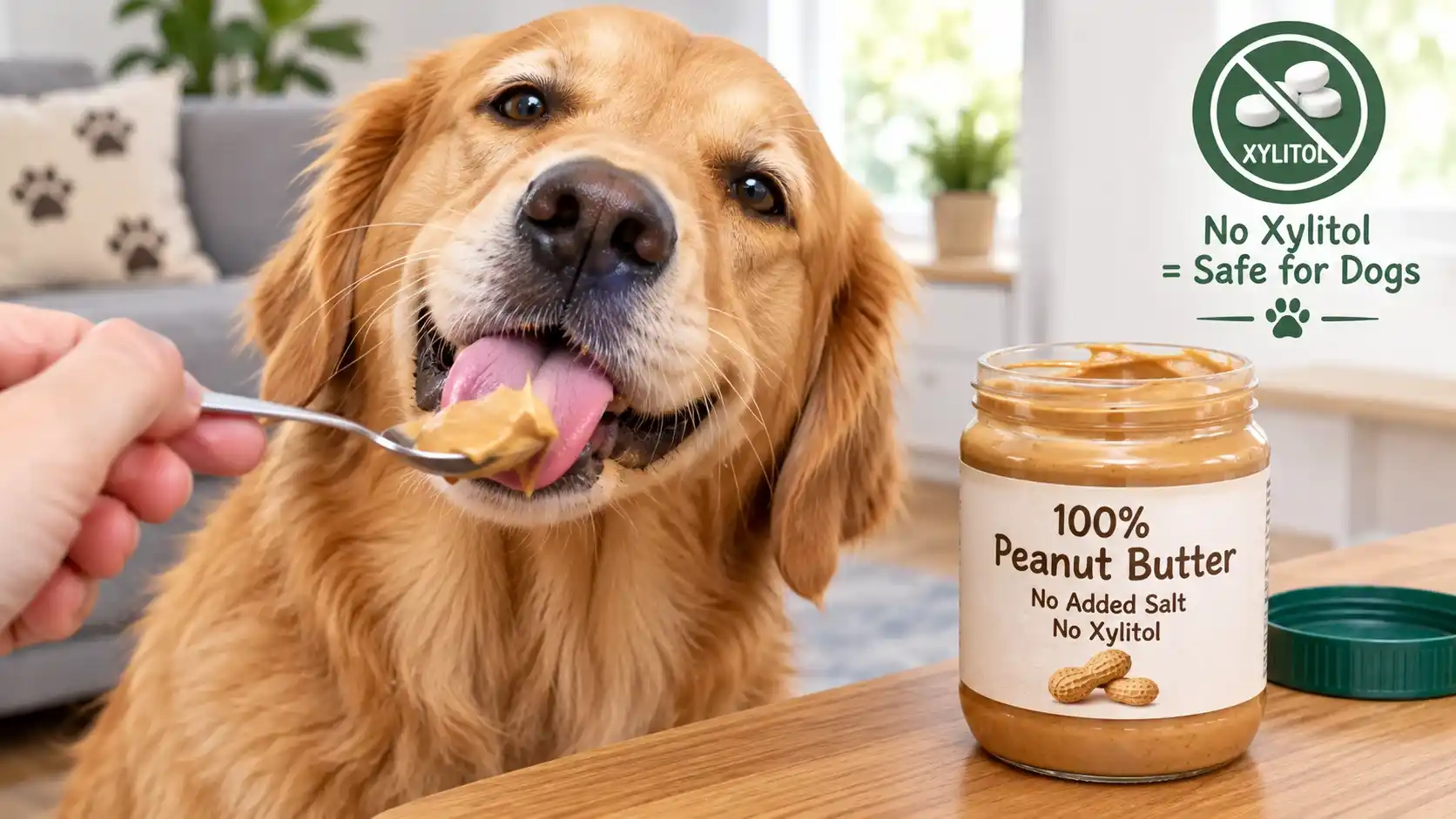
So, can dogs eat peanut butter? Yes, most dogs can, as long as the jar is free of xylitol and the portion stays small. That one ingredient is the difference between a happy lick and an emergency vet visit, so it is worth knowing before you hand over the spoon.
This guide covers what is safe, what is not, how much to give, and what to do if something goes wrong. It draws on advice from the American Kennel Club, Pet MD, and the FDA. Think of it as a calm, plain-spoken checklist you can use every time you open the jar.
Is Peanut Butter Safe for Dogs?
Plain peanut butter is safe for most dogs. Peanuts are not toxic to dogs, and a small spoonful offers protein, healthy fats, vitamins B and E, and niacin. The American Kennel Club says the best choices are unsalted peanut butter, dog-specific peanut butter, or a homemade version.
The word “plain” matters. Many jars on the shelf carry extra sugar, salt, oils, or sweeteners. Those add-ons are where the trouble starts.
Why Dogs Love It and What It Offers
Peanut butter smells strong, tastes rich, and feels creamy on the tongue. That makes it a great reward. Two tablespoons of natural peanut butter hold about 8 grams of protein, 16 grams of fat, and 2 grams of fiber, but remember those numbers are for a human serving. Your dog will get a fraction of that.
Here is where peanut butter earns its place in the treat drawer:
- A high-value reward for training sessions
- A tasty cover for pills and vitamins
- A way to keep a bored dog busy with a lick mat or stuffed toy
- A distraction during baths, nail trims, and grooming
It is still a treat, not a meal. The calories add up quickly, which we will get to below.
The Biggest Danger: Xylitol
Xylitol is an artificial sweetener found in sugar-free gum, breath mints, baked goods, toothpaste, chewable vitamins, and some peanut and nut butters. The FDA warns that it can be deadly for dogs.
Why Xylitol Is So Harmful
When a dog eats xylitol, it is absorbed fast and triggers a surge of insulin from the pancreas. Blood sugar then drops sharply. This can happen as soon as 10 to 60 minutes after eating it, and larger amounts can lead to liver failure. People do not react this way, which is why xylitol is considered safe for humans but not for dogs.
Signs of Xylitol Poisoning
Watch for these signs:
- Vomiting
- Low energy or weakness
- Staggering or poor coordination
- Collapse
- Seizures
Some symptoms can take 12 to 24 hours to appear, so never wait to see what happens. If you think your dog ate a product with xylitol, act right away.
What to Do If Your Dog Eats It
- Call your vet or the nearest emergency animal clinic immediately.
- If you cannot reach them, call a pet poison hotline. The Pet Poison Helpline number is 855-764-7661, and a fee applies.
- Grab the jar or wrapper so the vet can see the exact ingredients.
- Do not induce vomiting unless a veterinarian tells you to.
Early treatment matters. Dogs that get fast, proper care often recover well.
How to Choose the Safest Peanut Butter
Read the ingredient list every time, even for a brand you have bought before. Formulas can change without warning.
The safest jar lists peanuts only, or peanuts and a pinch of salt. Avoid any jar that includes:
- Xylitol, which may also appear as birch sugar or “sugar substitute”
- Chocolate or other flavors
- Added sugar or sweeteners
- A “sugar-free” label, since that often points to a sweetener that is not dog-friendly
Veterinary sources have named a few specialty brands that contain xylitol, including Go Nuts, Co., Nuts ‘N More, and P28. Popular grocery brands like Jif and Skippy typically do not use it. Still, check the label. That habit takes five seconds and removes the biggest risk.
How Much Peanut Butter Can a Dog Have?
Peanut butter is dense in calories. Two tablespoons hold roughly 180 to 200 calories, mostly from fat. That means one teaspoon is about 30 calories.
Vets suggest keeping all treats under 10 percent of your dog’s daily calories. A lightly active 20-pound dog needs around 325 to 400 calories a day, so a single teaspoon of peanut butter can use up a big part of that treat allowance.
PetMD gives these as a maximum guide:
- Small dogs: half a teaspoon, up to twice a day
- Medium and large dogs: one teaspoon, up to twice a day
Other sources give slightly different numbers, so treat these as upper limits, not goals. Many dogs do well with much less, and some days none at all. If you plan to give peanut butter regularly, ask your vet to match the amount to your dog’s weight and health.
Other Risks to Keep in Mind
Xylitol gets the headlines, but a few quieter issues matter too.
- Fat and pancreatitis. Too much rich food can strain the pancreas and lead to pancreatitis, a painful and serious condition.
- Weight gain. Extra calories turn into extra pounds, and obesity brings its own health problems.
- Salt. A pinch is fine, but a lot can cause dehydration, stomach trouble, and kidney problems. Dogs with heart conditions need extra care.
- Sugar. Regular sugar is not toxic, but it can lead to dental disease and weight gain over time.
- Allergies. Dogs can be allergic to peanuts. Offer a tiny taste first and watch for itching, vomiting, or diarrhea.
- Choking. A thick glob can be hard for tiny dogs to manage. Spread it thin or use a lick mat.
Can Puppies Have Peanut Butter?
Puppies can enjoy it too, but the portions need to be much smaller than an adult dog’s. Their stomachs are sensitive and their calorie needs are tight. Check with your vet first, especially if your puppy is under a few months old or on a special diet.
Dogs That Should Skip Peanut Butter
Peanut butter is not right for every dog. Skip it, or talk to your vet first, if your dog:
- Is overweight or on a calorie-controlled diet
- Has a history of pancreatitis
- Has a known peanut allergy
- Has a health condition that needs a special diet
There are plenty of lower-fat treats that work just as well, such as dog-friendly fruits and vegetables.
Smart Ways to Serve Peanut Butter
A little creativity goes a long way, and you can stretch a small amount across a long session.
- Spread a thin layer on a lick mat to calm an anxious dog
- Stuff a hollow toy and freeze it for a longer-lasting treat
- Wrap a pill in a small dab so it goes down easily
- Smear a bit on the wall during a bath so your dog stays busy
Keep the layer thin and the portion small, and count it toward the daily treat limit.
Can You Make Dog-Safe Peanut Butter at Home?
Yes, and it is the safest route because you control every ingredient. Blend unsalted, shelled peanuts in a food processor until smooth. That is the whole recipe. No sugar, no salt, no oil, no surprises. Store it in the fridge and serve small spoonfuls.
Quick Answers to Common Questions
Can dogs eat crunchy peanut butter? Yes, if it has no xylitol. Crunchy and creamy are equally safe in terms of ingredients. For very small dogs, creamy is easier to eat.
Can dogs have peanut butter and jelly? Plain peanut butter is the safer choice. Jelly adds sugar, and some jams contain other ingredients you do not want your dog eating.
Can dogs have chocolate peanut butter? No. Chocolate is harmful to dogs, so never share chocolate-flavored spreads.
Can dogs eat peanut butter every day? Small amounts can be fine, but it works best as an occasional treat. If you want it to be a daily habit, talk to your vet first.
more info: Can Dogs Eat Watermelon? Everything You Need to Know
Final Thoughts
So, is peanut butter okay for your dog? Yes, when you pick the right jar and keep the spoon small. Check for xylitol, skip the extras, and treat it like the high-value reward it is. A teaspoon here and there makes training easier, pill time smoother, and your dog very happy.
If you ever feel unsure, a quick call to your vet is always the right move. They know your dog’s health, weight, and needs better than any guide can.