If you’ve ever reached out to pet your dog and noticed their nose felt dry instead of the usual cool and damp, you’ve probably paused for a second. Why is my dog’s nose dry, you wonder. Is this normal, or should I be worried? It’s one of the most common questions dog owners search for, and the honest answer is that it depends. Most of the time, a dry nose is nothing to panic about. But sometimes it’s your dog’s way of telling you something is off. This guide walks you through both sides so you know exactly what to look for.
Why Dogs Usually Have Wet Noses in the First Place
Before getting into the dry nose part, it helps to understand why a wet nose is the default for most dogs. A dog’s nose stays moist for a few practical reasons.
First, moisture helps trap scent particles. Dogs rely heavily on smell to understand the world, and a damp nose surface holds onto odor molecules better than a dry one. This is part of why dogs constantly lick their noses throughout the day. They’re not just cleaning themselves. They’re actively keeping their sense of smell sharp.
Second, the nose plays a small role in temperature regulation. Dogs don’t sweat the way humans do. They cool down mostly through panting, but some moisture evaporation from the nose and paw pads contributes as well.
Third, tear ducts drain into the nasal area, which adds a bit of natural moisture throughout the day.
So a wet nose is the normal baseline. But that doesn’t mean a dry one is automatically abnormal.
Common and Harmless Reasons Your Dog’s Nose Is Dry
Let’s start with the reassuring part, because most dry noses fall into this category.
Your Dog Just Woke Up
Dogs don’t lick their noses while they sleep. Since regular licking is what keeps the nose moist, a long nap naturally leaves it dry. Give your dog about ten to fifteen minutes after waking up, and you’ll usually see the moisture return on its own as they start licking and moving around again.
The Weather Is Doing Its Thing
Just like your lips can chap in cold weather or your skin can feel tight in a heated room, a dog’s nose reacts to the environment too. Low humidity, whether from winter air or indoor heating, pulls moisture out of the skin, including the nose. Hot, dry, windy days can do the same thing in the opposite season.
If you notice your dog’s nose gets drier specifically during winter months or right after sitting near a space heater or heating vent, that’s almost always environmental and not a health concern.
Mild Dehydration From Activity
After a long walk, a game of fetch, or a hot afternoon outside, your dog’s nose might feel drier than usual. This is often simple, mild dehydration from exercise and heat, not a medical emergency. Offering fresh water and a cool place to rest usually solves it within an hour or two.
Sun Exposure
Dogs can get a bit of dryness from spending time in direct sunlight, especially dogs with lighter colored noses or thinner coats. This is mild and temporary in most cases, though prolonged sun exposure can lead to actual sunburn, which is a different issue covered below.
Breed and Individual Traits
Some dogs simply have naturally drier noses than others. Certain breeds are more prone to it due to their skin type or nose shape. If your dog has always had a slightly drier nose compared to other dogs you’ve owned, and they’re otherwise healthy, active, and eating normally, this is likely just their normal baseline.
Age
Older dogs tend to have drier noses more often. As dogs age, their skin, including the skin on their nose, produces less natural moisture. This is a gradual, normal part of getting older rather than a sign of illness.
Signs a Dry Nose Might Mean Something More
Now for the part that actually matters most. A dry nose on its own is rarely a problem. What matters is what else is going on alongside it. Here are the situations where you should pay closer attention.
Cracking, Bleeding, or Crusting
If your dog’s nose looks dry to the point of visible cracks, scabs, or bleeding, this goes beyond normal dryness. This kind of damage can point toward sunburn, an infection, or a skin condition that needs treatment. Left alone, cracked skin can also get infected, so it’s worth having a vet take a look.
Color Changes or Loss of Texture
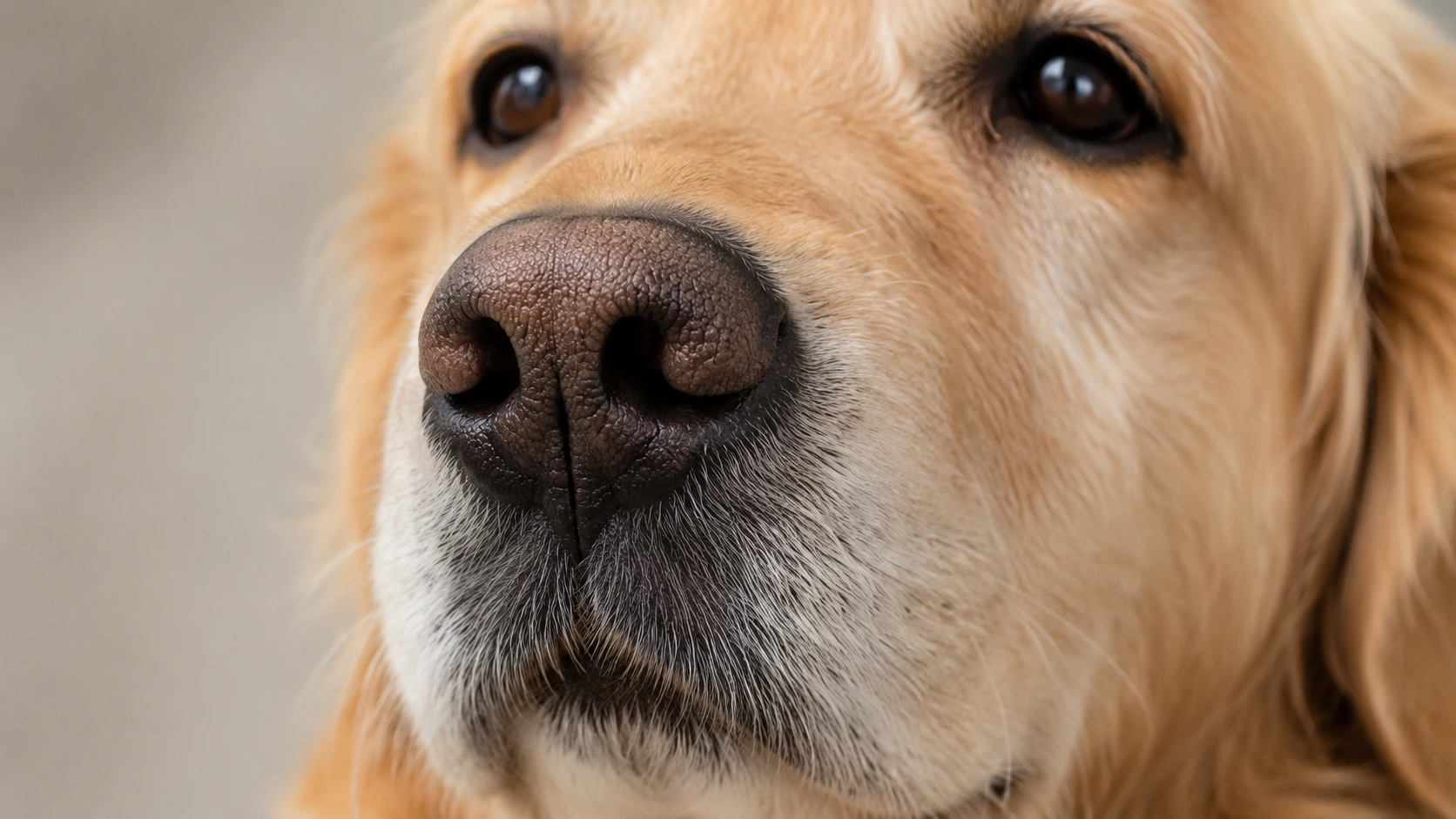
A healthy dog nose usually has a slightly bumpy, cobblestone-like texture. If you notice the nose becoming unusually smooth, losing its normal color, or developing patches that look pale or pink where it used to be black, this can be a sign of an autoimmune condition. Two conditions veterinarians commonly mention here are discoid lupus erythematosus and pemphigus, both of which affect the skin around the nose. These require a proper diagnosis, sometimes including a biopsy, so a vet visit is the right move.
Thick, Crusty Buildup
Sometimes a dog’s nose develops a hardened, crusty layer that looks almost like it’s overgrown. This can be a condition called nasal hyperkeratosis, where the nose produces excess keratin. It’s more common in certain breeds and in older dogs. It’s not usually dangerous, but it can be uncomfortable and sometimes needs a specific care routine that your vet can guide you through.
Discharge Along With Dryness
If you see thick discharge, unusual coloring, or any discharge that looks like more than clear moisture, this can point to an infection or respiratory issue. This is different from the everyday dryness caused by sleep or weather, and it’s worth getting checked out.
Other Symptoms Showing Up Too
This is the most important point in the entire article. A dry nose by itself, with a happy, active, eating and drinking normally dog, is almost never something to worry about. But a dry nose combined with other symptoms tells a different story. Watch for:
- Lethargy or low energy
- Loss of appetite
- Excessive thirst or, on the flip side, refusing water
- Vomiting or diarrhea
- Visible discomfort when touching the nose
- Behavior changes, like hiding or seeming withdrawn
If any of these show up alongside the dry nose, it’s time to call your vet rather than wait it out.
What About the Old Myth That a Wet Nose Means a Healthy Dog?
Many people grew up hearing that a wet nose means a dog is healthy and a dry nose means something is wrong. It’s a nice, simple rule, but it doesn’t hold up well in practice. Plenty of perfectly healthy dogs have dry noses at times, and on the flip side, a wet nose isn’t a guarantee of good health either. In fact, an unusually runny or wet nose can sometimes point to a respiratory infection.
Click Here: French Bulldog Health Problems
A much better way to check on your dog’s overall health is to look at their gums. Healthy gums are usually moist and a nice pink color. Dry or tacky gums can be a real sign of dehydration, and pale or unusually colored gums can point to other issues that need a vet’s attention. Your dog’s energy level, appetite, and general behavior tell you far more than the state of their nose ever could.
Simple Ways to Help a Dry Nose at Home
If your dog’s dry nose is mild and not accompanied by any warning signs, there are a few easy things you can do.
Keep fresh water available at all times, and encourage your dog to drink, especially after exercise or on hot days. Use a humidifier indoors during dry winter months if your home tends to get very dry from heating. Wipe your dog’s nose gently with a clean, damp cloth if it looks flaky or dry, which can offer some relief. Consider a vet approved nose balm made specifically for dogs if the dryness is persistent, since human lotions and lip balms are not safe for dogs to lick off. Limit long periods of direct sun exposure, especially for dogs with lighter noses, and talk to your vet about pet safe sunscreen if your dog spends a lot of time outdoors.
These small habits can make a noticeable difference over a week or two if the dryness is environmental.
When to Actually Call the Vet
To keep things simple, here’s when a vet visit makes sense:
- The nose is cracked, bleeding, or scabbed
- You notice color changes or loss of the normal bumpy texture
- There’s thick or unusual discharge
- The dryness has lasted more than a week or two with no improvement
- Your dog shows any other symptoms like low energy, appetite changes, or discomfort
If none of these apply and your dog is acting like their normal self, you likely have nothing to worry about.
The Bottom Line
A dry nose is one of those things that looks more alarming than it usually is. Sleep, weather, age, and mild dehydration explain the vast majority of cases, and they all resolve on their own with a little time or a few small adjustments at home. The real signal to watch for isn’t the dryness itself, but what comes with it. If your dog is eating well, playing, drinking water, and acting like themselves, a dry nose is just a dry nose. If something feels off beyond that, trust your instincts and give your vet a call. You know your dog better than any article ever could.