
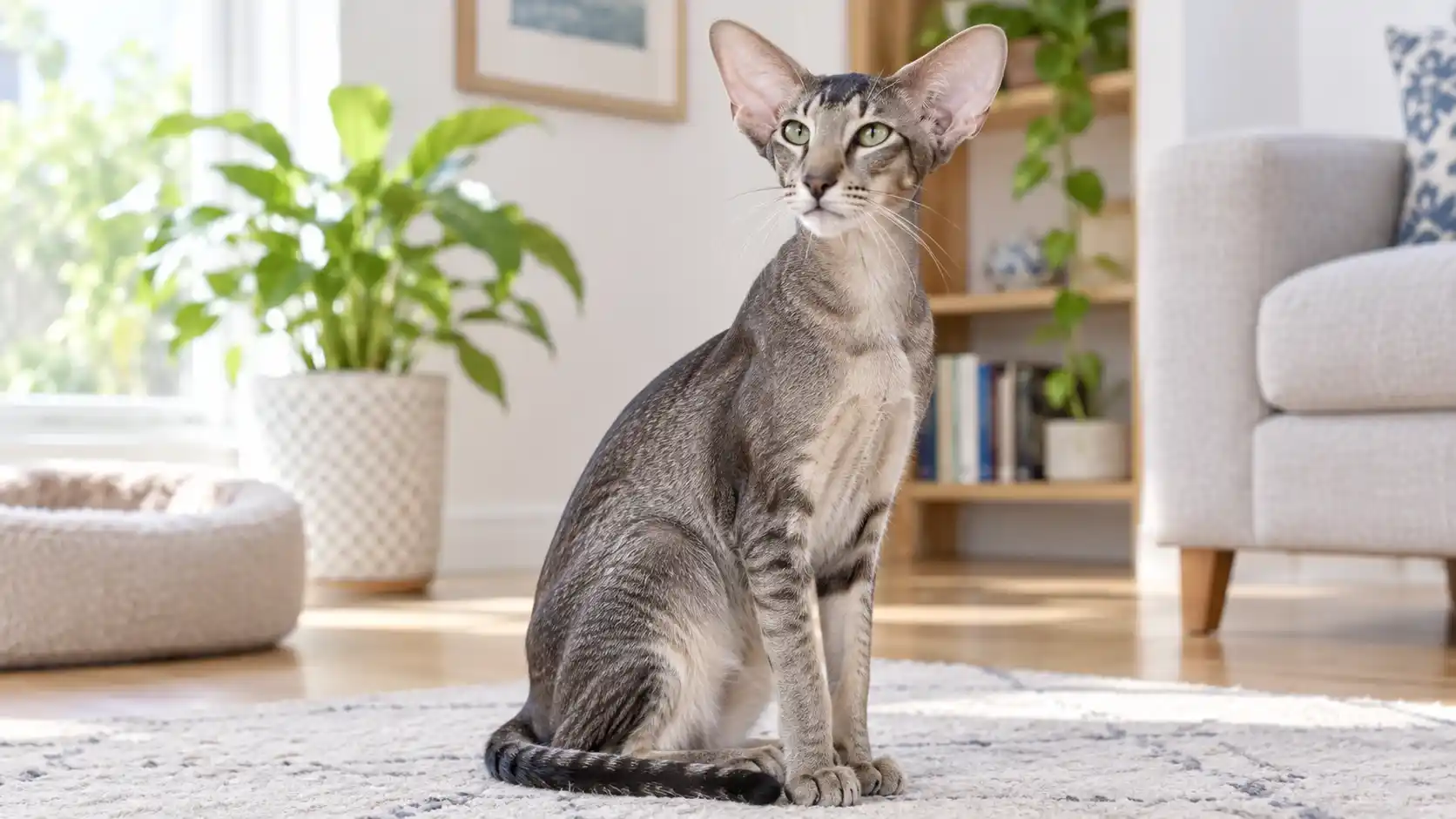
If you are researching oriental shorthair care, you have probably already fallen for those giant ears and that sleek, almost regal body. This breed is not your average lap cat. It is loud, opinionated, deeply affectionate, and often acts more like a small dog than a typical feline. Before you bring one home, it helps to understand what makes this breed tick, because an oriental shorthair that gets bored or ignored can turn destructive fast. This guide walks through everything from personality quirks to daily care, so you know exactly what you are signing up for.
What Is an Oriental Shorthair Cat?
The oriental shorthair is a close cousin of the Siamese, sharing the same long, tubular body, wedge shaped head, and large pointed ears. The main difference is coat color. While Siamese cats stick to a handful of pointed patterns, oriental shorthairs come in more than 300 color and pattern combinations, including solid white, chocolate, blue, cream, red, and tabby variations.
They typically weigh between 6 and 11 pounds, with males on the heavier end. Their coat is short, fine, and lies close to the body, which gives them that streamlined look. Life expectancy generally falls between 10 and 15 years when they are well cared for.
Oriental Shorthair Personality Traits
This is where the breed really stands out. Oriental shorthairs are not quiet background pets. They want to be involved in whatever you are doing, and they will let you know when they feel left out.
Highly Vocal
These cats talk. A lot. Much like their Siamese relatives, oriental shorthairs use a wide range of meows, chirps, and yowls to communicate. Some owners describe it as having full conversations with their cat. If you want a silent companion, this is probably not the breed for you.
Extremely Social
Oriental shorthairs bond closely with their people and often pick a favorite person to follow around the house. They do not do well being left alone for long stretches. Boredom and isolation can lead to anxiety, excessive vocalizing, or destructive behavior like scratching furniture or knocking things over just to get attention.
Smart and Curious
This breed is sharp. They learn how to open cabinet doors, figure out puzzle toys quickly, and can even be trained to walk on a leash or perform simple tricks. That intelligence is a double edged sword though, because a bored oriental shorthair will find its own entertainment, and you might not like what it chooses.
Athletic and Playful
Oriental shorthairs love to climb, jump, and perch in high spots. They have a lot of energy and need regular play sessions to stay balanced. A cat tree or wall shelves are almost a requirement with this breed, not just a nice extra.
Oriental Shorthair Care Basics
Good oriental shorthair care comes down to a few key areas: grooming, diet, exercise, and mental stimulation. None of it is overly complicated, but consistency matters.
Grooming Needs
The good news is that grooming is low maintenance. Their short coat sheds minimally and rarely mats. A weekly brush with a soft bristle brush or grooming glove is usually enough to remove loose hair and keep the coat shiny. Many oriental shorthairs actually enjoy the brushing routine and treat it as bonding time.
Beyond brushing, standard grooming tasks apply:
- Trim nails every two to three weeks to protect your furniture and prevent overgrowth
- Check ears weekly since their large ear shape can collect more dirt and wax
- Brush teeth a few times a week to reduce plaque buildup
- Wipe eyes gently if you notice any discharge, since their large eyes can be prone to irritation
Diet and Nutrition
Oriental shorthairs do not have unusual dietary requirements, but their high energy levels mean protein matters. Look for a cat food where real meat or fish is the first ingredient rather than fillers or by-products. A mix of wet and dry food can help with hydration, since cats in general do not always drink enough water on their own.
Because these cats are so active, obesity is less common than in more sedentary breeds, but it can still happen, especially as they age or if they are neutered. Watch portion sizes and avoid free feeding if your cat tends to overeat. Fresh water should always be available, and a water fountain can encourage more drinking since many cats prefer moving water.
Exercise and Enrichment
This is the part new owners often underestimate. An oriental shorthair without enough stimulation gets restless, and a restless oriental shorthair gets loud and sometimes destructive. Aim for at least two dedicated play sessions a day using wand toys, balls, or anything that mimics prey movement.
A few enrichment ideas that work well for this breed:
- Cat trees or vertical climbing shelves, since they love height
- Puzzle feeders to slow down eating and engage their brain
- Rotating toys weekly so nothing gets boring too fast
- A second cat or dog companion if your schedule keeps you away often, since they generally do well with other pets
Living Environment
Oriental shorthairs thrive in households where they get plenty of interaction. They are not the type of cat that is happy being an only pet left alone all day. If you work long hours, consider adopting two cats together, or make sure you have time set aside each evening for focused play and attention.
They also tend to be more sensitive to changes in routine or environment than some other breeds. Moving furniture around, introducing new pets, or sudden schedule changes can cause stress. A predictable routine goes a long way toward keeping them settled.
Common Health Considerations
Oriental shorthairs are generally a healthy breed with few breed specific issues, but there are a couple of things worth watching:
- Dental disease: Like many short haired breeds, they can be prone to plaque buildup, so regular dental care matters
- Eye issues: Their large, prominent eyes can be more susceptible to minor irritation or injury, so keep an eye out for excessive tearing or redness
- Kidney conditions: As with many cats related to the Siamese line, some oriental shorthairs can be predisposed to polycystic kidney disease, so routine vet checkups help catch issues early
- Respiratory sensitivity: Their narrow nasal passages, shared with the Siamese body type, can occasionally make them more prone to minor respiratory issues
Annual vet visits, along with basic bloodwork as they age, are the simplest way to stay ahead of any breed related concerns.
more info: Abyssinian Cat Care: A Complete Guide for First-Time Owners
Is an Oriental Shorthair Right for You?
If you want a cat that is affectionate, talkative, and genuinely wants to be part of your daily life, an oriental shorthair could be a great match. They are not a low involvement pet. They need attention, mental stimulation, and companionship to truly thrive. In return, you get a loyal, expressive, and endlessly entertaining companion who will follow you from room to room and let you know exactly what is on their mind.
Understanding oriental shorthair care before bringing one home makes the transition smoother for both of you. Keep up with grooming, feed a quality protein rich diet, give them plenty of playtime, and stay on top of vet visits. Do that, and you will likely end up with one of the most devoted cats you will ever own.