
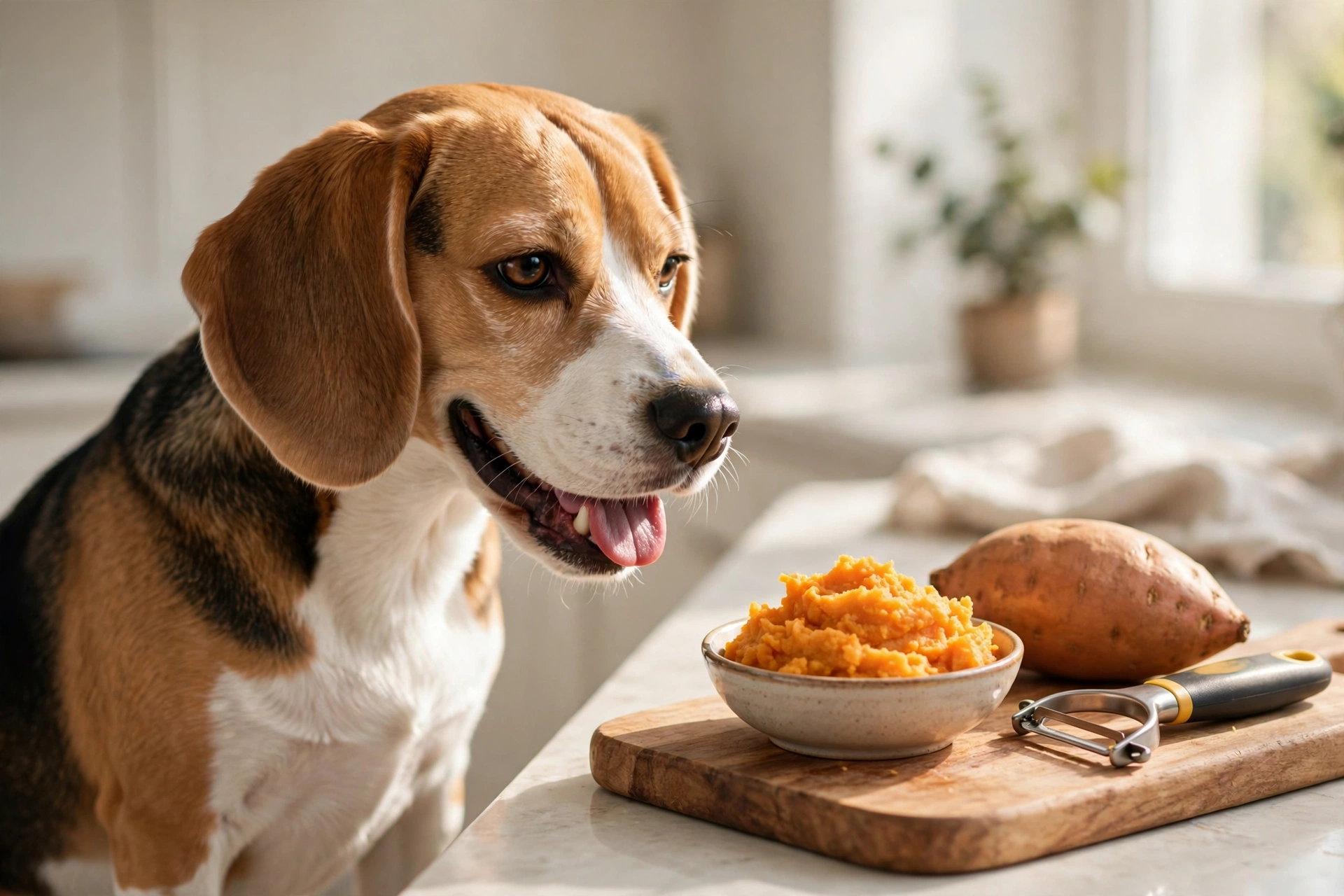
Quick answer: Yes, dogs can eat sweet potatoes when they are fully cooked, peeled, plain, and served in small amounts. Boiled, steamed, or baked sweet potato is a gentle, fiber rich treat for most healthy dogs. Raw sweet potato is the problem, along with the skin, fries, and sugary holiday dishes. Keep it plain, keep portions small, and it earns its place in the treat bowl.
Can Dogs Eat Sweet Potatoes Safely?
Yes, cooked and plain is the short version. Sweet potatoes are not toxic to dogs, and they show up in many commercial dog foods for good reason. They bring fiber, beta carotene, and vitamins without much fat.
So, can dogs eat sweet potatoes every day? That is where the answer changes. Sweet potato is a starchy, fairly calorie dense vegetable, so it works best as an occasional treat, not a daily side dish. This guide covers the safe ways to serve it, the forms to skip, and how much fits your dog’s size.
Why Sweet Potatoes Are Good for Dogs
- Fiber: Supports steady digestion and helps stools stay firm.
- Beta carotene (vitamin A): Supports vision, skin, coat, and immune health.
- Vitamin C and B6: Small amounts that support immune function and normal cell health.
- Potassium: Supports healthy muscles and nerves.
- Low in fat: A kinder treat choice than many shop bought biscuits.
Sweet potatoes are also different from white potatoes in one reassuring way. White potatoes belong to the nightshade family and contain solanine, which is toxic to dogs when raw. Sweet potatoes belong to the morning glory family and contain no solanine at all. It sits comfortably beside the fruit treats in our can dogs eat blueberries guide, though it is starchier and more filling than berries.
Cooked, Raw, and Every Form in Between
Not every form of sweet potato belongs in the bowl. The table below sorts them out.
| Form | Can your dog have it? | Why |
|---|---|---|
| Boiled, steamed, or baked, peeled and plain | Yes | Cooking softens the fibers and makes it easy to digest |
| Mashed plain, no butter or milk | Yes | Soft, easy to portion, gentle on stomachs |
| Raw, any size | No | Hard and dense, tough to chew and digest, choking and blockage risk |
| Skin, cooked or raw | Best avoided | Not toxic, but tough and fibrous, hard to digest |
| Fries, chips, and crisps | No | Salt, oil, and seasonings add risk with no benefit |
| Casserole with marshmallows or brown sugar | No | Added sugar, butter, and sometimes nutmeg, which is toxic to dogs in large amounts |
| Canned yams in syrup | No | Syrup means a heavy sugar load |
| Sugar free desserts and sweets | No, call a vet if eaten | Xylitol, a common sugar free sweetener, is extremely toxic to dogs |
Plain dehydrated sweet potato chews sold for dogs can be fine in moderation. Check the packet first: the ingredient list should read sweet potato and nothing else, and hard chews still need supervision.
How Much Sweet Potato Can a Dog Eat?
Treats of every kind, sweet potato included, should stay under 10 percent of your dog’s daily calories. That is the guideline veterinary nutrition services use, and it keeps treats from crowding out balanced dog food.
Sweet potato is more calorie dense than cucumber or berries, so the spoon stays small. The ranges below follow the general guidance published by PetMD, served two to three times a week at most.
| Dog size | Typical weight | Sweet potato per serving |
|---|---|---|
| Toy | Under 10 lbs | About 1 tablespoon, mashed |
| Small | 10 to 25 lbs | 1 to 2 tablespoons |
| Medium | 25 to 50 lbs | 2 to 3 tablespoons |
| Large | 50 to 90 lbs | 3 to 4 tablespoons |
| Extra large | Over 90 lbs | About 4 tablespoons |
Start with half a serving the first time. A new food deserves a trial run, and a small first portion tells you how your dog’s stomach feels about it before sweet potato becomes a regular treat.
How to Serve Sweet Potatoes to Your Dog (Step by Step)
- Pick a firm sweet potato. Skip any with soft spots, sprouts, or mould.
- Wash and peel it. Peeling removes the tough skin that is hardest to digest.
- Cut it into even pieces. Even pieces cook evenly, so no hard centre survives.
- Boil, steam, or bake until fully soft. A fork should slide through with no resistance. Undercooked pieces are the ones that cause trouble.
- Mash or dice it small. Mashed suits small dogs and seniors. Diced pieces suit bigger dogs who chew properly.
- Serve it plain and cooled. No butter, oil, salt, sugar, or seasonings. Let it cool to room temperature first.
The same peel, cook fully, and start small routine runs through our guides to can dogs eat cucumbers and can dogs eat strawberries, because safe feeding is mostly one careful routine repeated.
A Short Note on the Heart Disease Question
Some owners have heard that potatoes in dog food were linked to heart disease. Here is what actually happened, in plain terms. In 2018 the FDA began investigating reports of dilated cardiomyopathy in dogs eating certain diets, mostly grain free formulas with peas, lentils, or potatoes as main ingredients. In December 2022 the FDA announced it had not established any causal link and ended routine public updates on the investigation.
An occasional spoonful of plain cooked sweet potato as a treat is a very different thing from a diet built mainly on potatoes. If your dog has a heart condition, or eats a grain free diet, talk to your vet about the whole diet rather than worrying over one treat.
Risks and When Sweet Potato Is Not a Good Idea
- Raw pieces: Dense and hard, difficult to chew and digest, and a genuine choking and blockage risk, especially in large chunks.
- Too much at once: Large servings can cause gas, bloating, vomiting, or loose stools.
- Added ingredients: Butter, salt, sugar, marshmallows, and nutmeg turn a safe vegetable into an unsafe dish.
- Diabetic dogs: Sweet potato has a fairly high glycemic index, so dogs with diabetes should have it only in very small amounts and only with vet approval.
- Dogs with a history of calcium oxalate bladder or kidney stones: Sweet potatoes contain moderate levels of calcium oxalate, so these dogs should have them sparingly and with vet guidance.
- Overweight dogs: Sweet potato carries more calories than most dog safe vegetables. The 10 percent treat rule matters most for these dogs. For a lower calorie crunch instead, the routine in our can dogs eat cucumbers guide is the kinder daily option.
Warning Signs: When to See a Vet
Call your vet promptly, or an emergency clinic after hours, if you notice:
- Gagging, drooling, pawing at the mouth, or trouble breathing after eating raw or large pieces (possible choking, treat as an emergency)
- Your dog ate a sugar free sweet potato dessert (xylitol can drop blood sugar fast, so do not wait for symptoms)
- Repeated vomiting, straining, loss of appetite, or a swollen belly after eating sweet potato
- Signs of an allergic reaction, such as facial swelling, hives, or heavy itching
A little gas or one soft stool after a first serving usually settles on its own. Offer water, keep the next meal plain, and call your vet if things do not improve within 24 hours.
Common Mistakes Pet Parents Make
- Serving it raw. Raw sweet potato looks harmless and chews like a root vegetable. It is not a chew toy, and the stomach pays for it.
- Leaving the skin on. The skin is not toxic, but it is the toughest part to digest, and strips of it are easy to gulp.
- Sharing the holiday casserole. The marshmallow topped dish on the table is a dessert, not dog food, and nutmeg in large amounts is toxic to dogs.
- Treating it like a low calorie vegetable. Sweet potato is nutritious, but it is starchy and carries real calories. A heaped spoonful is not a free treat.
- Feeding it every day. Daily sweet potato crowds out balanced food and adds up quietly, especially for small or less active dogs.
- Skipping the cool down. Fresh from the oven, mashed sweet potato holds heat in the middle. Always test it first.
FAQs
Can puppies eat sweet potatoes?
Yes, in tiny amounts. Offer about half a tablespoon of plain, fully cooked, mashed sweet potato once your puppy is eating solids well, and watch the stomach’s verdict before offering more. Never offer raw pieces to a puppy.
Can dogs eat sweet potato fries?
No, not the way humans eat them. Fries bring salt, oil, and often seasonings, and the pieces can still be firm inside. Plain baked wedges with no salt or oil are a different thing, but the plain boiled or steamed version is simpler and safer.
Can dogs eat sweet potato skin?
They should not. The skin is not toxic, but it is fibrous and hard to digest, and a strip of tough skin is harder for a gulper to chew properly. Peel before cooking and the question disappears.
How often can dogs eat sweet potatoes?
Two to three times a week at most, inside the 10 percent treat rule. Sweet potato is a sometimes food, not a daily staple, and rotating it with lower calorie treats keeps the diet balanced.
Can diabetic dogs eat sweet potatoes?
Only with your vet’s guidance, and most will say very rarely or never. Sweet potato has a fairly high glycemic index, and diabetic diets depend on consistency. Lower sugar treats serve these dogs far better.
The Bottom Line
Cooked, peeled, plain, and small: that is the whole recipe for sharing sweet potatoes with your dog. They are one of the most nutritious treats in the kitchen, and one of the easiest to get wrong by serving raw or dressed up.
Keep it plain and occasional, and sweet potato becomes a warm, gentle treat your dog can genuinely enjoy.