
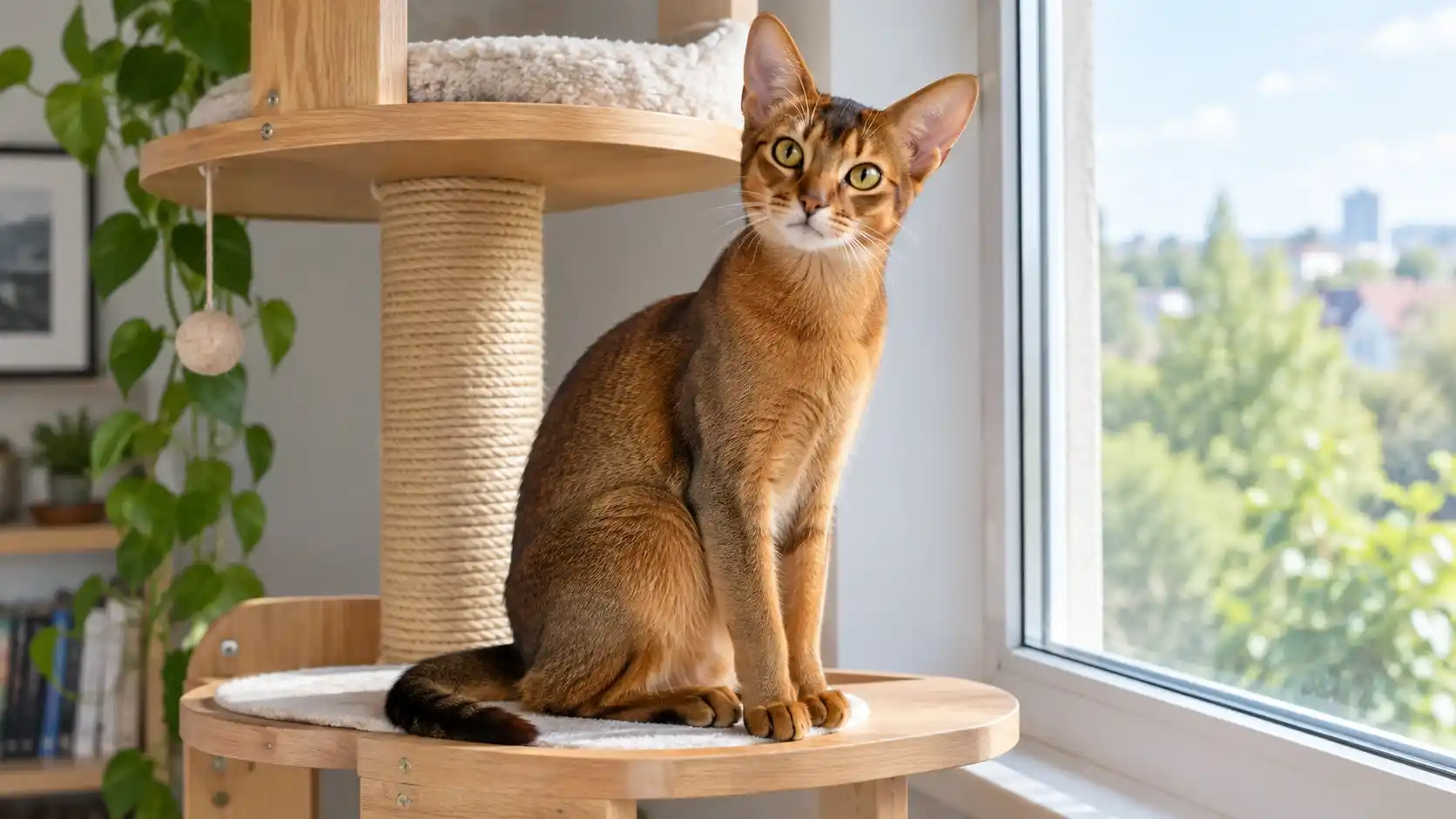
Abyssinian cat care is simpler than many people expect, but it is not the same as looking after an average house cat. The Aby is fast, curious, and always into something. If this is your first one, you need a plan for play, food, and health checks before your kitten comes home. This guide covers all of that in plain terms, so you can start with confidence.
What Makes the Abyssinian Different
The Abyssinian is a medium-sized cat with a lean, muscular body and a short ticked coat. Each hair carries several bands of color, which gives the coat a warm, glowing look. Adults usually weigh between 6 and 12 pounds.
The name points to Ethiopia, but the Cat Fanciers’ Association says the name only reflects where the first show cats in England were imported from, and genetic research places the breed’s roots along the Indian Ocean coast and in Southeast Asia. With good care, many Abys live 12 to 15 years, and some reach their late teens. cfavetlens
Abyssinian Personality: What to Expect at Home
The CFA sums up the breed in one word: busy. Abys are smart, athletic, and nosy. They climb everything, open cabinets, and follow you from room to room. They bond closely with their people, but they rarely stay in a lap for long. cfacfa
They also dislike being alone all day. If you work long hours, plan for a second pet or a solid enrichment routine.
Setting Up Your Home
A little prep saves you a lot of stress later. Here is what to do before day one:
- Add vertical space. A tall cat tree, wall shelves, and a window perch give your Aby places to climb and watch.
- Check your windows. Make sure screens fit tightly, because Abys jump high and fast.
- Secure low cabinets and hide loose cords.
- Set up a quiet bed or covered box for rest time.
- Place the litter box away from noisy appliances.
Keep that litter box very clean. Abyssinians rank among the most fastidious cats, and they will not quietly tolerate a dirty box. Scoop at least once a day, and use one box per cat plus one extra when you can. catlinkus
How to Feed an Abyssinian
Good food matters more for an active breed. Look for a diet where a named animal protein, such as chicken, turkey, or salmon, is the first ingredient, and skip foods packed with corn or wheat fillers. Choose a complete and balanced food made for your cat’s life stage. mrpetlover
Wet food deserves a big place in the bowl. The moisture in wet food supports kidney filtration, and a running water fountain helps your cat drink more. This matters because kidney disease is a known risk in the breed, which we cover below. catlinkus
A few feeding habits help:
- Feed adults two or three measured meals a day. Kittens need more frequent meals.
- Skip free feeding. Abyssinians can gain weight when free-fed, so weigh your cat monthly and adjust portions. mrpetlover
- Ask your vet before adding any supplement.
- Keep fresh water in more than one spot.
Grooming Your Abyssinian
Grooming is the easy part. The short, dense coat needs only a weekly brushing with a soft brush to remove loose hair and spread natural oils. Baths are rarely needed. Many Abys enjoy brushing as bonding time. snuffalo
Add these quick checks to your routine:
- Trim nails every two to four weeks.
- Look inside the ears weekly. Redness, odor, or debris can signal an infection or mites.
- Brush teeth a few times a week with cat-safe toothpaste. Start early so your kitten gets used to it.
Keep in mind that Abys shed, and they are not hypoallergenic. If someone in your home has cat allergies, spend time with the breed first.
Play, Exercise, and Mental Stimulation
A bored Aby finds its own fun, and you may not like the results. Give your cat at least two or three play sessions a day, each lasting 10 to 15 minutes. Wand toys work well because they copy hunting. Puzzle feeders and treat balls make meals more interesting.
Abys learn fast, so short training sessions work well. Many can learn their name, sit, or fetch with a clicker and small treats. Rotate toys every week so nothing gets stale.
Common Abyssinian Health Issues
Most Abys are healthy, but the breed carries a few inherited risks. This should not scare you off. It should make you a smarter buyer and owner.
- Pyruvate kinase (PK) deficiency is an inherited blood disorder. It shortens the life of red blood cells and can cause anemia, severe tiredness, weakness, weight loss, and jaundice. Severity varies, and some affected cats show no signs at all. A DNA test can tell you if a cat is normal, a carrier, or affected. nihnih
- Progressive retinal atrophy (PRA) is an inherited eye disease that slowly damages sight. DNA tests exist for the forms seen in the breed.
- Renal amyloidosis is a kidney disease caused by abnormal protein deposits. Deposits first appear between 9 and 24 months of age, and affected cats are usually diagnosed between 1 and 5 years old. Signs include a poor coat, weight loss, more drinking and urinating, low energy, and poor appetite. Research shows it is not a simple single-gene trait, so there is no easy DNA test yet. Selected Diseases of the Feline Kidney – WSAVA 2001 – VIN +2
- Dental disease and gingivitis are common, so home tooth care pays off. Patellar luxation, where the kneecap slips out of place, also shows up in the breed. snuffalo
Call your vet if you notice any of these:
- More drinking or urinating than usual
- Weight loss with a normal appetite
- Pale or yellow gums
- Low energy or hiding
- A dull, thinning coat
- Bad breath or red gums
- Limping or skipping steps
Vet Care for a New Abyssinian
Book a first exam within a few days of bringing your kitten home. Your vet will set up vaccines, parasite control, and spay or neuter timing. Ask about a microchip too.
After that, plan yearly checkups. Seniors do better with visits twice a year. Ask your vet about routine bloodwork and urine tests that include kidney values, especially as your cat reaches the age of 3 and beyond. Catching a change early gives you more options. clawmate
Choosing a Kitten and Planning Your Budget
Choose a breeder who health tests. Ask for PK and PRA results on both parents, meet the mother, and see how the kittens live. A good breeder answers questions openly and lets you ask twice. Rescue groups and breed-specific adoption networks are worth checking too, since adult Abys sometimes need new homes.
Price varies by region and bloodline. A kitten often costs somewhere between $750 and $1,500, and some listings reach $2,000. Then budget for food, litter, toys, vet visits, and pet insurance if you want it. lefelincats
Is an Abyssinian Right for You?
An Aby fits well if you want a cat that plays, climbs, and follows you around. It fits less well if you want a quiet lap cat or spend most days away from home.
You will likely enjoy this breed if you:
- Enjoy daily play and interaction
- Can give your cat tall spaces to climb
- Want low-effort grooming
- Are ready for regular vet checks
Quick Answers to Common Questions
Are Abyssinians good for first-time owners? Yes, if you can meet their need for play and company. Their care basics are easy. Their energy is the real job.
Are Abyssinians hypoallergenic? No. They will likely trigger allergies. adoptapet
How long do Abyssinians live? Many live 12 to 15 years. Good food, weight control, and regular vet care all help.
more info: Savannah Cat Care: A Beginner’s Guide to Owning One
Final Thoughts
Abyssinian cat care comes down to four things: a clean home with places to climb, high-quality food with plenty of moisture, daily play, and regular vet visits. Get those right, and you will have a smart, loyal companion for many years. Choose your kitten carefully, ask about genetic testing, and watch for early signs of kidney or blood problems. A little attention now goes a long way later.