
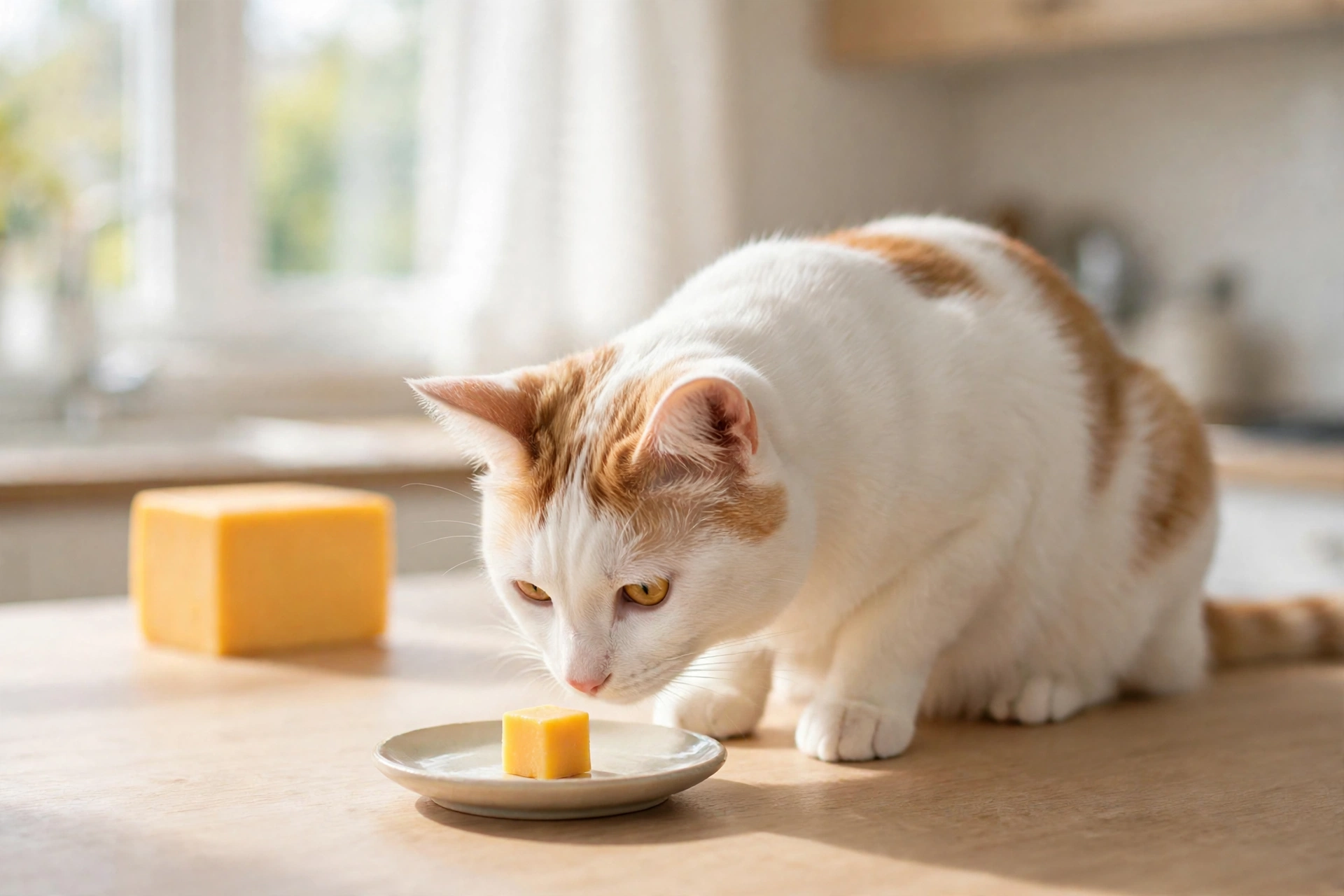
Quick answer: Yes, cats can eat cheese in tiny amounts as an occasional treat, but most adult cats digest lactose poorly, so cheese is a sometime food, not a healthy habit. Hard cheeses like cheddar are the gentlest choice because aging removes much of the lactose. Offer a pea sized piece, watch the stomach’s answer, and skip blue cheese and anything flavoured with onion or garlic entirely.
Can Cats Eat Cheese Safely?
Yes, with portion and type doing all the work. Cheese is not toxic to cats, and many cats adore it. The catch is digestion: kittens produce the enzyme that handles milk sugar, and most cats lose it as they grow up. Adult cats and lactose are uneasy partners.
So, can cats eat cheese the way cartoons suggest? A nibble, yes. A slice, no. This guide explains the lactose problem, ranks the common cheeses honestly, and covers the pill trick that makes cheese genuinely useful in a cat home.
Why Cats Like Cheese (Even When It Disagrees With Them)
- Fat and protein: Cheese delivers the two things a carnivore’s nose is built to chase. The attraction is real, even when the digestion is not.
- Salt and savour: A salty, savoury smell reads as “meat adjacent” to a cat, which is why fridge raids target the cheese drawer.
- Calcium and vitamin A: Present, but in a form cats are better off getting from their actual food.
- The pill pocket trick: A small softened piece of cheese can wrap a tablet better than almost anything in the kitchen, which alone earns cheese a place in a cat owner’s toolkit.
Liking is not the same as thriving. Our guide to can cats drink milk covers the same lactose story from the liquid side, and the pattern is identical: enthusiasm first, consequences an hour later.
Which Cheeses Are Safer for Cats?
| Cheese | Lactose level | Verdict for cats |
|---|---|---|
| Hard aged cheeses (cheddar, parmesan, Swiss) | Low, much is removed in aging | Best choice, pea sized piece occasionally |
| Cottage cheese | Moderate, but often tolerated in tiny amounts | A teaspoon occasionally is usually fine |
| Mozzarella and string cheese | Moderate | Tiny piece occasionally |
| Soft cheeses (brie, cream cheese) | Higher, and richer in fat | Rare tiny taste at most |
| Blue cheeses (stilton, gorgonzola) | Varies, plus mold cultures | Never. Avoid entirely |
| Flavoured cheeses (garlic, herb, chive, pepper blends) | Varies, plus toxic extras | Never. Onion and garlic family ingredients are dangerous for cats |
How Much Cheese Can a Cat Eat?
Treats should stay under 10 percent of a cat’s daily calories, and cheese is calorie dense, so the honest serving is small: a pea sized cube of hard cheese, or a teaspoon of cottage cheese, once or twice a week at most.
| Cat | Cheese per serving | How often |
|---|---|---|
| Kitten | None as a habit, a tiny taste at most | Rarely. Kitten calories belong to growth food |
| Healthy adult cat | One pea sized cube of hard cheese, or 1 teaspoon of cottage cheese | Once or twice a week at most |
| Senior cat | A tiny piece, only if the stomach has always tolerated dairy | Occasionally |
| Overweight cat or known lactose sensitive cat | None | Skip it. The calories and the stomach both say no |
First time? One tiny piece, then wait a day. Diarrhea, gas, or vomiting means that cat and cheese are finished, and that answer is final no matter how hopefully the cat stares at the fridge.
How to Serve Cheese to Your Cat (Step by Step)
- Choose hard and plain. Aged cheddar is the default. Read the label: no garlic, onion, chive, herbs, or spice blends.
- Cut it truly small. Pea sized is not a figure of speech. A cube a cat can swallow without chewing a brick is about right.
- Serve it at room temperature. Cold cheese from the fridge carries less smell. A few minutes out makes it far more interesting and easier to wrap around a pill.
- Use it with purpose. Cheese earns its keep as a rare treat or a medication helper, the two jobs where its strong appeal is worth the digestive risk.
- Watch the next 24 hours. The stomach always files its report, usually in the litter box.
- Keep the fridge closed. Cats who learn cheese lives at nose height become cheese thieves, and a stolen chunk is a far bigger dose than a served one.
For regular treating, the meat based routine in our can cats eat chicken guide and the honest limits in our can cats eat tuna guide will serve a cat far better day to day.
Risks and When Cheese Is Not a Good Idea
- Lactose intolerance: Most adult cats cannot digest milk sugar well. The usual bill is gas, bloating, soft stool, or vomiting within hours.
- Fat and calories: Cheese is rich. Regular servings quietly fatten a cat whose calorie budget is only a couple of hundred a day.
- Salt: Many cheeses are salty, and salty extras add up in a small body.
- Blue cheese: The molds that ripen blue cheeses can produce compounds cats handle badly. No blue cheese, in any amount.
- Flavoured varieties: Garlic, onion, and chive cheeses contain ingredients from a family that damages cat red blood cells. The ASPCA guide to people foods covers why the onion family is dangerous.
Warning Signs: When to See a Vet
Call your vet promptly, or an emergency clinic after hours, if you notice:
- Repeated vomiting or diarrhea lasting more than a day after eating cheese
- Weakness, pale gums, or rapid breathing after your cat ate garlic, onion, or chive flavoured cheese (possible red blood cell damage, treat as urgent)
- Any illness after your cat ate blue cheese, especially tremors or unusual agitation
- A stolen large amount of any cheese followed by bloating, straining, or appetite loss
One soft stool after a first taste is information, not an emergency. Note it, stop the cheese, and mention it at the next vet visit.
Common Mistakes Pet Parents Make
- Sizing for a cartoon mouse. The piece in your head is probably three times the piece a cat’s stomach wants.
- Assuming kitten rules last. Kittens digest milk. Adult cats mostly do not. Last year’s tolerance proves nothing.
- Reaching for the flavoured block. The garlic and herb cheddar is the one to keep behind a closed door and a firm no.
- Making cheese a daily treat. Cheese daily is calories daily and lactose daily. Twice a week, tiny, is the ceiling.
- Ignoring the litter box report. The stomach votes after every serving. Read the results before serving again.
FAQs
Can kittens eat cheese?
A tiny taste will not harm a weaned kitten, but kittens should get their calories from kitten food built for growth. Cheese is a poor use of a kitten’s small stomach.
Can cats eat cheddar cheese?
Yes, cheddar is one of the better choices. It is hard and aged, so much of its lactose is gone. A pea sized piece once or twice a week suits most healthy adult cats.
Can cats eat cottage cheese?
Usually, in small amounts. Many cats tolerate a teaspoon of plain cottage cheese better than richer cheeses. Start with half a teaspoon and read the litter box verdict.
Why does my cat go crazy for cheese if it upsets her stomach?
Because a cat’s nose votes for fat and protein, and the stomach’s objection arrives later. Attraction says nothing about digestion, which is why the portion decision belongs to you.
Can cheese help give my cat a pill?
Yes, it is one of the best tools for it. Soften a small piece, wrap the tablet fully, and offer it as a treat. Check with your vet first, because a few medicines should not be given with dairy.
The Bottom Line
Cheese for cats is a garnish, not a food group: hard, plain, pea sized, and rare. Chosen that way, it is a safe little pleasure and a first class pill delivery system.
Let the carton sized portions live in cartoons, and cheese stays exactly what it should be in a cat’s life, a tiny event.