
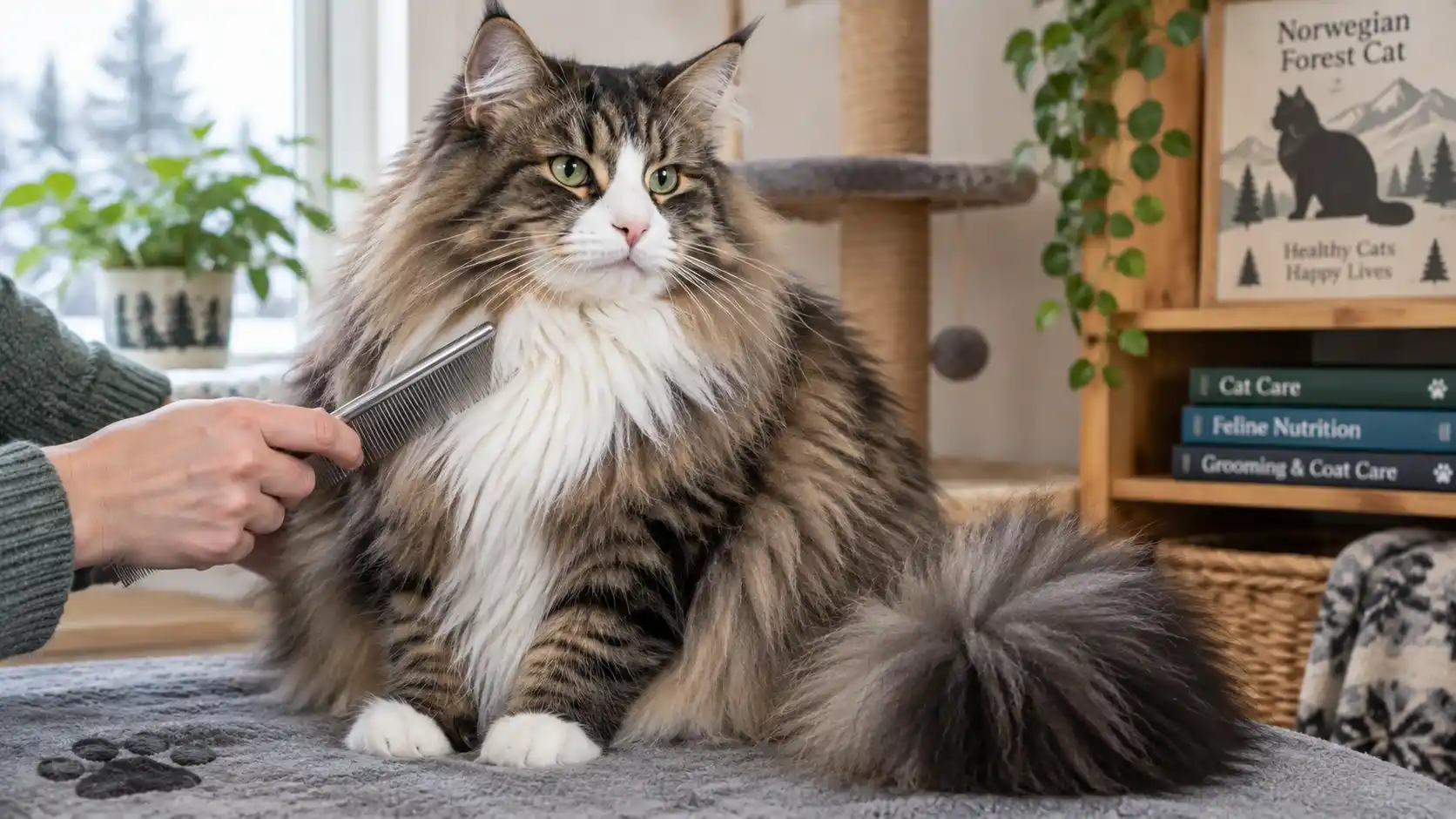
If you share your home with one of these gentle giants, you already know that norwegian forest cat care is a little different from caring for your average house cat. These cats carry a thick, weatherproof double coat built for Scandinavian winters, and that coat needs a routine that actually works, not just a quick brush once a month. Get the grooming and health basics right, and your Wegie will stay comfortable, mat free, and healthy for years.
This guide walks through everything you need, from brushing schedules to the health issues this breed is prone to, so you are not guessing your way through it.
Understanding the Norwegian Forest Cat’s Coat
Before you can groom this breed properly, it helps to understand what you are working with. Norwegian Forest cats have a double coat made of two very different layers. The outer layer is long, glossy, and water resistant, which is why water tends to bead right off it. Underneath sits a dense, woolly undercoat that traps warmth close to the skin.
The coat is not the same length all over. It is shorter across the shoulders and much longer around the neck ruff, chest, britches on the back legs, and the big bushy tail. That uneven length is exactly why mats tend to form in specific spots rather than all over the body.
The good news is that this coat is more forgiving than a Persian’s. The glossy guard hairs help stop tangles from forming as easily. Still, that thick undercoat needs regular attention, especially when the seasons change.
How Often Should You Groom a Norwegian Forest Cat
For most of the year, a thorough brushing once or twice a week is enough to keep things under control. During spring and fall, when the undercoat sheds heavily, you will want to bump that up to three or four times a week, sometimes daily if the shedding is intense.
Kittens benefit from getting used to brushing early. A cat that learns grooming is a calm, normal part of life will sit still for it as an adult, which makes the whole process faster for both of you.
Best Tools for Grooming a Wegie
Not every brush works on this coat. A soft bristle brush made for short haired cats will barely touch the undercoat, so it is worth investing in the right tools from the start.
- A wide toothed steel comb for working through the ruff, britches, and tail
- An undercoat rake to pull out loose fur during shedding season
- A slicker brush to smooth the top coat after combing
- Round tipped scissors for carefully trimming any small mats
Skip the standard bristle brush for this breed. It looks like it is doing something, but it mostly just skims the surface.
A Simple Step by Step Brushing Routine
- Start at the head and neck, using the steel comb in short, gentle strokes.
- Move down to the shoulders and back, checking for any early tangles.
- Spend extra time on the ruff, chest, and britches, since these areas mat first.
- Use the undercoat rake through the body to lift out loose fur, especially in spring and fall.
- Finish with the slicker brush to smooth everything down and bring out the natural shine.
- Comb through the tail last, working from the base outward with light pressure.
Go slowly and never pull hard on a knot. If you hit a stubborn mat, hold the fur close to the skin so you are not tugging on the skin itself, then work it loose with your fingers before combing through it.
Bathing Tips for Norwegian Forest Cats
Because their coat is naturally water resistant, most Norwegian Forest cats do not need frequent baths. Regular brushing removes most of the dirt and oil buildup on its own. That said, an occasional bath, maybe every couple of months or when your cat gets into something messy, is perfectly fine.
Use a cat specific shampoo, since human shampoo can strip the natural oils that make this coat water resistant in the first place. Rinse thoroughly, since leftover soap can irritate the skin under all that fur, and dry your cat completely before letting them wander off, particularly in colder months.
Nail Trimming and Ear Care
Grooming a Norwegian Forest cat is not only about the coat. Trim nails roughly every three to four weeks, using a proper cat nail clipper and trimming just the tip to avoid the quick.
Ears deserve a quick check weekly. Look for redness, odor, or dark buildup, which can signal an infection or mites. A cotton ball with a vet approved ear cleaner is usually all you need for routine maintenance. Never insert anything deep into the ear canal.
Dealing with Shedding Season
Spring is when things get intense. The undercoat that kept your cat warm all winter starts coming out in clumps, and daily brushing during this period genuinely makes a difference, both for your cat’s comfort and for how much fur ends up on your furniture.
An undercoat rake is your best friend here. It reaches past the top coat and pulls loose fur out without damaging the healthy hair around it. Some owners also find that a brief daily session, even just five minutes, keeps things far more manageable than one long weekly battle with mats.
Diet and Nutrition for a Healthy Coat
Coat health starts from the inside. A high quality diet with real animal protein supports strong hair growth and skin condition. Look for food with adequate fat content, since healthy fats contribute directly to that glossy outer coat.
Fresh water should always be available, and because this breed can be prone to weight gain if overfed, portion control matters more than it might for a smaller cat. A lean, active Wegie tends to have fewer joint and heart related issues down the road.
Health Issues to Watch For
Part of good norwegian forest cat care means knowing what this breed is genetically prone to, so you can catch problems early.
- Hypertrophic cardiomyopathy, a heart condition where the muscle wall thickens and reduces the heart’s pumping efficiency. Many cats show no obvious signs early on, which is why regular vet checkups matter.
- Hip dysplasia, more common in larger breeds like this one, where the hip joint does not form correctly. Watch for stiffness, reluctance to jump, or a change in gait.
- Glycogen storage disease, a rare inherited condition affecting how the body processes glycogen. It is serious, but reputable breeders now screen for it.
None of this means your cat is destined for health problems. It simply means annual vet visits, and sooner if you notice unusual lethargy, breathing changes, or mobility issues, are worth prioritizing.
Exercise and Mental Stimulation
Norwegian Forest cats are natural climbers, built for scaling trees back in their homeland. A tall cat tree or wall shelves give them an outlet for that instinct and help keep muscles and joints in good shape, which also supports healthy hips over time.
Interactive toys and short daily play sessions keep this intelligent breed mentally engaged too. A bored Wegie is more likely to become overweight, which then feeds back into joint and heart strain.
Bringing It All Together
Caring for a Norwegian Forest cat really comes down to consistency. A steel comb, a regular brushing schedule, decent nutrition, and yearly vet visits cover most of what this breed needs to thrive. None of it is complicated, it just needs to happen regularly, especially through shedding season. Keep at it, and you will have a calm, healthy, strikingly fluffy companion for well over a decade.