
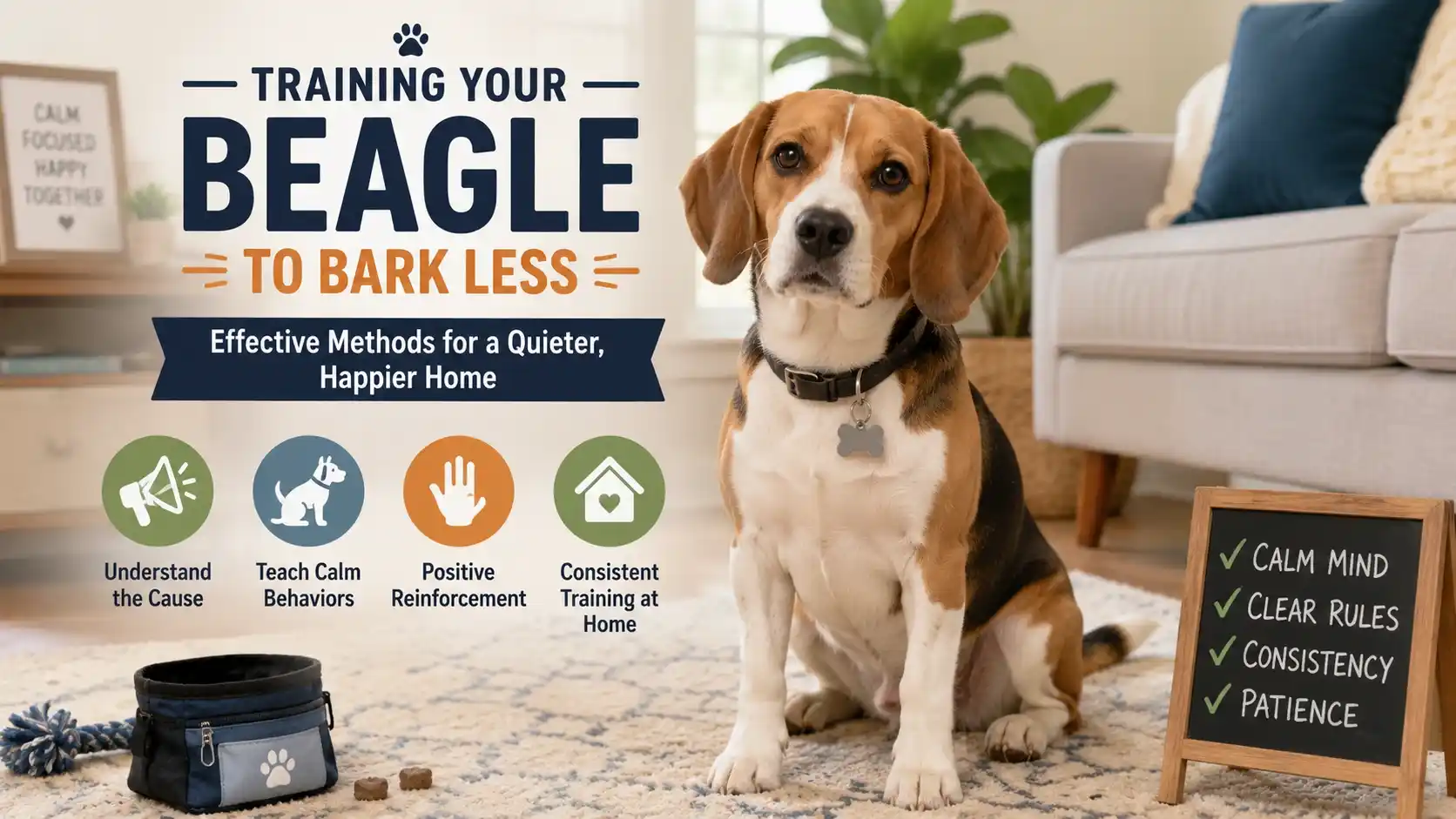
If you own a beagle, you already know these dogs love to use their voice. These beagle training tips will help you understand why your dog barks so much and, more importantly, how to bring that noise level down without breaking your bond with your pup. Beagles were bred as scent hounds that hunted in packs, and barking was actually part of the job. That instinct did not disappear just because your beagle now naps on the couch instead of chasing rabbits through a field. The good news is that excessive barking is very trainable once you understand what is driving it.
Why Beagles Bark So Much in the First Place
Before jumping into training, it helps to know why this breed is naturally louder than most. Beagles were originally bred to track scent in packs and alert hunters with a distinct baying sound whenever they picked up a trail. That instinct is still baked into their DNA today.
A few common reasons beagles bark excessively include:
- Boredom or lack of mental stimulation
- Excitement, especially when they see a leash or hear the door
- Alerting you to strangers, animals, or unfamiliar sounds
- Separation anxiety when left alone
- Seeking attention or a reward
- Fear or feeling threatened by something nearby
Once you figure out which category your beagle falls into, training becomes much easier because you are addressing the actual cause instead of just reacting to the noise.
Identify the Type of Barking You Are Dealing With
Not all barking is the same, and treating every bark the same way rarely works. Dogs generally bark for one of four reasons: alarm, request, fear, or boredom. Take a few days to simply observe your beagle without immediately correcting them. Notice when the barking happens, what triggers it, and how long it lasts.
For example, if your beagle barks the moment you sit down to eat, that is likely request barking. If your beagle barks the second a car pulls into the driveway, that is alarm barking. Knowing the difference changes how you respond, so this step is worth the extra patience.
Teach a Reliable Quiet Command
One of the most effective beagle training tips is teaching a solid quiet cue. This gives your dog a clear, consistent way to understand what you want instead of just reacting to your frustration.
Here is a simple way to start:
- Let your beagle bark a few times at a normal trigger
- Once they pause to breathe, calmly say the word quiet
- The instant they stop barking, reward them with a treat and praise
- Repeat this pattern consistently, several times a day
- Gradually increase the amount of silence required before the reward comes
Consistency matters more than speed here. Some beagles pick this up in a couple of weeks, while others need a month or more. Either way, the command becomes far more reliable if every person in the household uses the same word and the same approach.
Use Positive Reinforcement Instead of Punishment
Yelling at a barking beagle almost always backfires. From your dog’s perspective, you are barking right along with them, which can actually increase the excitement level instead of calming things down.
Positive reinforcement works better because it rewards the behavior you actually want. Every time your beagle stays calm and quiet in a situation that would normally trigger barking, mark that moment with praise or a small treat. Over time, your dog starts to associate silence with good things happening, which naturally reduces the barking.
It helps to keep a few treats within reach during high barking times of day, such as when the mail arrives or when neighbors walk by with their dogs.
Give Your Beagle More Physical and Mental Exercise
A tired beagle is a much quieter beagle. This breed has a lot of natural energy and a nose that is constantly working, so a short walk around the block often is not enough to satisfy them.
Try adding some of these into your daily routine:
- A longer walk or jog that lets them sniff and explore
- Scent work games, like hiding treats around the house or yard
- Puzzle toys that make them work for their food
- Interactive play sessions rather than just tossing a ball a few times
- A second shorter walk later in the day if your schedule allows
Beagles that get enough physical activity and mental stimulation tend to settle down much faster once they are back inside. Boredom barking in particular improves dramatically once exercise needs are properly met.
Address Separation Anxiety Directly
If your beagle only barks excessively when you leave the house, separation anxiety is likely the root cause. This type of barking will not respond well to a simple quiet command because the underlying issue is emotional distress rather than a request for attention.
A few approaches that tend to help include:
- Practicing short departures and gradually increasing the time you are away
- Avoiding a big emotional goodbye or hello, which can heighten anxiety around your comings and goings
- Leaving a puzzle toy or long lasting chew to redirect their focus
- Using background noise like a radio or television to mask outside sounds
- Considering a doggy daycare or a trusted sitter for longer absences
Separation anxiety often takes longer to resolve than other types of barking, so patience and consistency really do make the biggest difference here.
Manage Triggers in the Environment
Sometimes the easiest fix is reducing exposure to whatever sets your beagle off in the first place. If your dog barks nonstop at people or animals passing by a window, consider blocking that view with a curtain or moving their favorite resting spot to a quieter part of the house.
Other simple environmental changes include:
- Closing blinds during peak walking hours in your neighborhood
- Playing white noise to soften outside sounds
- Keeping windows closed if street noise is a major trigger
- Rearranging furniture so your beagle is not stationed right at the front window
These small adjustments will not eliminate barking on their own, but they reduce the number of chances your dog has to practice the unwanted behavior, which speeds up training overall.
Stay Consistent Across the Whole Household
Training only works if everyone in the home follows the same rules. If one family member gives in and feeds the dog every time it barks at the table while another ignores it completely, your beagle will get confused and the barking will likely continue.
Sit down with everyone who interacts with the dog and agree on the same commands, the same rewards, and the same response to barking. Even young children can help reinforce training by learning to ignore attention seeking barks and praise quiet behavior instead.
Know When to Bring in Professional Help
Some barking issues go beyond what home training alone can fix, especially if fear, trauma, or severe anxiety are involved. If you have been consistent for several weeks without much progress, a certified dog trainer or a veterinary behaviorist can offer guidance specific to your beagle’s situation. This is especially worth considering if the barking is affecting your relationship with neighbors or causing real stress in your household.
Final Thoughts
Beagles are naturally vocal dogs, and a certain amount of barking will always be part of owning one. That said, excessive barking is very manageable with the right beagle training tips, patience, and consistency. Start by figuring out why your beagle is barking, teach a reliable quiet command, reward calm behavior, and make sure your dog gets enough exercise and mental stimulation throughout the day. With steady effort from everyone in the household, most beagles can learn to bark when it truly matters and stay relaxed the rest of the time.