
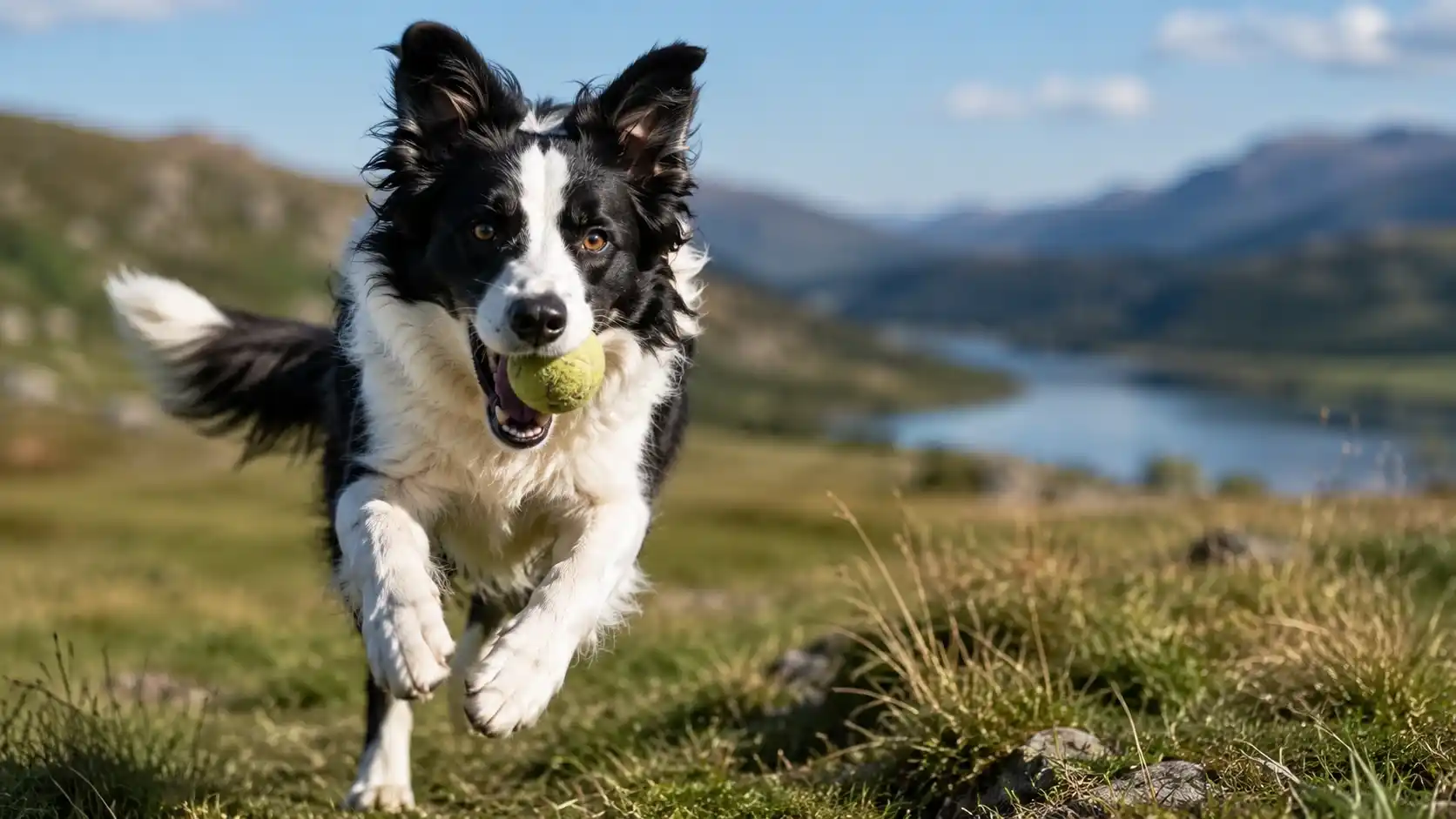
Border collies were bred in the hills between England and Scotland to herd sheep. That job required them to run for hours across rough terrain, think on their feet, and respond instantly to commands from a distance. This is not a breed that was designed to sit around. It was designed to work, and that instinct has not gone anywhere just because most border collies today live in homes instead of on farms.
This background explains why border collies are often ranked as one of the most energetic dog breeds in the world. It also explains why exercise for this breed is not just about physical movement. A border collie’s brain needs a job too. Herding instincts do not disappear just because there are no sheep around. If those instincts have nowhere to go, your dog may start herding the kids, chasing cars, or nipping at ankles.
Understanding this background helps put the exercise requirements into context. It is not that border collies are difficult dogs. They simply have a lot of built-in drive that needs an outlet.
How Much Daily Exercise Does a Border Collie Need
Most healthy adult border collies need somewhere between 90 minutes and 2 hours of exercise every day. This is not a firm number that applies to every dog in exactly the same way. Age, health, and how active the individual dog is will all shift this number up or down. But as a general rule, if your border collie is getting less than an hour of real activity a day, it is probably not enough.
It also helps to think about this time as a mix, not just walking. A truly satisfying exercise routine for a border collie includes:
- Physical activity that raises the heart rate, like running or fetch
- Off-lead time to explore and move freely when it is safe to do so
- Mental work such as training games, puzzle toys, or scent activities
- Social time with people or other dogs
Splitting the day into two or three shorter sessions usually works better than one long outing. A 30-minute walk in the morning, a training or play session at lunch, and a longer run or fetch session in the evening covers both the body and the mind without overwhelming your schedule.
Exercise Needs by Age
Puppies (0 to 12 months)
Puppy exercise is where a lot of new border collie owners get it wrong. It is tempting to think a young, energetic puppy needs to run and run until it is tired. In reality, too much exercise at this age can damage growing bones and joints, sometimes causing problems that last into adulthood.
A commonly used guideline is about 5 minutes of structured exercise per month of age, done up to twice a day. So a 4-month-old puppy might get around 20 minutes of walking or play, split across a couple of sessions. Free play in a securely fenced yard is generally fine and lets the puppy move at its own pace. Avoid long runs, jumping from heights, or repetitive high-impact activity until the dog is closer to 12 months old.
This early period is also a great time to focus on socialization and basic training instead of pure physical exertion. A puppy that learns to settle, walk politely on a lead, and respond to basic cues will be much easier to manage once its energy levels increase.
Adults (1 to around 8 years)
Once a border collie reaches full physical maturity, usually around 12 to 18 months, exercise needs increase significantly. This is the stage where most adult border collies benefit from 90 minutes to 2 hours of combined physical and mental exercise daily.
Good activities for adult border collies include:
- Running or jogging alongside you
- Fetch and frisbee
- Agility training or courses
- Herding activities, if available in your area
- Hiking on varied terrain
- Flyball or dog sports clubs
- Puzzle feeders and scent games for mental work
Adult border collies involved in dog sports or working roles may need even more than this, sometimes several hours a day. Dogs kept purely as pets can do well on the lower end of the range, as long as the activity is consistent and includes some mental challenge alongside the physical part.
Senior Border Collies
As border collies age, usually from around 8 years onward, their exercise needs shift rather than disappear entirely. Older dogs still need regular movement to maintain muscle tone, joint health, and mental sharpness, but the intensity should come down. Shorter, gentler walks combined with low-impact mental games work well for senior dogs.
Watch for signs of stiffness, slowing down, or reluctance to jump, and adjust accordingly. A senior border collie that used to run for an hour might now do better with two or three shorter walks and some relaxed puzzle toy time instead.
Signs Your Border Collie Isn’t Getting Enough Exercise
Border collies are not shy about letting you know when their needs aren’t being met. Common signs of under-exercised border collies include:
- Excessive barking or whining
- Chewing furniture, shoes, or other household items
- Digging in the yard
- Herding behavior directed at people, kids, or other pets
- Restlessness or an inability to settle
- Weight gain
- Nipping at heels or ankles
If you notice several of these behaviors at once, it is worth taking an honest look at how much physical and mental activity your dog is actually getting each day. Often the fix is not more discipline. It is more appropriate exercise.
Mental Stimulation Matters Just As Much
It is worth repeating that physical exercise alone will not fully satisfy a border collie. This is one of the most intelligent dog breeds, and a tired body does not always mean a settled mind. Training sessions, nose work, puzzle feeders, and even simple games like hide and seek with treats all give the brain something to do. Many experienced border collie owners find that 15 minutes of focused mental work can tire a dog out as much as a 30-minute walk.
Combining both types of activity throughout the day tends to produce the calmest, most content border collies. A dog that gets to run and think will usually settle much more easily at home.
Building a Simple Daily Routine
You do not need a complicated schedule to meet your border collie’s needs. A workable daily routine might look like this:
- Morning: A brisk 20 to 30 minute walk or light run
- Midday: A short training session or puzzle toy while you take a break
- Evening: A longer session of fetch, agility practice, or off-lead exploration
Adjust the timing and intensity based on your dog’s age and energy level, and stay consistent. Border collies do well with routine, and knowing what to expect each day can actually help reduce anxiety and excess energy.
more info: Signs Your Dog Is in Pain but Hiding It
Final Thoughts
Meeting border collie exercise needs is really about understanding what this breed was built to do and giving it a modern outlet. Adult dogs generally need 90 minutes to 2 hours of combined physical and mental activity each day, while puppies and seniors need adjusted, gentler routines. Pay attention to your individual dog, watch for signs of under-stimulation, and mix physical movement with mental challenges. Do that consistently, and you will have a border collie that is calm, confident, and genuinely happy.