
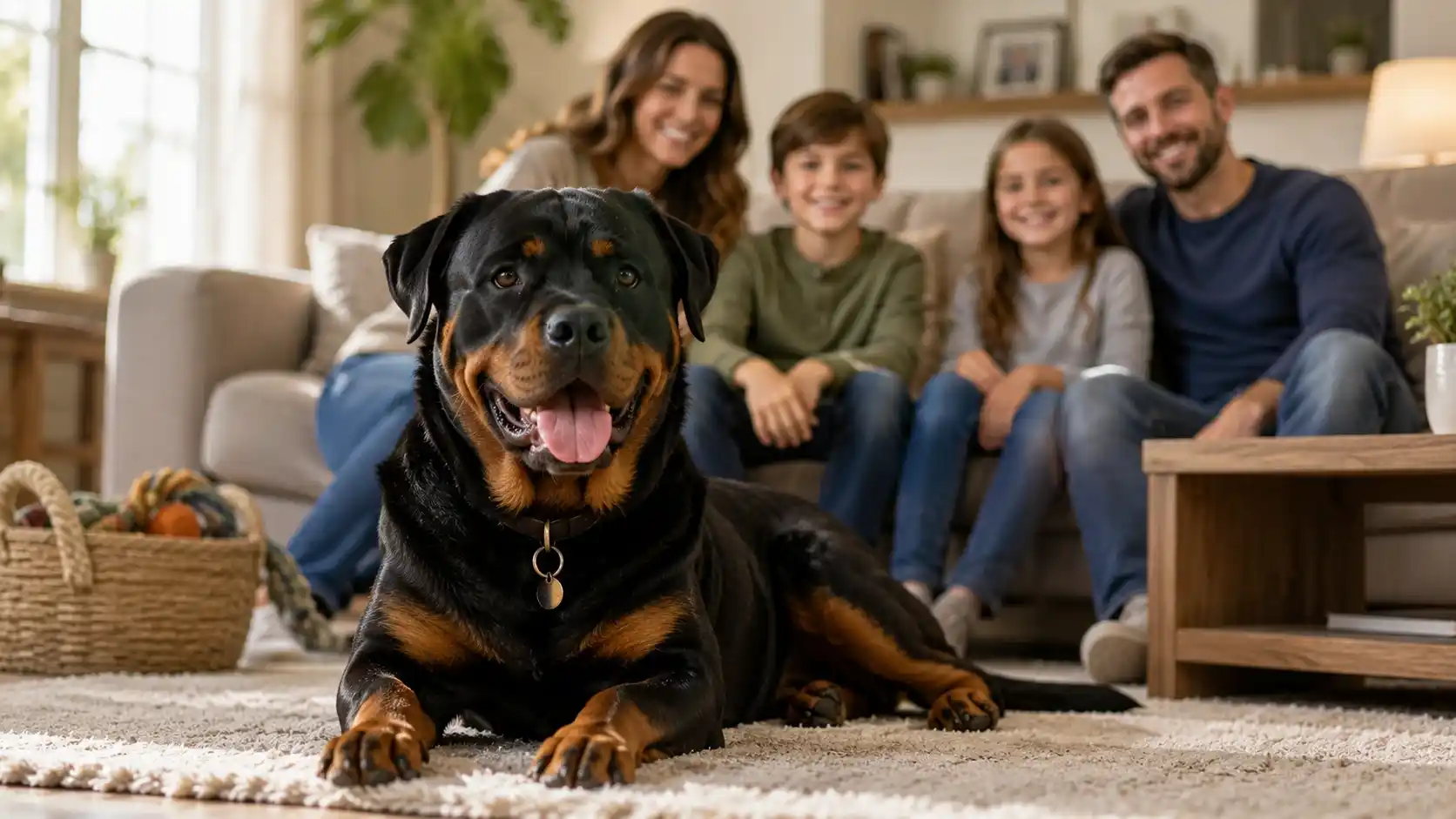
Rottweiler temperament is one of the most misunderstood topics in the dog world. Thanks to their muscular build and intimidating look, Rotties often get labeled as aggressive before anyone even meets the dog in person. But if you spend time around a well raised Rottweiler, you quickly see a completely different side. This guide breaks down what Rottweiler temperament actually looks like, whether the breed fits well with families, and what it takes to raise one that is calm, confident, and good with kids.
Understanding the Real Rottweiler Temperament
The American Kennel Club describes the Rottweiler as a calm, confident, and courageous dog with a self assured aloofness that does not lend itself to instant friendliness with strangers. That description matters, because it explains a lot about how Rotties act in different situations.
At home, with people they know and trust, Rottweilers tend to be affectionate, playful, and even a little goofy. Around strangers, they are naturally more reserved and watchful. This is not the same thing as aggression. It is closer to a dog that takes its time deciding whether someone is worth trusting, which is exactly the instinct the breed was developed for generations ago.
Rottweilers descend from cattle driving and guarding dogs used since the days of the Roman Empire, and that working history still shows up in their personality today. They are intelligent, alert, and naturally protective of their home and the people in it.
Are Rottweilers Naturally Aggressive
This is probably the most common question people ask, and the honest answer is no. Breed alone is not a reliable predictor of aggression. Behavior researchers have found that a dog’s individual upbringing, training, and socialization matter far more than its breed when it comes to predicting aggressive behavior.
That said, Rottweilers do have a few traits that can look like aggression if they are not properly managed.
- A strong protective instinct toward their family and territory
- A tendency to be standoffish or wary around unfamiliar people
- Potential tension with other dogs, especially those of the same sex
- A prey drive that can make them unpredictable around cats they were not raised with
None of these traits are dangerous on their own. They simply mean a Rottweiler needs consistent training and early socialization to learn how to handle new people, animals, and situations calmly.
Are Rottweilers Good With Kids
Yes, in general, Rottweilers can be excellent family dogs, including with children. Many Rottweiler owners describe their dogs as gentle, patient, and even protective in a nurturing way toward the kids in their household. Some Rotties even show a kind of instinct to watch over young children the way they might watch over a herd, treating supervision almost like a job.
There are a few reasons the breed tends to do well with children when raised correctly.
- They are large and sturdy enough to handle typical rough and tumble play without getting hurt
- They form extremely strong bonds with their family, kids included
- They are intelligent and generally responsive to training, which makes teaching household manners easier
- Their protective instincts often extend naturally to the children they grow up around
That said, size and strength cut both ways. A Rottweiler puppy or adolescent can easily and accidentally knock over a small child during play, simply because of their weight and energy. This is not aggression, but it is still a real safety consideration for families with very young kids.
Why Supervision Still Matters
Even the most easygoing Rottweiler should not be left alone unsupervised with small children, and this advice applies to pretty much any large dog breed, not just Rotties. A few practical reasons why supervision matters:
- Young children can unintentionally provoke a dog through rough handling, pulling, or loud noises
- A Rottweiler may try to herd or block children during rough play, which can startle kids who do not understand the behavior
- Even well trained dogs can react unpredictably if startled or hurt accidentally
- Supervision allows you to catch and correct any early warning signs before they become habits
Think of supervision less as a warning sign about the breed and more as a basic safety habit that applies to any dog and child relationship, regardless of size or breed.
The Role of Training and Socialization
Rottweiler temperament is inherited to some degree, but training and socialization shape how that temperament actually shows up day to day. A Rottweiler that is socialized early, meaning exposed calmly and positively to different people, animals, sounds, and environments as a puppy, is far more likely to grow into a confident, well adjusted adult dog.
Key parts of raising a well balanced Rottweiler include:
- Starting obedience training early, ideally as soon as the puppy comes home
- Exposing the puppy to a wide variety of people, environments, and other animals during the critical socialization window
- Establishing consistent household rules so the dog understands its place within the family structure
- Using positive reinforcement rather than harsh corrections, since Rottweilers respond well to reward based training
- Giving the dog a clear leader to follow, since Rottweilers tend to do best with confident, consistent handling
Without this kind of structure, a Rottweiler’s natural confidence and strength can turn into stubbornness or dominant behavior. With it, that same confidence becomes steady, dependable loyalty.
Energy Levels and Exercise Needs
Rottweilers are working dogs at heart, and they need regular physical and mental activity to stay balanced. A bored, under exercised Rottweiler is far more likely to develop unwanted behaviors simply because it has too much pent up energy.
Ways to keep a Rottweiler mentally and physically satisfied include:
- Daily walks or runs to burn off physical energy
- Structured play sessions, including games like fetch or tug
- Obedience training sessions, which double as mental exercise
- Dog sports like tracking, herding trials, or agility, which many Rottweilers genuinely enjoy
- Simple jobs around the house, since the breed tends to feel more content when it has a purpose
A tired, mentally stimulated Rottweiler is generally a calmer, easier dog to live with.
How Rottweilers Behave With Other Pets
Rottweilers can live peacefully with other dogs and cats, especially if they are raised together from a young age. Problems are more likely to show up with unfamiliar animals, particularly dogs of the same sex, where tension can develop without careful introductions.
If you are bringing a Rottweiler into a home with existing pets, slow and supervised introductions make a big difference. Many Rotties form close bonds with the family cat or another household dog once they grow up side by side, even if they remain more cautious around unfamiliar animals outside the home.
Is a Rottweiler the Right Fit for Your Family
A Rottweiler tends to work best in a home that can offer structure, consistent training, and enough time for daily exercise and mental engagement. Families with older children who understand how to interact respectfully with a large dog often find the breed to be an easier fit than households with very young toddlers, simply because of the size and energy involved.
If you are considering a Rottweiler, it helps to meet the puppy’s parents when possible, since temperament often runs in family lines. A reputable breeder should be able to describe the general personality traits of the litter and help match you with a puppy that fits your household.
Final Thoughts
Rottweiler temperament is far more nuanced than the breed’s tough reputation suggests. At their core, Rottweilers are loyal, intelligent, and deeply devoted to their families, often showing genuine gentleness and patience with the children they grow up around. Like any large and powerful breed, they need early socialization, consistent training, and regular exercise to become the calm, confident companions they are capable of being. For the right family willing to put in that effort, a Rottweiler can turn into one of the most loving and protective dogs you could ask for.