
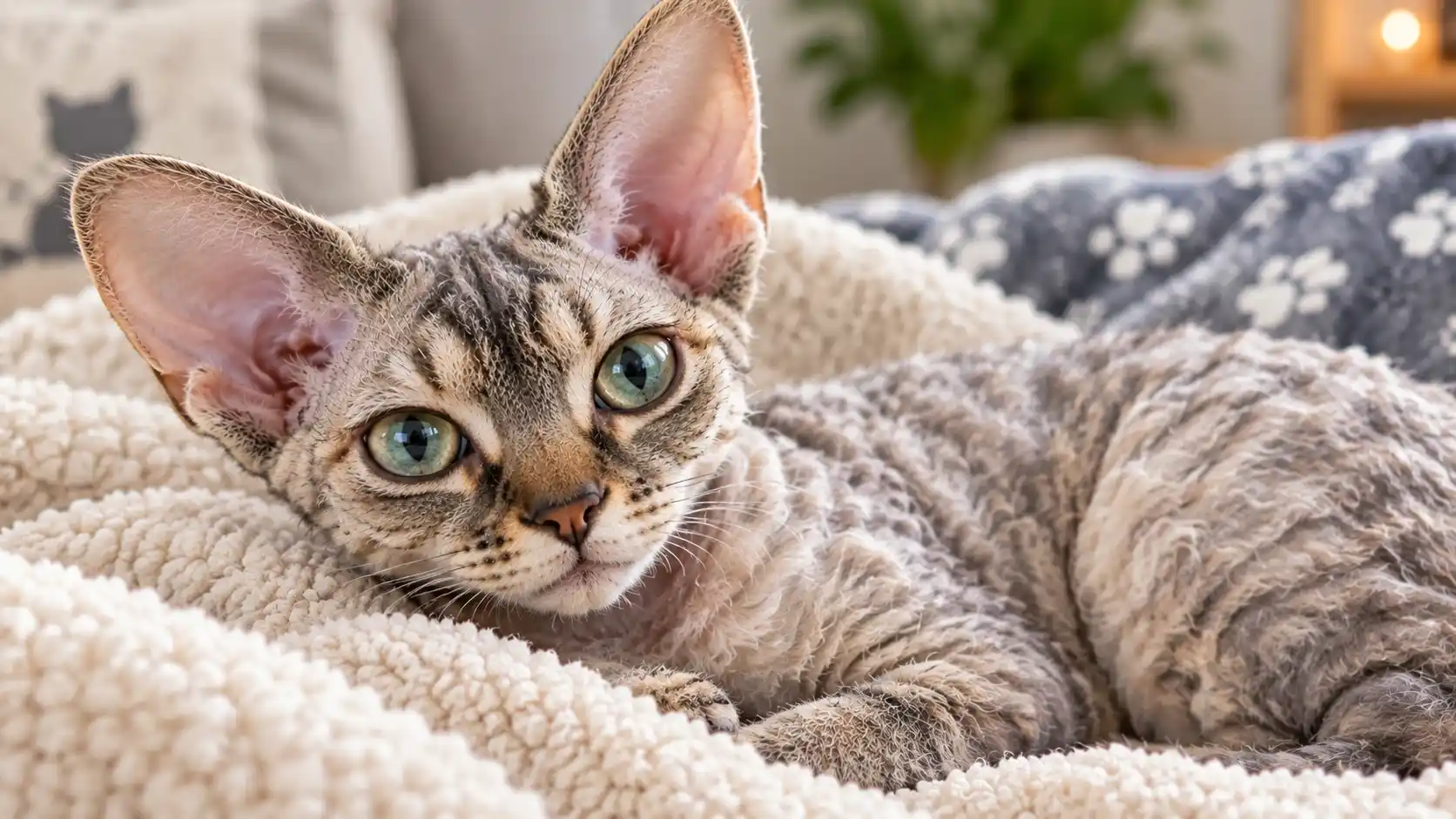
Devon Rex cat care is a little different from looking after most other cats. That thin, wavy coat, those big ears and that lean body change how you brush, bathe, feed and even warm your home. Get the basics right and you get one of the most loving and funny cats around. Get them wrong and you can end up with greasy skin, waxy ears or a cat that is always cold.
This guide walks you through grooming, bathing, warmth, food and common health concerns. It works for first-time owners, and it is also handy if you have lived with a Devon Rex for years and want to double check your routine.
Understanding the Devon Rex Coat and Skin
The Devon Rex began as a natural gene mutation in Devon, England. It gave the breed a short, soft, wavy coat with very little of the coarse outer hair most cats have. The hairs are fine, and even the whiskers break easily.
That shapes how you care for them. Less fur means less insulation, less sun protection and less to soak up skin oils, so many Devon Rex cats feel slightly greasy. Rough grooming can also damage the coat fast. The breed sheds very little, but no cat is truly hypoallergenic, so spend time with one before you commit if you have allergies.
How to Groom a Devon Rex Cat
Brushing
Less is more here. Over-brushing can damage the coat and even leave thin patches. Once a week is plenty, using a soft brush, a rubber grooming mitt or a slightly damp cloth. Skip metal combs and stiff bristles.
Use grooming time as a skin check too. Run your hands over the body and look for redness, dandruff, scabs or bald spots. Small changes are much easier to treat when you catch them early.
Bathing
Because oils build up on the skin, most Devon Rex cats need an occasional bath. How often depends on the cat. Some do well with a bath every few weeks, while others can go a couple of months. Your vet can help you set a schedule. Here is a simple way to do it:
- Use a mild shampoo made for cats. Never use human shampoo.
- Keep the water lukewarm and keep it out of the ears.
- Rinse well so no soap stays on the skin.
- Dry your cat fully with a warm towel and keep the room warm, because a wet Devon Rex chills fast.
Between baths, a pet-safe wipe can handle small greasy spots. Do not bathe too often, since that dries the skin.
One more thing. A greasy coat can also mean a cat has stopped grooming itself, which can point to poor health. If the change comes on suddenly, book a vet visit.
Ear Cleaning
Those big ears collect wax, oil and dirt. Check them once a week. If you see buildup, use a vet-approved ear cleaner with a cotton ball or soft cloth and wipe only the parts you can see. Never push anything into the ear canal.
Head shaking, scratching, redness, a bad smell or dark discharge mean it is time to see the vet.
Nails and Teeth
Trim the nails every two to three weeks with cat clippers, and avoid the pink quick. A tall scratching post helps keep them in shape. Dental disease is common in cats, so brush the teeth with cat toothpaste. Daily is best, but a few times a week still helps. Add a dental check to your yearly vet visit.
Keeping Your Devon Rex Warm and Safe from the Sun
Devon Rex cats feel the cold. With so little fur and a lean body, they hunt for warm spots all day. You will find them on a sunny ledge, a pile of laundry or under your blanket. Give them a soft bed in a warm corner and keep the house comfortable in winter. A pet-safe heated bed can help, as long as your cat can move away from it.
The same thin coat means they can sunburn. Pale cats and the tips of the ears are most at risk. Let them bask, but avoid long hours in strong direct sun. Do not use human sunscreen. Ask your vet about a cat-safe product if your cat spends lots of time in bright light. Keeping a Devon Rex indoors is the safest choice anyway, since it also protects them from cold, parasites and traffic.
Feeding a Devon Rex
Devon Rex cats are lively and burn plenty of energy, so they do best on a high-quality, protein-rich food that is complete and balanced for their age. Wet food, dry food or a mix can all work. Always leave fresh water out.
Even though the breed looks lean, weight still matters. Extra weight is one of the easiest health problems to prevent, and it puts strain on the joints and heart. Measure meals instead of free feeding, and go easy on treats, because these cats are clever at begging. If you want to try raw or homemade meals, talk to your vet first. It is easy to miss key nutrients.
Exercise and Play
This is a jumper and a climber. Give your cat a tall cat tree, wall shelves and window perches. Add wand toys, puzzle feeders and a few short play sessions every day. Many Devon Rex cats enjoy clicker training, and some even learn to walk on a harness.
They also bond closely with their people and do not enjoy long stretches alone. If you work long hours, plan extra time together and leave interactive toys out.
Common Devon Rex Health Concerns
Devon Rex cats are generally healthy, but the breed does carry a few inherited risks. Knowing them helps you spot trouble early.
- Hypertrophic cardiomyopathy (HCM): the heart muscle thickens. Many cats show no signs early on. Later signs can include tiredness, fast or hard breathing and sudden weakness in the back legs. Diet does not cause it, and a heart scan by a vet confirms it.
- Patellar luxation: the kneecap slips out of place. Look for limping, a skipping step or a bunny hop.
- Hereditary myopathy: this muscle disorder can cause weakness, a drooping head and neck, and tiring easily. Signs often show in the first months of life.
- Skin and ear trouble: itchy bumps, patchy hair loss, dandruff and ear infections all deserve a vet check.
- Clotting problems: some Devon Rex cats have a hereditary vitamin K related clotting disorder, so ask the breeder about it.
If you buy from a breeder, ask for proof that the parents were screened for heart disease and kneecap problems, and get a written health guarantee. No breeder can promise a cat will never develop HCM, so yearly vet checks matter for life. Keep up vaccines and parasite control too, even for indoor cats.
When to Call the Vet
Cats hide discomfort well, so small changes count. Call your vet if you notice:
- Limping or hopping
- Fast or hard breathing while resting
- Sudden weakness or pain in the back legs, which is an emergency
- A drooping head or trouble swallowing
- Bald patches, scabs or constant scratching
- Head shaking or smelly ears
- A cat that stops eating or stops grooming
A Simple Devon Rex Care Routine
- Daily: fresh water, play time, a quick look at the ears and eyes, and tooth brushing if you can
- Weekly: a gentle brush, an ear check and a skin check
- Every two to three weeks: nail trim
- Every few weeks to months: a bath, only as needed
- Every year: a full vet checkup with a dental exam
Quick Answers
Do Devon Rex cats need baths?
Yes, but only now and then. Oil builds up on a thin coat, so a gentle bath every few weeks to every couple of months suits many cats. Ask your vet what fits yours.
Are Devon Rex cats hypoallergenic?
No. They shed very little, but no cat is fully hypoallergenic.
Do Devon Rex cats get cold easily?
Yes. Give them warm beds, soft blankets and a comfortable home, especially in winter.
more info: Abyssinian Cat Care: A Complete Guide for First-Time Owners
Final Thoughts
Good Devon Rex cat care comes down to a few habits. Groom gently, keep the ears clean, bathe only when needed, stay warm, feed for a healthy weight and keep up with vet visits. Add plenty of play and time with you, and this curly, big-eared clown will repay you every day.