
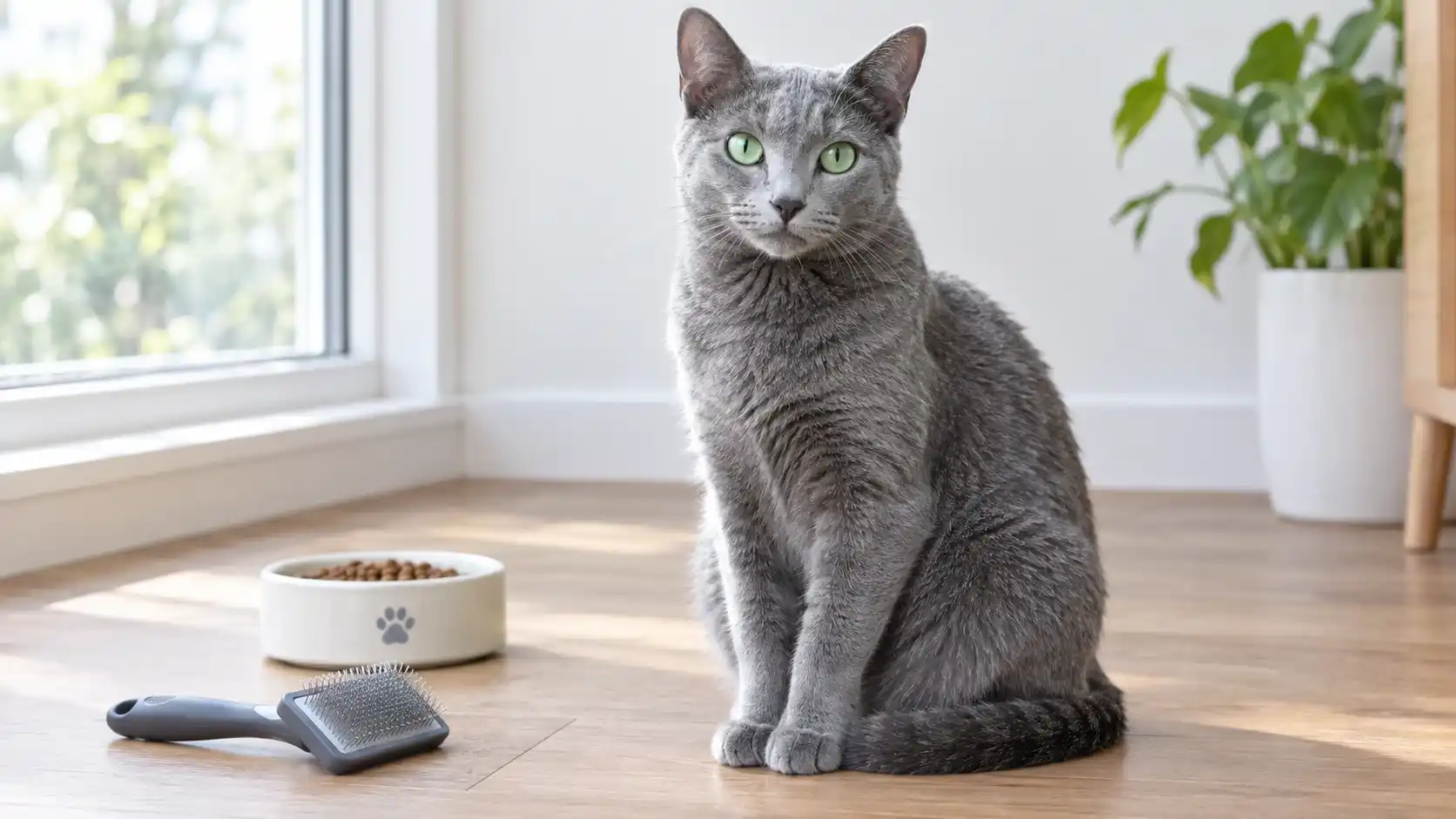
Good Russian Blue cat care comes down to a few things you do the same way every day. Feed measured meals. Brush the coat once a week. Give the cat twenty minutes of real play. Keep the litter box clean and the routine steady. That is most of the job. This breed is not fussy, but it is sensitive to change, and it hides discomfort well. Once you understand how a Russian Blue thinks, caring for one gets easy.
This guide covers food, grooming, health, play, and the small daily habits that keep these cats well into their late teens.
What Makes a Russian Blue Different
The Russian Blue is a medium-sized cat with a dense double coat, silver-tipped guard hairs, and green eyes. Adults usually weigh between eight and twelve pounds. The breed traces back to Arkhangelsk in Russia, which is why some people still call it the Archangel Cat. embracepetinsurance
Two traits shape everything about their care. First, they are creatures of habit. A new sofa, a house guest, or a moved food bowl can throw them off. Second, they are quiet about pain. A Russian Blue will keep eating and grooming normally while something is wrong, so you need to watch for small changes rather than wait for obvious symptoms.
They are also a naturally occurring breed with a long lifespan of 15 to 20 years and generally good health. That is a long commitment, and it means the choices you make in year one still matter in year fifteen. petmd
Feeding a Russian Blue
Diet is where most owners go wrong. Russian Blues love food and gain weight quietly under that thick coat. Excess weight is the number one nutrition-related health issue for this breed. petmd
Build the Plate Around Protein
Cats are obligate carnivores. Pick a food that lists a named meat such as chicken, turkey, or salmon as the first ingredient. Skip anything that leads with corn, wheat, or unnamed by-products.
Look for these on the label:
- High animal protein content
- Taurine, which supports heart and eye health
- Omega-3 and Omega-6 fatty acids for skin and coat
- Low filler carbohydrates
Portion Control Beats Everything
Do not free-feed. Leaving a full bowl of kibble out all day is the fastest route to a chubby cat. Measure each meal with a proper scoop, not a coffee mug.
A simple routine that works:
- Kittens under six months: three to four small meals a day
- Adults: two measured meals a day, morning and evening
- Seniors over ten: two meals, with portion sizes adjusted after a vet weigh-in
Wet Food, Dry Food, or Both
Most vets suggest a mix. Wet food adds moisture, which helps the urinary tract and kidneys. Dry food is convenient and helps a little with dental wear. A common split is one wet meal and one measured dry meal per day.
Always keep fresh water available. Many cats drink more from a pet fountain than a still bowl, and Russian Blues often prefer running water.
Grooming and Shedding
Here is the good news. The Russian Blue is a low-maintenance breed when it comes to grooming, with no need for routine washing. That dense coat looks like work, but it rarely mats. petmd
A weekly brush with a soft slicker or a fine-toothed comb is enough for most of the year. Brushing once a week helps prevent hairballs, improves circulation, and keeps the coat glossy, and it gives you a chance to spot health problems early. russianbluecat
During spring and autumn shedding seasons, bump that up to two or three times a week. A de-shedding comb that reaches the undercoat makes a noticeable difference.
Round out the routine with:
- Nails: trim every two to three weeks
- Teeth: brush several times a week with cat toothpaste, since dental disease is common in all cats
- Ears: check monthly, clean only if you see wax or debris
- Eyes: wipe gently if you notice discharge, no special care needed otherwise
Never use human toothpaste or human shampoo on a cat.
Are Russian Blues Hypoallergenic?
This is the most misunderstood part of the breed. The short answer is no.
Every cat produces Fel d 1, the protein behind roughly 95% of human cat allergies, so no breed is truly hypoallergenic. Russian Blues are reported to produce lower levels of Fel d 1 and shed relatively little, which makes them a better option for some people with mild allergies. petfuleverypaw
If someone in your home reacts to cats, spend real time with an adult Russian Blue before you commit. Reactions vary from cat to cat far more than they vary from breed to breed. A HEPA air purifier, weekly damp wiping of the coat, and keeping the cat out of the bedroom all help more than breed choice alone.
Health Problems to Watch For
Russian Blues are one of the healthier pedigree breeds, with no long list of inherited conditions. Still, keep an eye on a few things.
- Obesity. The most common and most preventable issue. Weigh your cat monthly and feel for the ribs.
- Dental disease. Bad breath, drooling, or dropping food while eating are early signs.
- Urinary tract problems. Straining in the box, frequent small urinations, or blood in the urine needs a same-day vet call.
- Hypertrophic cardiomyopathy. A heart condition seen across many cat breeds. Ask your vet about cardiac screening at annual visits.
- Stress-related issues. Sudden hiding, over-grooming, or litter box avoidance often trace back to a change at home.
Adult cats need one checkup a year, and cats over ten should be seen every six months so age-related problems get caught early. russianbluecat
Play, Exercise, and Mental Work
Russian Blues are smart and they get bored. Aim for 20 to 30 minutes of interactive play a day, split into two sessions.
Things this breed tends to love:
- Fetch with small crumpled paper balls
- Wand toys with feathers
- Puzzle feeders that slow down eating
- A tall cat tree near a window for bird watching
- Shelves or perches where they can sit above the room
Rotate toys weekly so they stay interesting. A puzzle feeder does double duty here, since it burns mental energy and stops fast eating at the same time.
Personality and Home Setup
Russian Blues are reserved with strangers and deeply attached to their own people. Expect a cat that disappears when guests arrive and reappears the moment the door closes. That is normal, not unfriendly.
To set up a home they will settle into:
- Keep food, water, and litter in quiet, low-traffic spots
- Use one litter box per cat plus one extra, scooped daily
- Give them a hiding place they can retreat to
- Keep feeding and play times consistent
- Introduce new pets, people, or furniture slowly
They are clean cats with strong opinions about litter boxes. A dirty box is one of the fastest ways to trigger accidents outside it.
Care by Life Stage
Kittens, up to 12 months. Feed a kitten formula in small frequent meals. Start handling paws, ears, and mouth early so grooming is easy later. Complete the vaccination and deworming schedule.
Adults, 1 to 7 years. Move to two measured meals, keep up annual vet visits, and hold the daily play routine. This is when weight creeps up, so track it.
Seniors, 7 years and up. Switch to a senior formula if your vet recommends it. Watch for stiffness, weight loss, drinking more water, or changes in litter box habits. Bloodwork at each visit catches kidney and thyroid issues early.
more info: Persian Cat Grooming Guide for Beginners: Everything You Need to Know
Final Thoughts
Russian Blue cat care is not complicated, it is just consistent. Measure the food, brush the coat weekly, book the vet visits, play every day, and keep the home calm and predictable. Do that and you will likely share the next fifteen to twenty years with a quiet, clever, deeply loyal cat. The effort you put in during the first year pays you back for the rest of their life.