
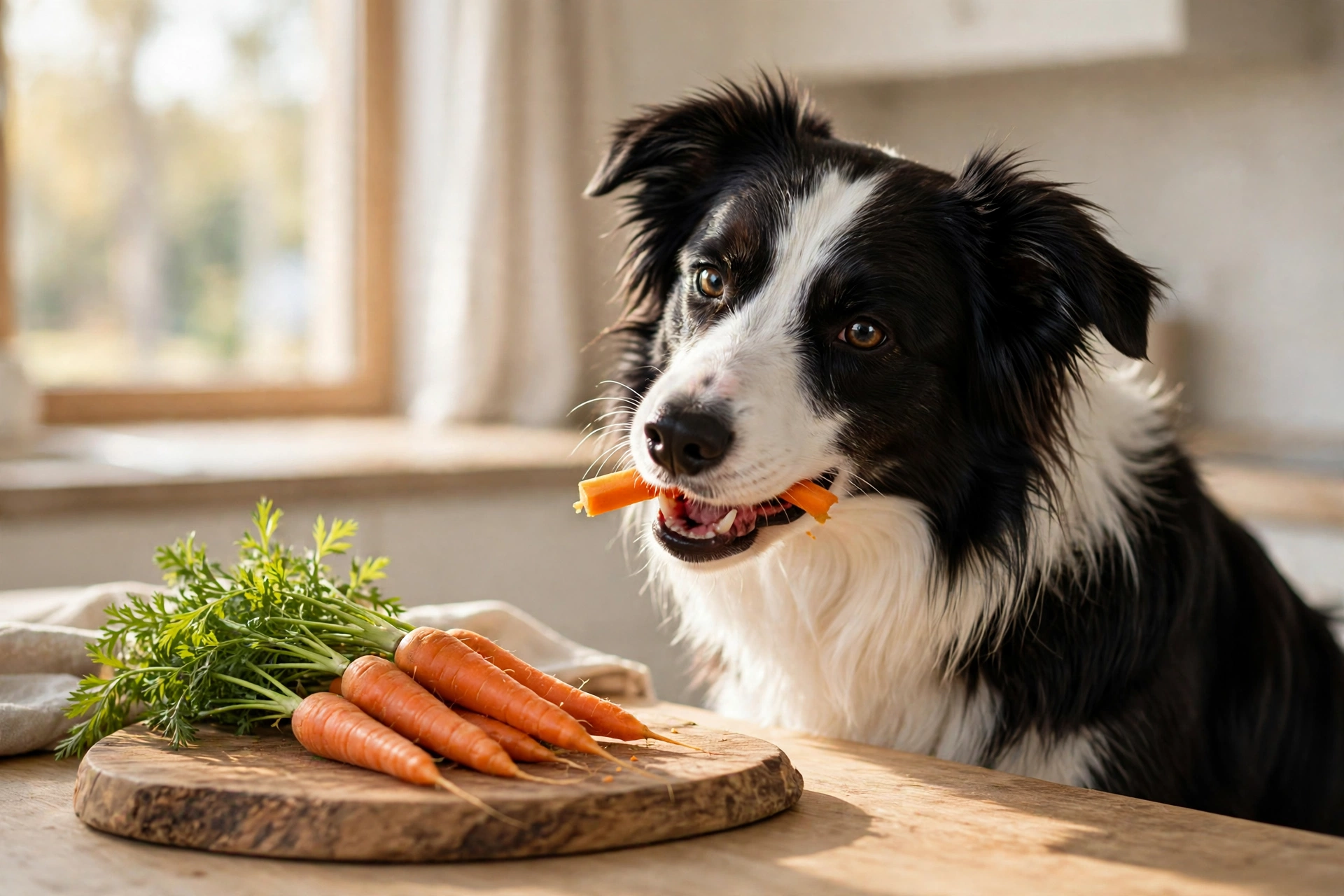
Quick answer: Yes, dogs can eat carrots safely, raw or cooked. Carrots are low in calories, high in fiber and beta carotene, and their crunch makes them a satisfying treat. Cut them into sticks or coins sized for your dog, because a whole carrot or a gulped baby carrot is a genuine choking risk. Keep servings modest, since carrots carry more natural sugar than green vegetables.
Can Dogs Eat Carrots Safely?
Yes. Carrots are non toxic to dogs, and the AKC lists them among the vegetables dogs can enjoy. They are cheap, available everywhere, and most dogs genuinely like them, which is a rare combination in the treat world.
So, can dogs eat carrots as a regular snack? For most healthy dogs, yes. The two things to manage are size (choking) and quantity (natural sugar). Both are easy once you know the routine.
Why Carrots Are Good for Dogs
- Beta carotene and vitamin A: Support healthy eyes, skin, coat, and immune function.
- Fiber: Helps digestion and firm, regular stools.
- Low calories: Around 41 calories per 100 grams, so a few sticks are a light treat, kinder than most biscuits for dogs watching their weight.
- Crunch that helps teeth: Chewing raw carrot can gently scrape the teeth as a dog chews. It is a small bonus, not a replacement for brushing or dental chews.
- Potassium and vitamin K: Support muscles, nerves, and healthy blood.
Carrots also freeze beautifully, which makes them one of the most useful treats in the freezer door. More on that in the serving section.
How Many Carrots Can a Dog Eat?
Treats should stay under 10 percent of daily calories. A medium carrot is a sensible daily ceiling for a big dog, and much less for a small one.
| Dog size | Typical weight | Carrot per serving |
|---|---|---|
| Toy | Under 10 lbs | 2 to 3 thin coins or a few small sticks |
| Small | 10 to 25 lbs | Half a medium carrot, cut up |
| Medium | 25 to 50 lbs | Half to 1 medium carrot |
| Large | 50 to 90 lbs | 1 medium carrot, cut up |
| Extra large | Over 90 lbs | 1 to 2 medium carrots |
Diabetic dogs can usually enjoy a small amount, but carrots carry more sugar than cucumber or green beans, so check with your vet before they become a daily habit.
How to Serve Carrots to Your Dog (Step by Step)
- Wash and scrub well. Carrots grow underground and arrive with soil attached. A good scrub or a peel removes it.
- Cut to your dog’s size. Thick coins for big dogs, thin sticks or small cubes for little ones. Cut baby carrots lengthwise for any dog who gulps.
- Raw for crunch. Raw carrot is the classic serving and the best for the teeth bonus.
- Lightly steamed for seniors and sensitive stomachs. A few minutes of steam softens the carrot and makes it easier to digest, with nutrients intact.
- Frozen for teething puppies. A frozen carrot stick, offered under supervision, soothes sore puppy gums. Take it away once it softens or shrinks to a choking size.
- Skip the seasonings. No butter, salt, honey glazes, or ranch dip. Plain is the whole recipe.
Carrots pair naturally with the other low calorie crunch in our guide to can dogs eat cucumbers, and they sit alongside the berry treats in can dogs eat blueberries and the wider list in our fruits and vegetables guide.
Risks and When Carrots Are Not a Good Idea
- Choking is the main risk. A whole carrot, a thick chunk, or a whole baby carrot in a gulping dog’s mouth can lodge in the throat. Size and supervision fix this.
- Too much fiber at once: A carrot feast can mean gas or loose stools. Introduce carrots gradually, like any new food.
- Natural sugar: Carrots are sweeter than most vegetables. Fine for healthy dogs, worth a vet conversation for diabetic ones.
- Carrot cake and carrot dishes: Cake brings sugar, butter, and sometimes raisins or nutmeg, and raisins are toxic to dogs. The ASPCA guide to people foods covers the ingredients to keep off your dog’s plate.
- Canned carrots: Often packed with added salt or syrup. Fresh or frozen plain carrots are the better choice.
Warning Signs: When to See a Vet
Call your vet promptly, or an emergency clinic after hours, if you notice:
- Gagging, pawing at the mouth, drooling, or trouble breathing (possible choking, treat as an emergency)
- A dog who swallowed a large carrot piece whole and now seems uncomfortable, bloated, or off their food
- Vomiting or diarrhea lasting more than a day
- Any illness after eating carrot cake or another carrot dish that may have contained raisins, nutmeg, or sweeteners
Most carrot trouble is a mild stomach upset that passes. Offer water, keep the next meal plain, and call your vet if things do not settle within 24 hours.
Common Mistakes Pet Parents Make
- Tossing a whole carrot like a chew stick. It looks sturdy, but dogs bite off exactly the wrong sized chunks.
- Trusting baby carrots for big gulpers. A baby carrot is the perfect size to swallow whole. Cut it lengthwise first.
- Cooking carrots in butter and honey. The carrot was the healthy part. The glaze undoes it.
- Replacing dental care with carrots. The crunch helps a little. It does not clean teeth the way brushing does.
- Serving a mountain on day one. Any new food lands better in small amounts first.
FAQs
Can puppies eat carrots?
Yes, and they often love them. Offer small, thin sticks a puppy can manage, or a supervised frozen carrot for teething. Keep portions tiny, watch the chewing, and take away pieces that shrink to a swallowable size.
Can dogs eat raw carrots, or should they be cooked?
Both are fine. Raw carrots give the crunch and the teeth bonus. Lightly steamed carrots are softer and easier to digest, which suits seniors and sensitive stomachs. Avoid heavy cooking in butter or oil.
Can dogs eat carrot tops?
Yes, the green tops are safe for dogs in small amounts, washed well. They are bitter, so many dogs ignore them, but a little chopped top mixed into food does no harm.
Can dogs eat carrots every day?
For most healthy dogs, a small daily serving is fine, as long as it stays within the treat budget. Rotate with other safe vegetables and fruits so no single food dominates the treat bowl.
Are carrots good for dogs’ eyes?
Carrots provide beta carotene, which the body converts to vitamin A, a nutrient that supports eye health. They support normal vision as part of a balanced diet, but they will not fix an existing eye problem. Eye changes always deserve a vet visit.
The Bottom Line
Carrots are one of the easiest wins in dog treats: cheap, healthy, crunchy, and welcome in almost every kitchen. Wash them, cut them to size, and serve them plain.
Mind the choking risk with whole pieces, and this humble vegetable will earn its place in your dog’s treat rotation.