
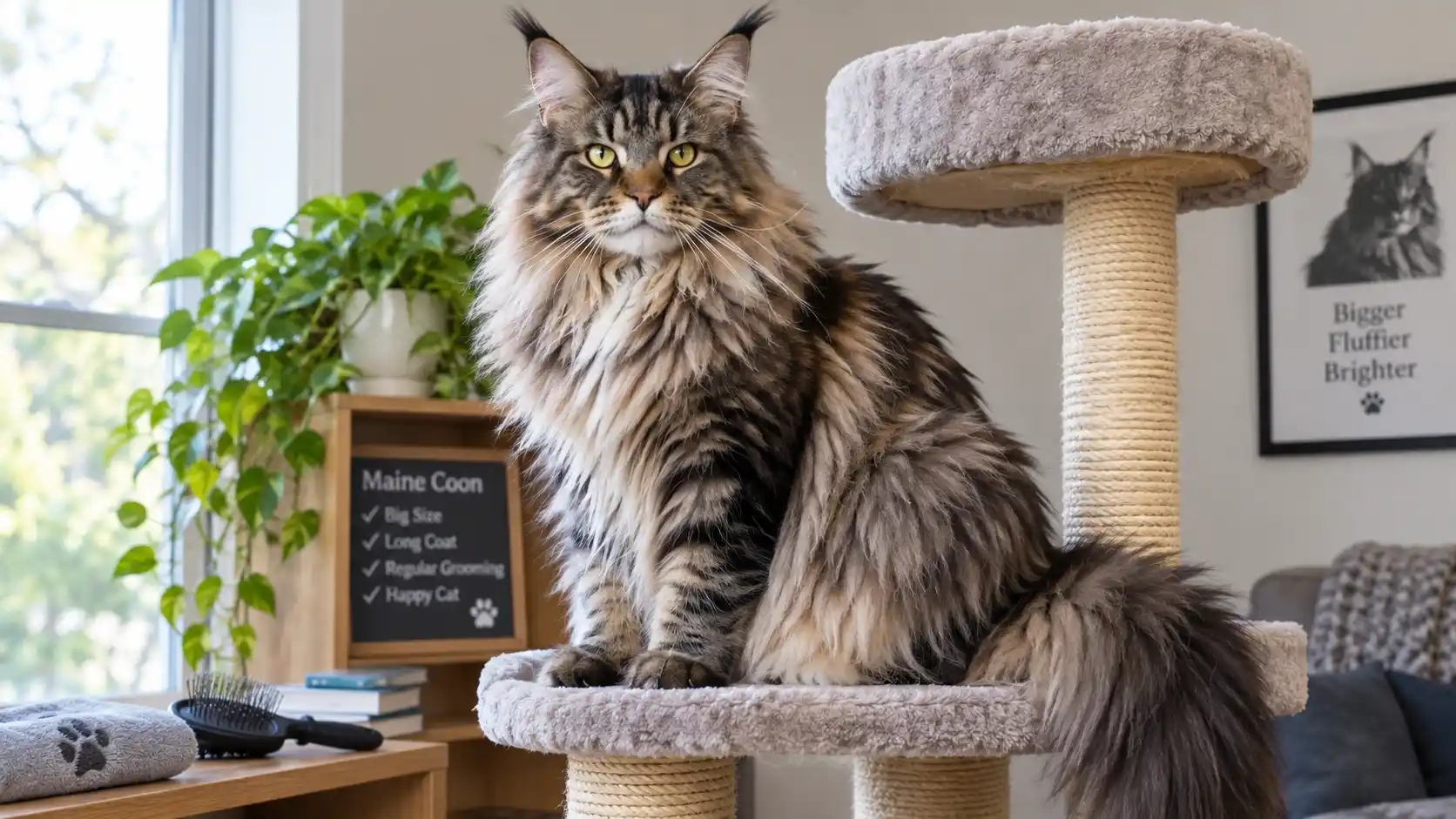
There is a reason Maine Coons show up on so many favorite breed lists. They are big, friendly, and full of personality, but that size and that gorgeous coat come with real responsibilities. This maine coon care guide walks through everything a first time owner needs to know, from feeding and grooming to the health issues this breed tends to face as it grows.
If you just brought one home or you are about to, this is the kind of practical, no nonsense information that helps you avoid the common mistakes new Maine Coon owners make.
Understanding the Maine Coon’s Size and Growth
The first thing that surprises new owners is how long a Maine Coon takes to grow up. While most cats reach full size by their first birthday, Maine Coons keep developing until they are three to four years old. That slow growth affects almost every part of their care.
Adult males typically weigh between 13 and 18 pounds, with some reaching over 20 pounds, while females usually land between 8 and 12 pounds. Length is another standout feature, with adult males often measuring 30 to 40 inches from nose to tail. This is simply a large breed, and treating a six month old Maine Coon like a fully grown cat can lead to feeding or activity mistakes.
Because growth stretches on so long, patience matters. Your Maine Coon will still look and act like a kitten in some ways well past the age when other breeds have settled into adulthood.
Feeding a Maine Coon the Right Way
Diet plays a bigger role in a Maine Coon’s development than most new owners expect, mainly because of that extended growth period.
Kittens need more frequent, calorie dense meals to support steady bone and muscle development. As they grow, their appetite will naturally taper off, but it takes longer to level out compared to smaller breeds. Here is what matters most:
- Choose a high quality food with an AAFCO nutritional adequacy statement matched to your cat’s life stage, whether that is growth, adult maintenance, or senior
- Feed kitten formula or an all life stages food during the growth years, then transition to an adult formula once your Maine Coon reaches maturity
- Keep an eye on calcium and phosphorus levels, since proper bone development matters for a breed this size
- Provide constant access to fresh water, since good hydration supports kidney and urinary health, and many Maine Coons enjoy drinking from a cat fountain over a still bowl
- Avoid table scraps, especially anything salted, spiced, or sauced, since a cat’s nutritional needs are very different from a human’s
Supplements generally are not necessary unless your vet recommends them for a specific reason. A properly balanced commercial diet already covers what a growing Maine Coon needs.
Weight Management Matters More Than You Think
Because Maine Coons are naturally large, it can be hard to tell the difference between a healthy big cat and one that is simply overweight. This matters more than it sounds, since excess weight puts extra strain on joints in a breed already prone to musculoskeletal issues.
A few practical steps help keep weight in check:
- Measure food portions instead of free feeding throughout the day
- Check body condition regularly by feeling for ribs under a light layer of fat, rather than relying on the number on a scale
- Watch calorie intake closely if your Maine Coon becomes less active as an adult, since metabolism naturally slows with age
- Talk to your vet if you notice steady weight gain, since a food switch or portion adjustment early on is much easier than managing obesity later
Keeping a lean, active Maine Coon usually means fewer joint problems and a more comfortable life overall.
Grooming the Long, Shaggy Coat
Maine Coons have a long, water resistant double coat that looks dramatic but is actually fairly manageable with the right routine. Shedding tends to be moderate most of the year with heavier seasonal shedding in spring and fall.
A solid grooming routine includes:
- Brushing two to three times a week using a slicker brush and a wide toothed comb, increasing to almost daily during heavy shedding season
- Paying close attention to areas prone to matting, like behind the ears, under the legs, and around the belly
- Trimming nails every few weeks, since overly long nails can affect how your cat walks and climbs
- Checking ears regularly for wax buildup or signs of irritation
- Brushing teeth several times a week, since dental disease is one of the most common and most overlooked health issues in this breed
Dental care deserves special attention here. Maine Coons have all their adult teeth by around six months old, and gum disease can quietly progress without obvious symptoms until it becomes serious. Regular brushing and yearly dental checks at the vet make a real difference.
Exercise and Mental Stimulation
Despite their size, Maine Coons are playful, curious cats with a moderate to high energy level, especially when they are young. They enjoy interactive play, climbing, and exploring more than many other breeds.
To keep a Maine Coon active and mentally engaged:
- Provide a sturdy cat tree or climbing shelf, since these cats enjoy height and vertical space
- Use wand toys and puzzle feeders to encourage natural hunting behavior
- Set aside short daily play sessions, especially for younger cats still burning off energy
- Rotate toys occasionally to keep things interesting, since Maine Coons can get bored with the same routine
Regular play also supports healthy weight management, which ties directly back to joint and heart health as your cat ages.
Common Health Issues to Watch For
Every good maine coon care guide needs to cover the health conditions this breed is more likely to face. Being aware of these early helps you catch problems before they become serious.
Hypertrophic cardiomyopathy, often shortened to HCM, is a heart condition that thickens the heart muscle and is more common in Maine Coons than in many other breeds. Regular vet checkups, including listening for heart murmurs, help catch this early. Some breeders also test for the genetic mutation linked to HCM.
Hip dysplasia can affect Maine Coons due to their large frame, leading to joint pain and mobility issues over time. Keeping your cat lean reduces stress on the hips and can slow the progression of related arthritis.
Spinal muscular atrophy is a genetic condition that affects muscle function, though reputable breeders typically test for this and it is less common in cats from screened lines.
Dental disease, as mentioned earlier, develops quietly and is one of the most underestimated health concerns in this breed. Consistent home care paired with annual vet checkups goes a long way.
As Maine Coons enter their senior years, arthritis, kidney issues, and general joint stiffness become more common. Increasing checkup frequency as your cat ages, sometimes to twice a year past age ten, helps catch these problems while they are still manageable.
Setting Up a Maine Coon Friendly Home
A few adjustments around the house make daily life easier for a cat this size.
- Choose a large litter box, since standard sized boxes can feel cramped for a big cat
- Provide sturdy furniture and cat trees that can support their weight without tipping
- Keep food and water bowls wide enough that their whiskers do not brush the sides, which some Maine Coons find uncomfortable
- Give them access to a cat fountain if they show interest in running water, since better hydration habits support long term kidney health.
- more info: Shih Tzu Grooming Schedule for a Healthy Coat
Final Thoughts
Caring for a Maine Coon comes down to respecting how big, how slow growing, and how food and joint sensitive this breed really is. Feed a balanced diet suited to their life stage, keep them lean, stay consistent with grooming and dental care, and watch for the health issues this breed tends to face as it ages. With attentive care, many Maine Coons live comfortably into their mid teens and sometimes well beyond.
Following the basics laid out in this maine coon care guide, and staying consistent with vet visits along the way, sets your gentle giant up for a long, healthy, and happy life by your side.