
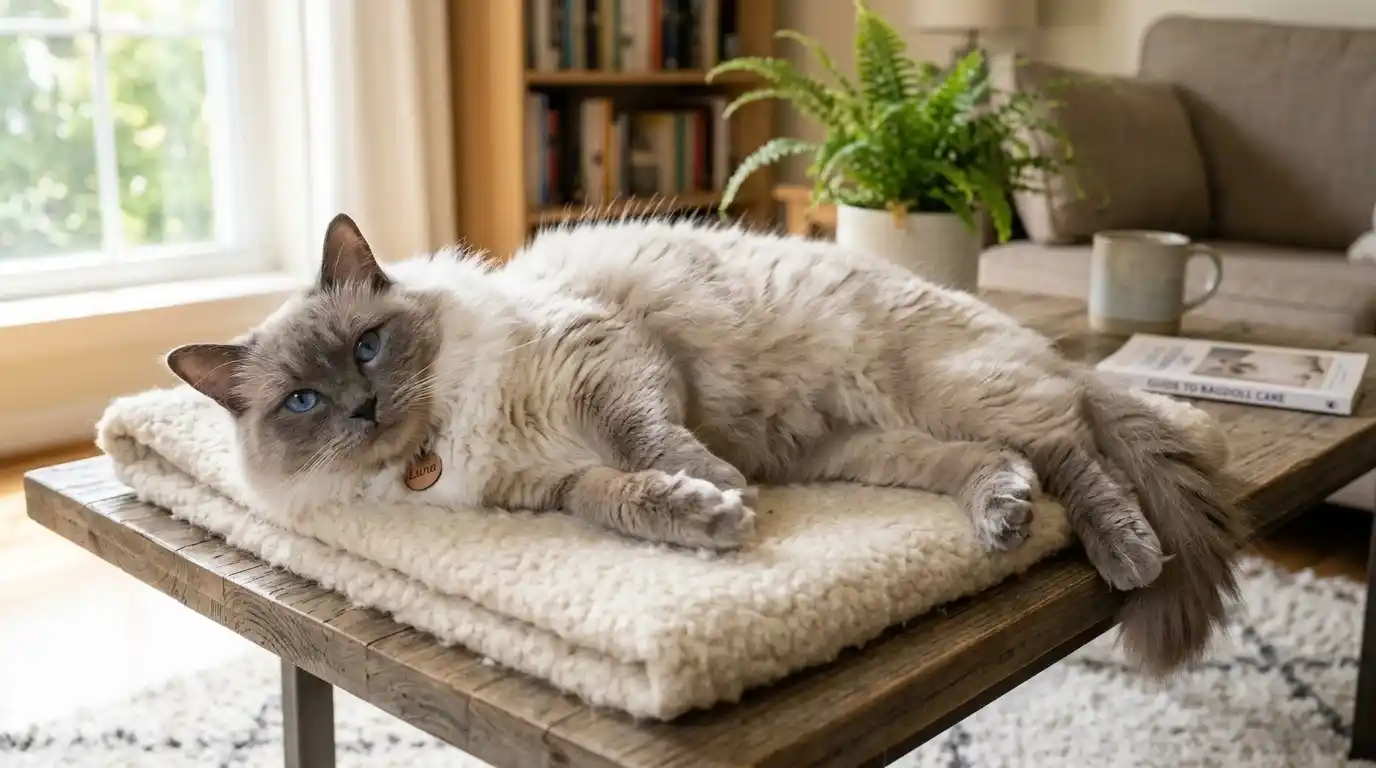
Ragdolls have a reputation for going limp and relaxed the moment you pick them up, which is exactly how the breed got its name. That easygoing personality makes them wonderful companions, but good ragdoll cat care still requires attention in a few specific areas. This breed is large, laid back, and prone to a handful of health issues that are much easier to manage when you know what to watch for from the start.
This guide covers everything a Ragdoll owner needs, from diet and grooming to the health conditions that show up most often in this breed.
Getting to Know the Ragdoll Temperament
Understanding what makes Ragdolls different helps explain almost every care decision that follows. This breed is known for being affectionate, gentle, and unusually dog like in how closely they follow their owners from room to room. They tend to be calm and easygoing, which makes them a great fit for families and first time cat owners.
That relaxed personality comes with a tradeoff. Ragdolls are naturally less active than many other breeds, which means weight management becomes a bigger priority than it might be with a more energetic cat. Keeping that in mind from day one shapes how you approach feeding and exercise.
Ragdolls are also a large breed. Males often weigh between 15 and 20 pounds, while females typically land between 10 and 15 pounds. With proper care, they commonly live between 12 and 17 years, and some reach their late teens or even early twenties.
Feeding a Ragdoll the Right Way
Diet plays a central role in ragdoll cat care, mainly because this breed’s relaxed lifestyle makes weight gain a real risk if feeding is not managed carefully.
Here is what actually matters when it comes to feeding:
- Choose a high quality food with a strong protein content, since cats need protein as their primary energy source
- Feed measured meals on a schedule, ideally two meals a day for adults and three for kittens and seniors, rather than leaving food out all day
- Include wet food alongside dry food, since the added moisture supports urinary and kidney health, both areas where Ragdolls can be prone to issues
- Provide constant access to fresh water, and consider a cat fountain, since many cats drink more from moving water than from a still bowl
- Avoid free feeding entirely if your cat tends to overeat, since Ragdolls are known for eating past the point of being full when food is always available
Talk to your vet about the best food for your specific cat, especially if there is a family history of urinary issues or heart disease. Some brands even make formulas designed specifically for the breed’s nutritional needs.
Weight Management Deserves Extra Attention
Because Ragdolls are naturally less active and larger than average, obesity is one of the most common preventable problems in this breed. Extra weight puts strain on joints and increases the risk of diabetes and heart issues down the line.
A few practical steps help keep weight in check:
- Stick to measured portions instead of guessing
- Encourage regular play sessions, even short ones, to keep your cat moving throughout the day
- Check body condition periodically by feeling for ribs under a light layer of fat rather than relying only on a scale
- Adjust food intake as your cat ages, since activity naturally slows down over time
Catching weight gain early is much easier to manage than trying to reverse obesity once it has developed, so regular monitoring is worth the small effort.
Grooming the Semi-Long Coat
Ragdolls have a semi-long, silky coat with a minimal undercoat, which actually makes grooming easier than it looks. Shedding is moderate for most of the year with a noticeable increase during spring shedding season.
A simple grooming routine works well:
- Brush two to three times a week during normal periods, increasing to almost daily during heavy shedding season
- Use a slicker brush or metal comb to reach through the coat without pulling on the skin
- Pay attention to areas prone to matting, such as behind the ears, under the arms, and around the belly
- Trim nails regularly, since overly long nails can affect movement and increase the risk of snagging on furniture or bedding
- Clean ears every couple of months, since Ragdolls typically do not produce much earwax and rarely need frequent cleaning
Dental care deserves its own mention here. Ragdolls have a slightly shorter face structure that can increase the risk of dental disease, so daily tooth brushing, or at least a few times a week, makes a real difference in preventing tartar buildup and gum problems later on.
Creating a Safe Indoor Environment
Ragdolls do best as indoor cats, and the difference in outcomes is significant. Indoor cats typically live well into their teens, while cats allowed to roam outdoors face a much higher risk of injury, disease exposure, and shortened lifespan.
To keep an indoor Ragdoll happy and enriched, consider the following:
- Provide vertical space like cat trees or wall shelves, since climbing gives them a sense of security and something to do
- Offer interactive toys and puzzle feeders to prevent boredom, especially since this breed is intelligent despite its laid back reputation
- Keep a clean, appropriately sized litter box, since Ragdolls are sensitive to a dirty or cramped space
- Make sure the home is free of small objects they might chew on, since some Ragdolls are known to be curious chewers
Ragdolls can also be trained to walk on a leash or learn simple tricks, which is a fun way to add mental stimulation and light exercise to their routine.
Common Health Issues to Watch For
A responsible approach to ragdoll cat care means understanding the health conditions this breed faces more often than others.
Hypertrophic cardiomyopathy, or HCM, is a heart condition where the heart muscle thickens abnormally, and it is one of the more serious concerns in this breed. Regular vet checkups, including listening for heart murmurs, help catch early signs, and some breeders test for the genetic marker linked to this condition.
Bladder stones are another concern, often tied to hydration and diet. Signs include straining in the litter box, blood in the urine, or vocalizing discomfort while urinating. Feeding wet food and ensuring constant access to fresh water are two of the simplest ways to reduce this risk.
Polycystic kidney disease, often shortened to PKD, is a genetic condition that can affect kidney function over time. Reputable breeders typically screen for this, making it less common in cats from tested lines, but it is still worth knowing about, especially if your cat’s history is unknown.
As Ragdolls move into their senior years, joint stiffness and reduced mobility can develop, which ties back to the importance of maintaining a healthy weight throughout their life.
Building a Long Term Care Routine
Good long term care comes down to consistency rather than doing everything perfectly at once. A realistic routine includes:
- Annual vet visits for adults, moving to twice a year once your cat reaches senior age
- Baseline blood and urine testing around one year old to establish a healthy reference point for future checkups
- Consistent feeding times and portions rather than free feeding
- Regular grooming sessions worked into your weekly routine
- Watching for changes in appetite, energy, or litter box habits, since these are often the earliest signs something is off
None of these steps are complicated on their own. The value comes from doing them consistently over the years rather than only reacting once a problem shows up.
more info: Complete Maine Coon Care Guide for First-Time Owners
Final Thoughts
Caring for a Ragdoll comes down to understanding their relaxed nature, their tendency toward weight gain, and the specific health conditions this breed is more likely to face. Feed measured portions of quality food, keep grooming and dental care consistent, provide enrichment despite their calm personality, and stay ahead of health screenings for heart and kidney conditions. With attentive ragdoll cat care, most of these gentle, affectionate cats go on to live long, comfortable lives well into their teens.
Start with the basics covered here, stay consistent with vet visits, and adjust as your cat moves through each life stage. That kind of steady attention is really what keeps a Ragdoll thriving for years to come.