
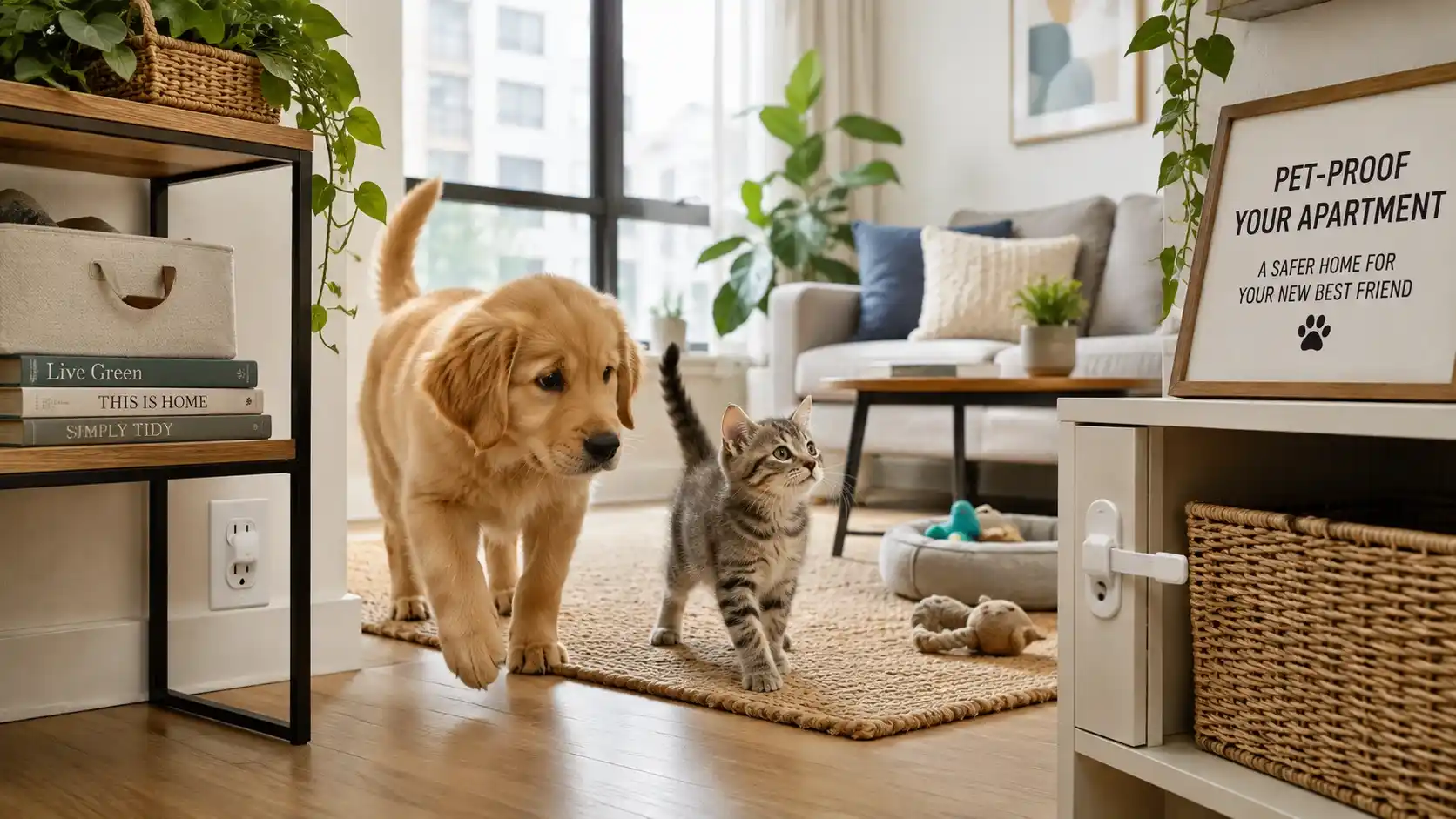
If you are figuring out how to pet-proof your apartment for a new puppy or kitten, you are not overthinking it. Apartments come with their own set of hazards that a house with a big yard simply does not have, like balconies, shared hallways, and tight kitchens packed with tempting counters. A curious puppy or kitten explores everything with her mouth and her paws, and small living spaces mean danger is often within easy reach. The good news is that pet-proofing an apartment does not require a total renovation. A few focused changes room by room will keep your new pet safe while she settles in.
Start With the Big Picture
Before diving into individual rooms, walk through your apartment at your pet’s eye level. Get down low and look around, especially if you are bringing home a kitten who will explore both up high and underneath furniture. Things you would never notice standing up, like a dangling cord or a gap under the couch, become obvious the moment you crouch down.
Aim to finish your pet-proofing at least a couple of days before your new arrival comes home. Living in the space for a bit often reveals hazards you missed the first time through.
Living Room Safety
The living room is usually where your new pet will spend a lot of time, which makes it one of the most important rooms to secure first.
- Tuck away or cover electrical cords, since puppies and kittens love chewing on them and cords can cause burns or worse
- Move small items like remote batteries, coins, hair ties, and children’s toys out of reach, since these are common choking hazards
- Secure bookshelves or tall furniture that could tip if climbed on, especially important for kittens
- Check underneath and behind recliners before closing them, since cats sometimes hide inside the mechanism
- Remove or relocate any toxic houseplants, since common varieties like philodendrons and sago palms are dangerous if chewed or swallowed
- Put breakable items on higher shelves, out of paw’s reach
If you keep candles or a space heater in the living room, never leave them unattended once your new pet has full access to the space.
Kitchen Safety
Kitchens hide a surprising number of dangers, especially in an apartment where counters, trash, and food are often close together.
- Keep food off counters entirely, since dogs and cats are both capable of counter surfing once they are tall enough or motivated enough
- Store knives and sharp utensils in drawers rather than on countertops
- Use a trash can with a locking lid, or keep it inside a latched cabinet
- Install childproof latches on lower cabinets, especially any that store cleaning products
- Keep toxic foods, including chocolate, grapes, raisins, onions, and garlic, completely out of reach
- Watch for sugar free gum or peanut butter containing xylitol, which is highly toxic to dogs even in small amounts
- Always double check the inside of the oven, dishwasher, and washing machine before closing them, since curious pets sometimes climb inside without you noticing
Apartment kitchens are often compact, which means pets have less distance between them and anything left out. A little extra vigilance here goes a long way.
Bathroom Safety
The bathroom looks harmless, but it is packed with small, dangerous objects that are easy for a curious pet to find.
- Store medications, vitamins, and supplements in a closed cabinet, never left out on a counter or sink
- Keep the toilet lid closed, both to prevent drowning risk in small kittens and to stop them from drinking cleaning chemicals left in the bowl
- Put away razors, dental floss, cotton swabs, and rubber bands, all of which are choking or laceration hazards
- Store cleaning products in a latched cabinet rather than under the sink where pets can nose their way in
- Keep hair ties and small hair accessories off the floor and counters, since these are frequent culprits in emergency vet visits
Bedroom Safety
Bedrooms often get overlooked during pet-proofing, but they hold plenty of small items that end up in a puppy or kitten’s mouth.
- Keep shoes, socks, and clothing off the floor, since fabric and elastic can cause serious intestinal blockages if swallowed
- Store jewelry, hair ties, and small accessories in closed drawers
- Tuck away phone chargers and cords, or use cord protectors to discourage chewing
- Check closets before closing the door, especially with kittens who may sneak inside unnoticed
- Consider keeping a crate or a cozy pet bed near your own bed for the first few weeks, which helps puppies settle faster and makes nighttime bathroom breaks easier to manage
Balcony and Window Safety
This is one of the biggest differences between pet-proofing an apartment and pet-proofing a house, and it deserves extra attention.
Balconies pose a real fall risk for both puppies and kittens, so access should be limited or fully blocked until your pet is older and more predictable. If you do allow supervised balcony time, make sure railings have no gaps a small pet could squeeze through, and never leave a puppy or kitten unsupervised outside, even briefly.
Windows deserve just as much caution. Cats in particular are prone to what is often called high rise syndrome, where a cat chasing a bird or bug can lose her footing and fall from an open window. Make sure window screens are sturdy and securely latched, not just resting in the frame. A screen that looks secure can still pop out under a determined cat’s weight.
Managing Shared Spaces and Hallways
Apartment living often means shared hallways, elevators, and entryways, which come with their own set of considerations.
- Keep your pet on a leash or securely carried when moving through common areas, since a startled puppy or a bolting kitten can easily slip away in a hallway
- Be mindful of your front door, since new pets often try to dash out the moment it opens
- Consider a baby gate near the entryway during the first few weeks to create a buffer zone before your pet reaches the door
- Check for gaps under doors leading to hallways or storage closets that a kitten could squeeze through
Toxic Plants Worth Double Checking
Houseplants are common in apartments, especially in smaller spaces where greenery adds life without taking up much room. Unfortunately, many popular varieties are toxic to pets. Common culprits include lilies, which are extremely dangerous for cats, along with philodendrons, sago palms, and pothos. If you are not sure whether a plant you own is safe, look it up before your new pet arrives rather than after. Swapping risky plants for pet safe alternatives, like spider plants or Boston ferns, lets you keep your greenery without the worry.
Setting Up a Safe Home Base
In addition to removing hazards, it helps to give your new puppy or kitten a small, contained space to start in rather than the full run of the apartment right away. A single room with a bed, food, water, and appropriate toys lets her adjust gradually, and it gives you a controlled environment to double check for anything you might have missed. You can slowly expand her access to the rest of the apartment as she shows she can be trusted with more freedom.
This approach also makes pet-proofing more manageable. Instead of trying to secure the entire apartment at once, you can focus fully on one space first and work outward from there. more info: Pets Oral Care: Mouth Care of Your Pet
Final Thoughts
Pet-proofing an apartment for a new puppy or kitten does not need to be complicated, but it does require walking through your space with fresh eyes and thinking like your pet would. Cords, small objects, toxic plants, open windows, and balconies deserve the most attention, since these are the hazards most specific to apartment living. Take it room by room, give your new pet a contained space to start, and expand her freedom as she grows more settled. A little preparation before she comes home makes the first few weeks safer and far less stressful for both of you.