
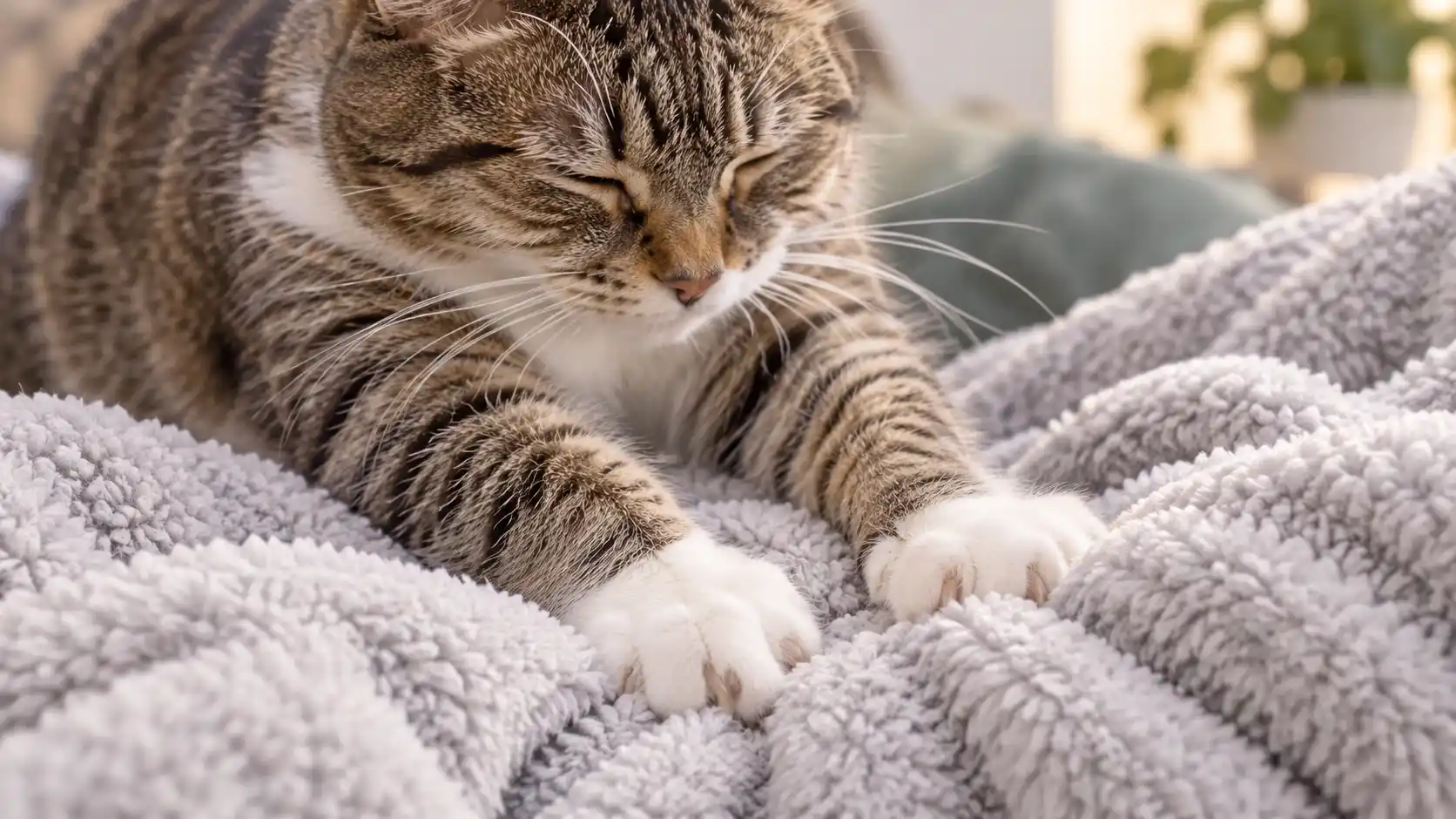
If you have ever asked yourself why does my cat knead me while she pushes her paws into your lap and purrs like a tiny engine, you are far from the only one. It is one of the most common cat behaviors, and it looks equally sweet and strange at the same time. Some cats do it gently. Others dig their claws in hard enough to make you wince. Either way, this habit goes back to kittenhood, and once you understand where it comes from, it actually makes a lot of sense.
What Kneading Actually Looks Like
Kneading is when a cat presses one paw and then the other into a soft surface, over and over, almost like she is working dough. People often call this making biscuits because the motion looks so similar to bread kneading. Some cats knead with claws fully extended, some purr through the whole thing, and a few even drool a little without realizing it. It usually happens on laps, blankets, pillows, or stuffed animals, and it tends to show up right before your cat settles in for a nap or a long cuddle session.
Not every cat kneads with the same intensity. Some barely touch the surface. Others really lean into it, claws and all. Both versions are completely normal.
It Starts With Nursing
The root of this behavior goes all the way back to kittenhood. When kittens nurse, they knead their mother’s belly with their tiny paws. This motion helps stimulate milk flow, making it easier for the kitten to feed. It is an instinctive action that kittens do automatically, without ever being taught.
During this process, nursing also triggers the release of oxytocin, often called the bonding hormone. This chemical helps strengthen the connection between mother and kitten, creating a sense of safety and comfort. That early association between kneading and feeling secure sticks with many cats long after they stop nursing.
So when your adult cat kneads you, she may be tapping into that same feeling from her earliest days. In a way, she is recreating a memory of comfort and safety, just with you instead of her mother.
Why Adult Cats Keep Doing It
You might wonder why adult cats keep this behavior around when they no longer need to nurse. There are a few solid reasons.
Kneading feels good. The repetitive motion is thought to release calming brain chemicals, similar to what happens when people stretch after sitting too long. This can leave your cat feeling relaxed and content, which is part of why kneading often happens right before naptime.
It is also linked to comfort and security. If your cat feels safe with you, kneading can be her way of expressing that. Many cats only knead the people or spots they feel most relaxed around, so it is often a genuine compliment when your cat chooses your lap for this.
Kneading can also be a form of communication. Cats have scent glands in their paw pads, and kneading releases pheromones from those glands. This is one way cats mark their territory or claim ownership over something, including you. If your cat kneads a blanket, a pillow, or your leg, she may be leaving her scent behind as a subtle way of saying this is mine.
Kneading as a Sign of Affection
For most cats, kneading you directly is a sign of trust and affection. Cats are not big fans of vulnerability, so choosing to settle onto your lap and knead away shows she feels safe enough to relax completely around you. It often comes paired with other affectionate behaviors, like purring, slow blinking, or rubbing her head against you.
If your cat only kneads certain people in the household, that is not unusual either. Cats tend to reserve this behavior for whoever they feel most bonded to, so it can be a nice signal of where you stand in her eyes.
Nesting Instincts From the Wild
Another theory traces kneading back to wild cat ancestors. Before cats were domesticated, they needed to prepare safe resting spots in tall grass or foliage. Pressing down grass and leaves with their paws helped create a flatter, more comfortable area to sleep or rest.
Even though your indoor cat has never had to build a nest in the wild, that instinct can still show up when she kneads a blanket or cushion before curling up. It is essentially the same behavior, just aimed at your couch instead of a patch of grass.
Stretching and Muscle Relief
Cats are naturally athletic, built for jumping, pouncing, and quick bursts of movement. Kneading may double as a light stretch for their paw and leg muscles, helping keep them limber and ready for action. This is similar to how people stretch after sitting for a while.
Some cats also knead more when they are getting comfortable after a period of rest, almost like a quick warmup before settling in fully.
When Kneading Might Signal Something Else
In most cases, kneading is completely normal and nothing to worry about. That said, there are a couple of situations worth knowing about.
- Unspayed female cats may knead as part of their heat cycle behavior, often paired with increased vocalization and affection.
- A noticeable increase in kneading, especially paired with stress signals like hiding or changes in appetite, could point to anxiety or discomfort.
- A sudden decrease in kneading, especially in a cat who used to do it often, can sometimes be worth mentioning to your vet, particularly if paired with other behavior changes.
If your cat’s kneading habits change dramatically in either direction, it is worth keeping an eye on her overall behavior and mentioning it at her next vet visit.
What to Do if Kneading Hurts
Cat claws are sharp, and kneading with claws extended can be uncomfortable, especially on bare skin. The good news is you do not need to stop the behavior altogether, since it is a natural and healthy part of your cat’s emotional expression.
Here are a few simple ways to make kneading more comfortable for everyone:
- Keep a thick blanket nearby to place on your lap before your cat settles in.
- Trim your cat’s nails regularly to reduce sharpness.
- Gently redirect her paws to a cushion or blanket if the claws start digging in too much.
- Avoid scolding or pushing her away, since this can confuse her and create unnecessary stress.
Punishing a cat for kneading is never a good idea. It is an instinctive behavior, not misbehavior, and trying to suppress it can damage the trust your cat has built with you.
more info: Can Cats Be Trained Like Dogs
Final Thoughts
So the next time your cat curls up, pushes her paws into your lap, and starts kneading away, you can appreciate it for what it really is. It is a leftover habit from kittenhood, tied to comfort, security, and even a little bit of communication through scent. Most of the time, it simply means your cat feels safe and happy with you. As long as the behavior stays consistent with her normal patterns, there is nothing to worry about. It is just your cat’s own quiet way of saying she trusts you completely.