
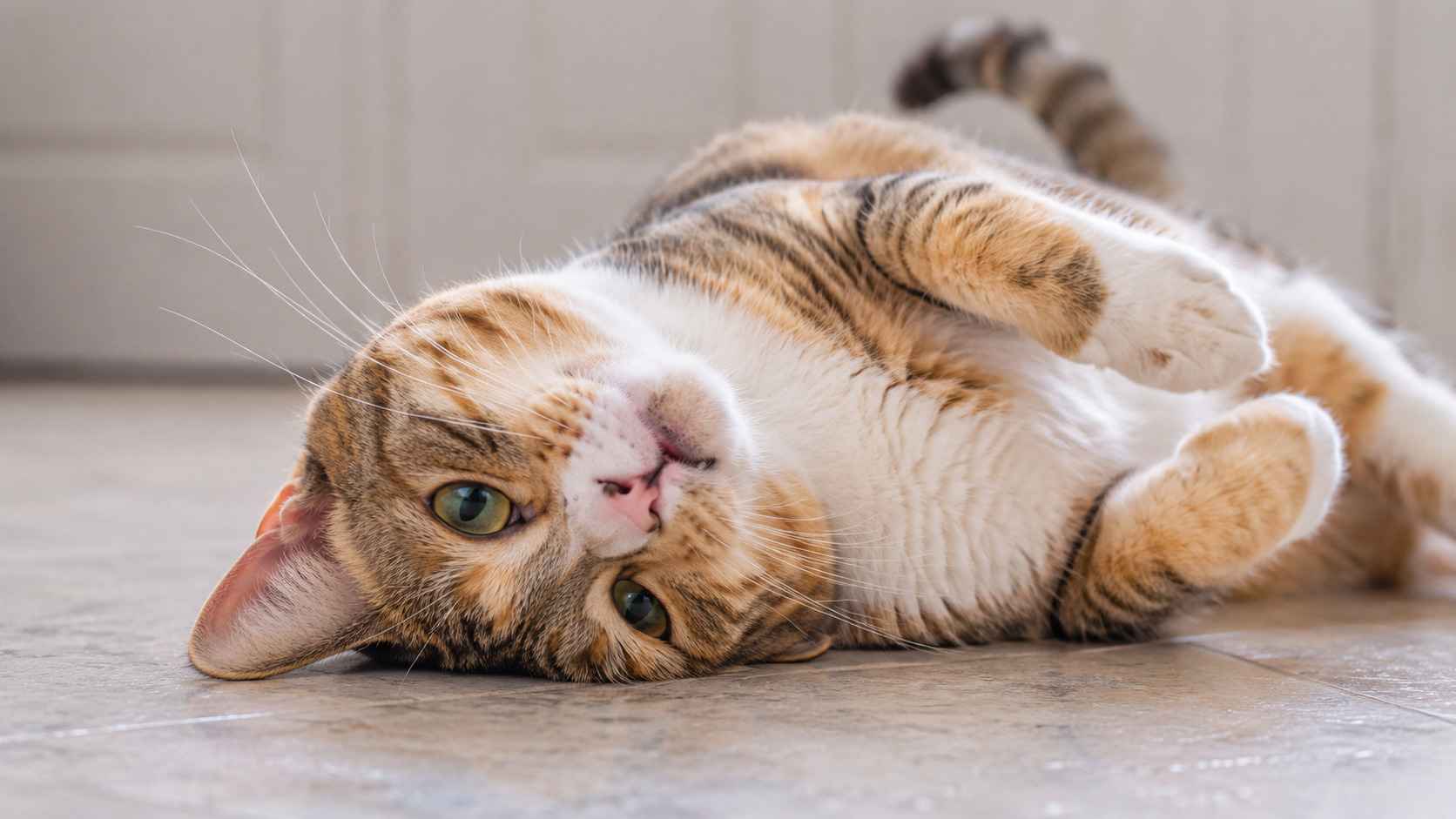
If you have an unspayed female cat, you have probably noticed her acting strange every few weeks. She yowls at odd hours, rubs against everything in sight, and rolls around on the floor like she has lost her mind. This is called being in heat, and it can catch new cat owners completely off guard. So how long do cats stay in heat, and what should you actually do about it? Let’s walk through the timeline, the signs, and the steps that actually help.
How Long Do Cats Stay in Heat
On average, a cat stays in heat for about seven days. But that number is not fixed. Some cats show signs for as little as two or three days, while others stay in heat for two to three weeks. Vets generally agree the range falls somewhere between one and twenty one days, with most cats landing in the four to ten day range.
If your cat mates with a male during this time, her heat period usually ends faster, often within four days. That is because cats are induced ovulators. Unlike humans, they do not release eggs on a set schedule. Mating itself triggers ovulation, which is part of why the whole cycle can feel unpredictable.
If she does not mate, she will simply go out of heat for a while and then come back into it again. This is normal and it will keep happening throughout the breeding season unless she is spayed.
The Stages of a Cat’s Heat Cycle
A heat cycle is not just one long stretch of odd behavior. It actually moves through distinct stages, and knowing them helps you understand what your cat is experiencing.
Proestrus
This is the lead up to heat. It usually lasts one to two days and often goes unnoticed because the visible signs are mild. Your cat may become a little more affectionate, but nothing dramatic yet.
Estrus
This is what most people mean when they say a cat is in heat. She is now fertile and receptive to males. This stage is when you will see the loud calling, restlessness, and unusual postures. It typically lasts anywhere from three to fourteen days, though the exact length depends on the individual cat.
Interestrus
If mating does not happen, your cat enters a short resting phase before the cycle starts again. This can last anywhere from a few days to about two weeks.
Diestrus
If ovulation happened but pregnancy did not follow, or if a false pregnancy occurs, your cat enters this phase, which can stretch for several weeks before her body resets.
Anestrus
This is the quiet season when your cat is not cycling at all. For outdoor cats, this usually falls in late fall and winter when daylight hours are shorter. Indoor cats living under artificial light sometimes skip this resting period entirely and cycle almost year round.
Signs Your Cat Is in Heat
Cats do not bleed noticeably during heat the way dogs often do, so the signs you need to watch for are mostly behavioral. Here is what tends to show up:
- Loud, prolonged yowling or crying, especially at night
- Rolling around on the floor more than usual
- Rubbing her head and body against furniture, doorways, and you
- Raising her hindquarters and treading her back legs when petted near the base of her tail, sometimes called the elevator pose
- Increased affection or clinginess
- Restlessness and pacing
- Trying to slip outside or escape through open doors
- A drop in appetite
- Frequent urination or spraying in some cats
These behaviors can be intense, and it is common for owners to worry something is wrong. In most cases, this is simply hormonal and not a sign of pain or illness. Still, if something feels off, like unusual discharge or signs of real distress, a vet visit is worth it.
How Often Do Cats Go Into Heat
If your cat is not spayed and does not become pregnant, she will keep cycling roughly every two to three weeks throughout her breeding season. In the Northern Hemisphere, that season generally runs from early spring through fall, though it can start as early as January and continue into late autumn depending on climate and daylight.
Indoor cats are a bit of a special case. Because indoor lighting mimics longer days, some indoor cats cycle almost continuously, with little to no break during winter. This can mean frequent heat cycles throughout the entire year, which is exhausting for both the cat and the household.
Most cats have their first heat between five and nine months of age, though some breeds like Siamese cats can start as early as four months. Larger cats sometimes take a little longer to reach that first cycle. Once it starts, heat cycles continue for the rest of her life unless she is spayed. Cats do not go through anything like menopause.
What Affects How Long a Cat Stays in Heat
A few factors influence how long each cycle lasts:
Mating. If your cat mates during estrus, the cycle typically shortens and ends within a few days.
Age. Younger cats often have less predictable heat lengths. As cats mature, their cycles tend to become more consistent.
Breed. Some breeds, particularly Siamese and other Oriental breeds, are more sensitive to hormonal shifts and may stay in heat longer than average.
Environment. Temperature and light exposure play a real role. Warmer climates and longer daylight hours, whether natural or artificial, tend to keep cats cycling more often and sometimes for longer stretches.
What to Do When Your Cat Is in Heat
There is no way to stop a heat cycle once it starts, but there is plenty you can do to make it easier on both of you.
- Keep her indoors at all times. This is the single most important step to prevent an unwanted pregnancy, since her instinct to find a mate becomes very strong during estrus.
- Give her extra attention and gentle affection if she seeks it out. Some cats calm down slightly with more physical closeness.
- Provide distractions like interactive toys, scratching posts, or puzzle feeders to redirect her restless energy.
- Keep windows and doors secured, since cats in heat are surprisingly determined escape artists.
- Avoid punishing or scolding her for the behavior. She is not acting out. This is instinct, not misbehavior.
- Talk to your vet about spaying if you have not already. This is the only permanent way to stop heat cycles altogether.
Spaying does more than stop the yowling and restlessness. It also lowers the risk of uterine infections and certain reproductive cancers later in life, so there is a real health upside beyond just convenience.
When to Call the Vet
Most heat cycles are uncomfortable to witness but not dangerous. That said, contact your vet if you notice heavy bleeding, since cats normally show little to none, or if your cat seems to be in genuine pain rather than just restless. A heat cycle that seems unusually long, or behavior changes that feel extreme, are also worth mentioning at your next appointment.
More Info: Why Cat Suddenly Not Using the Litter Box
Final Thoughts
A cat’s heat cycle usually lasts around a week, though anywhere from a few days to a few weeks is considered normal. It will keep coming back every couple of weeks during breeding season unless she becomes pregnant or gets spayed. The behaviors can be loud and a little startling if you have never dealt with them before, but they are a completely natural part of feline biology. Keeping her indoors, staying patient, and talking to your vet about spaying will make the whole experience far easier to manage for both of you.