
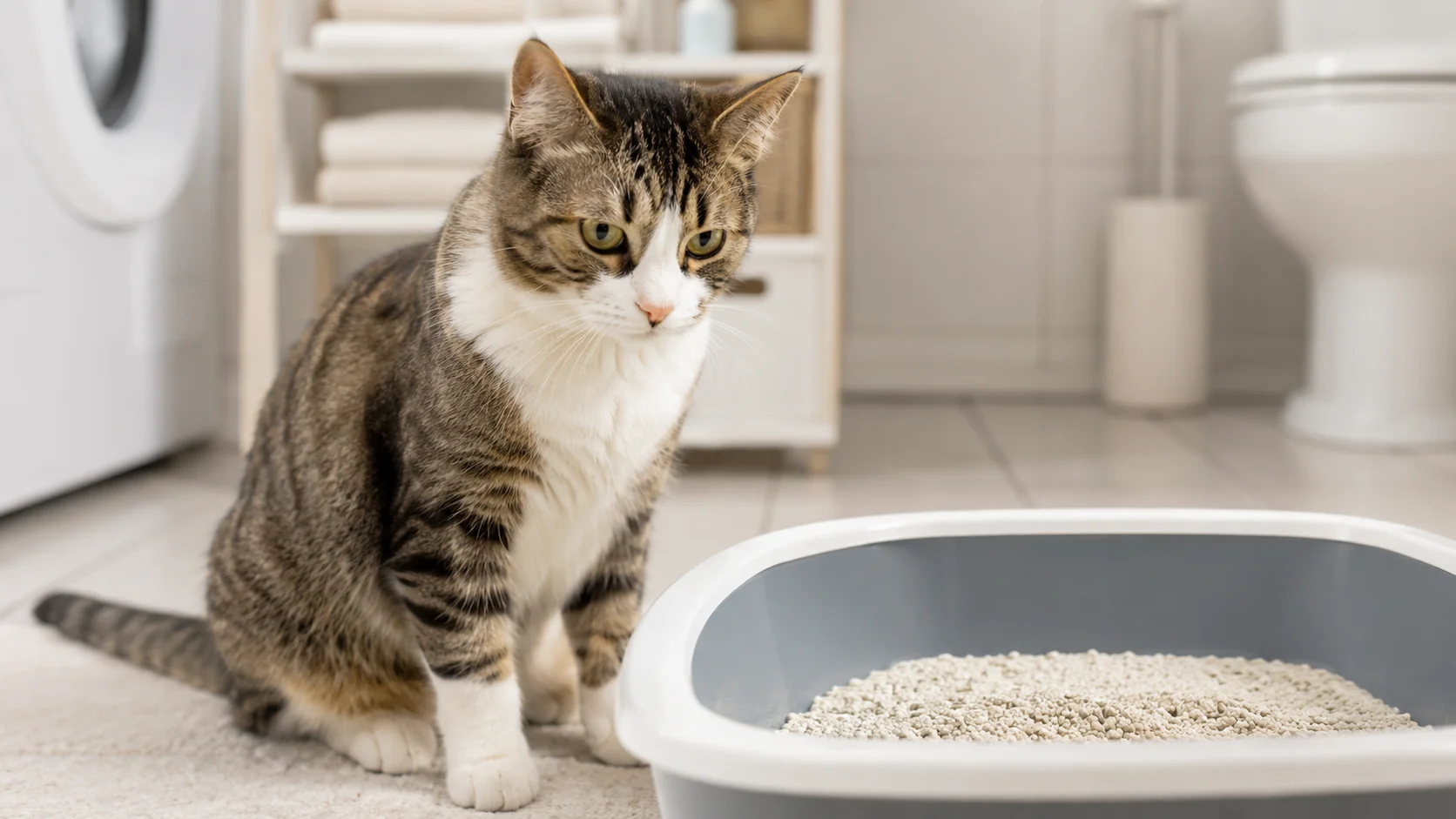
One day your cat is using the litter box like clockwork. The next, you’re finding puddles on the bath mat or a surprise behind the couch. It’s frustrating, it’s confusing, and if you’re like most cat owners, your first thought jumps straight to “is my cat mad at me?”
Here’s the reassuring truth: cats don’t act out of spite. When a previously reliable litter box user suddenly stops, it’s always communicating something: a medical problem, a stressor, or a complaint about the box itself. Your job isn’t to punish the behavior; it’s to play detective and figure out what changed.
This guide walks through the real, vet-backed reasons cats suddenly avoid the litter box, how to tell them apart, and exactly what to do about each one.
First: Rule Out a Medical Problem
Before you touch the litter box, type, or location, get your cat checked by a veterinarian, especially if the change was sudden. Sudden litter box avoidance is one of the most common early signs of a medical issue, and treating it as “just behavior” can delay care for something painful.
Conditions commonly linked to litter box avoidance include:
- Feline idiopathic cystitis (FIC) or urinary tract infections: causes pain during urination, which cats often associate with the box itself
- Bladder stones or urinary blockages: a true emergency, especially in male cats, who can develop a life-threatening blockage within hours
- Kidney disease or diabetes: both increase thirst and urine volume, which can overwhelm a box that isn’t cleaned often enough
- Arthritis or joint pain: makes climbing into a high-sided or covered box physically uncomfortable, particularly in senior cats
- Digestive issues or parasites: can cause diarrhea or discomfort that a cat associates with the box
Watch for these red flags that mean “vet visit today, not next week”: straining to urinate with little or no output, crying out while in the box, blood in the urine, frequent trips to the box, lethargy, or vomiting. A blocked male cat can be a medical emergency, so don’t wait if you see these signs.
Once medical causes are ruled out or treated, it’s time to look at behavior and environment, which cause the vast majority of ongoing cases.
1. The Litter Box Isn’t Clean Enough
Cats are famously fastidious, and a litter box that smells or looks dirty to a human is often unbearable to a cat’s far more sensitive nose. If you’re not scooping daily, this is frequently the simplest explanation.
What to do: Scoop waste at least once a day, wash the box weekly with unscented soap and warm water, and fully replace the litter on a regular schedule depending on the type you use.
2. You Changed the Litter Type or Brand
Cats develop strong preferences for texture and scent, and most prefer a soft, sand-like texture over pellets, crystals, or coarse granules. If you recently switched brands, switched to a scented litter, or changed the depth of litter in the box, that alone can be enough to trigger avoidance.
What to do: If you must switch litter, do it gradually by mixing the new litter in with the old, increasing the ratio over one to two weeks. Stick with unscented litter, since fragrances that seem pleasant to us are often overwhelming to cats.
3. The Box Was Moved or Is in the Wrong Spot
Cats are creatures of habit, and a sudden relocation of the litter box can throw them off completely. Cats also have real opinions about where a box should live: they want a quiet, low-traffic spot with at least one clear escape route, away from their food and water, and never wedged into a tight corner with no way to see who’s approaching.
What to do: If you need to move a box, do it gradually, just a few inches per day, rather than all at once. Avoid laundry rooms, furnace closets, or anywhere with sudden loud noises, and never place a box right next to a noisy appliance.
4. There Aren’t Enough Litter Boxes
This is one of the most overlooked causes, especially in multi-cat homes. The standard rule of thumb is one litter box per cat, plus one extra, so a two-cat household should ideally have three boxes, placed in different locations rather than clustered together.
What to do: Add boxes if you’re under the recommended number, and spread them across different areas or floors of the home. Some cats also prefer separate boxes for urinating and defecating, so having extra options can solve the problem instantly.
5. The Box Itself Is the Problem
Sometimes it’s not the litter or the location. It’s the box. Common issues include:
- Too small. A box should be about one and a half times your cat’s body length so they can comfortably turn around.
- Covered or hooded boxes. Many cats instinctively avoid enclosed spaces because they feel trapped with no escape route, even if there’s no actual danger.
- Liners. Plastic liners can catch a cat’s claws and create an unpleasant sensation with every scratch.
- Outgrown boxes. A box bought for a kitten may simply be too small once your cat reaches adulthood.
What to do: Size up if needed, remove liners, and consider switching to an open, uncovered box, especially if the avoidance started after you introduced a hooded one.
6. Stress, Anxiety, or a Household Change
Cats are far more sensitive to change than they let on. A new pet, a new baby, houseguests, moving furniture, construction noise, or even a new stray cat visible through the window can be enough to disrupt litter box habits. In multi-cat homes, a more confident cat “guarding” the litter box area can also intimidate a less confident cat away from using it.
Stress-related avoidance often looks different from a dirty-box problem: cats may urinate on soft items like bedding, laundry, or rugs, particularly items with new or unfamiliar smells.
What to do: Try to identify what changed recently in the home. Give your cat multiple safe litter box options in quiet, low-traffic areas, and consider pheromone diffusers, extra vertical space, or hiding spots to help reduce overall stress. If tension between cats seems to be the cause, adding boxes in neutral, separate territories usually helps.
7. A Bad Experience in or Near the Box
If something startled or hurt your cat while they were using the litter box, such as a loud noise, another pet cornering them, or pain from a medical issue, they can form a negative association with that specific box, and sometimes with litter boxes in general. You may notice your cat entering the box, then bolting out quickly without finishing, or hesitating and pacing before stepping in.
What to do: Try offering a fresh box with different litter in a completely new location to help your cat form a new, positive association. Give it time. This kind of aversion often resolves faster than you’d expect once the negative trigger is removed.
What NOT to Do
- Never punish or scold your cat for accidents outside the box. Cats don’t understand punishment in this context, and it only adds stress, which worsens the underlying problem.
- Don’t rub their nose in it or physically place them in the box repeatedly. This is an outdated method that creates fear, not learning.
- Don’t skip the vet visit because you’re sure it’s “just behavior.” Many behavioral-looking cases turn out to have an underlying medical cause.
- Don’t use the soiled spot as the new litter box location without a plan. Instead, clean it thoroughly with an enzymatic cleaner to fully remove the scent, or the cat may return to it repeatedly.
How Long Does It Take to Fix?
Most environmental and behavioral causes, such as a dirty box, wrong litter, or poor placement, start improving within a few days to two weeks once the fix is in place. Stress-related or trauma-related avoidance can take longer, sometimes several weeks, especially if there are multiple contributing factors. If you’ve addressed every possible cause and the problem persists beyond two to three weeks, or if it started suddenly with no clear trigger, loop your vet back in for a second look or ask about a referral to a veterinary behaviorist.
The Bottom Line
A cat that suddenly stops using the litter box isn’t misbehaving. They’re telling you something isn’t right, whether that’s a health issue, a box they’ve come to dislike, or stress in their environment. Start with a vet visit to rule out medical causes, then work through the litter box itself: cleanliness, litter type, box size and style, number of boxes, and location. With a little detective work and patience, most cats return to consistent litter box use once the real cause is addressed.
cats don’t act out of spite, the same is true for dogs
Frequently Asked Questions
Why did my cat suddenly stop using the litter box after years of no problems?
A sudden change after long-term reliable use is one of the strongest signals of a medical issue, particularly a urinary tract problem, so a vet visit should be the first step. If medical causes are ruled out, look for recent changes to the litter, box, location, or household stress.
Is my cat peeing outside the box out of spite?
No. Cats don’t have the cognitive framework for spiteful behavior. What looks like spite is almost always pain, stress, or a preference issue with the box, litter, or location.
How many litter boxes should I have for one cat?
The general recommendation is one litter box per cat, plus one extra, so even a single-cat household benefits from having two boxes available.
Should I use a covered or open litter box?
Most cats prefer open, uncovered boxes because they feel safer with a clear escape route and better visibility of their surroundings. If you’re using a covered box and avoidance began afterward, switching to an open one is worth trying.
When should I take my cat to the vet for litter box avoidance?
As soon as possible, especially if the change was sudden, or if you notice straining, crying while urinating, blood in urine, frequent unproductive attempts, or lethargy. These can indicate a medical emergency, particularly in male cats.