
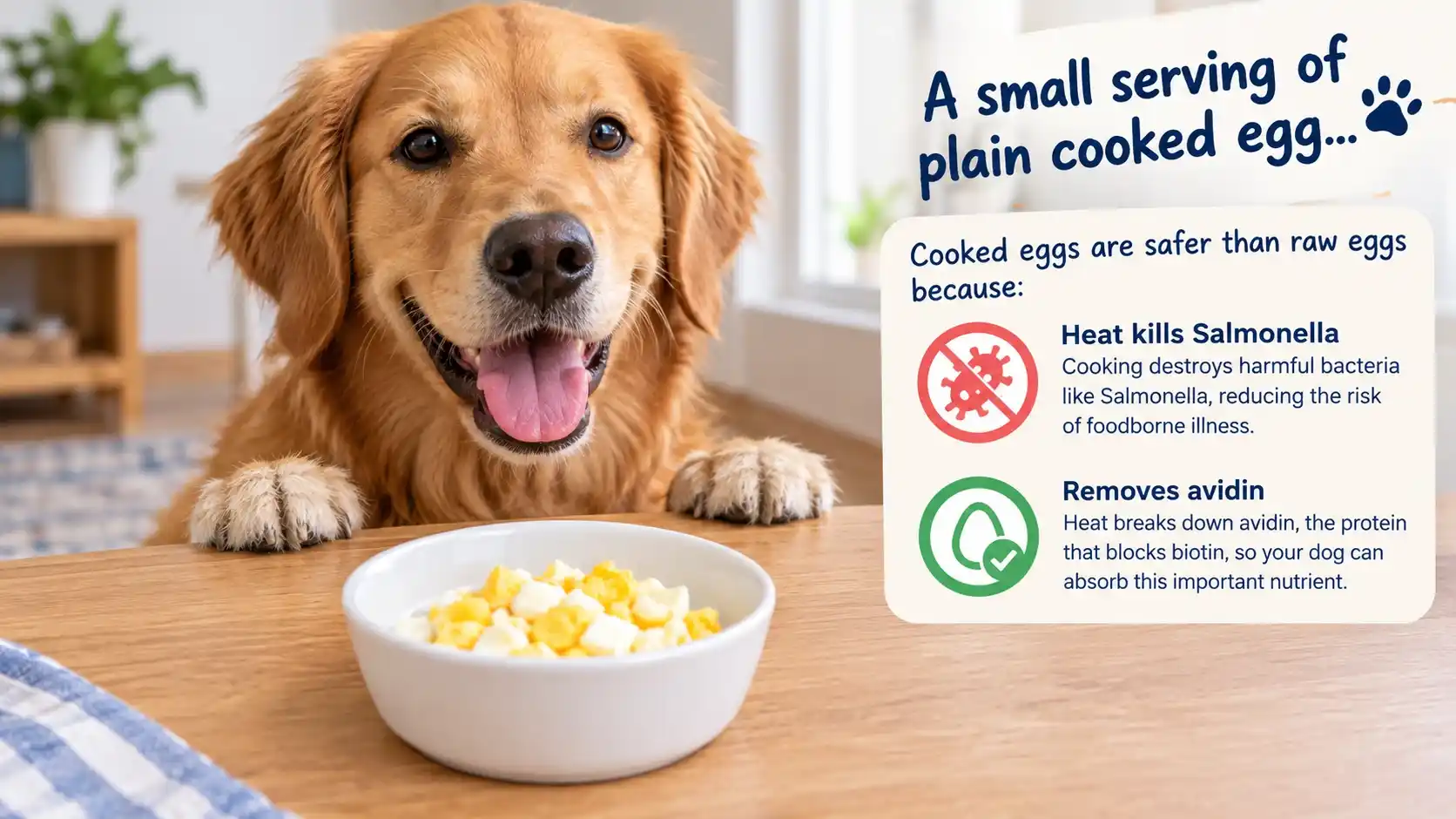
Can dogs eat eggs? Yes, they can, and most dogs love them. Cooked eggs are a safe, protein-rich treat when you serve them plain and in small portions. Raw eggs are where things get tricky.
If your dog stares at your breakfast plate with hopeful eyes, you have probably wondered how to share safely. This guide covers how raw and cooked eggs differ, how much to feed, how to prepare them, and when to skip them. The advice follows guidance from the American Kennel Club, Hill’s Pet Nutrition, and other veterinary sources. Always check with your own vet before you change your dog’s diet.
Are Eggs Good for Dogs?
For most healthy dogs, yes. An egg is a complete protein, so it has all the amino acids a dog needs. It also carries vitamins and minerals that support the skin, coat, and muscles.
A cooked egg offers:
- High-quality protein for muscle
- Riboflavin and vitamin B12 for energy
- Vitamin A for eyesight and immune health
- Linoleic acid for skin and coat
Some vets also suggest a little plain cooked egg to settle a mildly upset stomach. Still, an egg is a treat or a topper. It cannot replace a complete and balanced dog food.
Can Dogs Eat Cooked Eggs?
Yes, and this is the safest way to serve them. Heat kills bacteria like Salmonella. It also breaks down avidin, a protein in raw egg whites that we will cover shortly. Cooked eggs are easier to digest, too.
How to Cook Eggs for Dogs
The method matters less than keeping it plain. Any of these work:
- Hard-boiled: Peel it, cool it, and chop it into small pieces.
- Scrambled: Cook it in a dry non-stick pan with no oil or butter.
- Baked: Bake a whole egg until it is fully set.
Cook until the white and yolk are firm, then let the egg cool. Many dogs gulp their food and can burn their mouths.
Skip butter, oil, salt, seasoning, and milk. Never add onion, garlic, or chives, which are toxic to dogs. That rules out fried eggs, deviled eggs, and most omelets made for people.
Can Dogs Eat Raw Eggs?
Dogs can eat raw eggs, and many have done so without trouble. But most veterinary sources advise against it because the risks are real and the benefits are not proven.
The Salmonella Risk
Raw eggs can carry Salmonella and sometimes E. coli. In dogs, an infection can cause diarrhea, vomiting, fever, and loss of appetite.
Here is the part many owners miss. Some dogs carry Salmonella and look perfectly healthy. They can still shed it in their stool or saliva, which puts people at risk. Young children, older adults, and anyone with a weak immune system are most vulnerable. Even clean, fresh eggs can carry bacteria, and cooking is the only sure fix.
The Biotin and Avidin Issue
Raw egg whites contain avidin. This protein binds to biotin (vitamin B7) and blocks absorption. Biotin supports a healthy skin and coat, so a long-term shortage can mean dry skin and hair loss.
Keep this in perspective. Yolks are rich in biotin, so a whole raw egg partly cancels the effect. A deficiency usually needs large amounts of raw egg white over many weeks. Cooking removes the concern completely.
What If My Dog Ate a Raw Egg?
Do not panic. One raw egg rarely causes serious trouble in a healthy adult dog. Watch your dog for a day or two, and call your vet if you see vomiting, diarrhea, fever, or unusual tiredness. Wash your hands and any surfaces the egg touched.
Raw vs Cooked Eggs at a Glance
Cooked eggs:
- Kill bacteria, so the Salmonella risk drops sharply
- Remove the avidin concern
- Digest easily and keep nearly all the nutrition
Raw eggs:
- Can carry Salmonella and E. coli
- Can block biotin if whites are fed in large amounts over time
- Can spread bacteria to people at home
Cooked wins on safety, and your dog loses almost nothing.
How Many Eggs Can a Dog Eat?
Size, age, activity level, and health all matter. A good starting point is the 10 percent rule. Treats and extras should stay under 10 percent of your dog’s daily calories. Here is a rough guide for plain cooked egg:
- Toy dogs: about a quarter of an egg
- Small to medium dogs: about half an egg
- Large dogs: up to one whole egg
Sources differ on how often. Some say one egg a day suits bigger dogs, while others call eggs an occasional treat. The cautious path is a few times a week. An egg has roughly 70 calories, which adds up fast for a small dog. Too many can cause weight gain and loose stools.
Yolks, Whites, and Eggshells
Both yolks and whites are fine when cooked. The yolk holds most of the vitamins and most of the fat. For dogs prone to pancreatitis or weight gain, vets often prefer plain cooked whites.
Eggshells are mostly calcium, and a complete dog food already covers that need. Shells can be sharp, and too much calcium is harmful. If your vet approves, boil the shell and grind it into a fine powder first. Dogs with kidney disease or urinary stones should not have it.
Puppies and Senior Dogs
Puppies can have tiny amounts of cooked egg, introduced slowly. Most of their calories should come from proper puppy food. Seniors can enjoy eggs too, since the soft texture suits sore teeth. Ask your vet first if your senior has kidney problems, because eggs are high in phosphorus.
When Eggs Are Not a Good Idea
Skip eggs, or ask your vet first, if your dog has:
- Pancreatitis or a history of it
- Chronic kidney disease
- Obesity or diabetes
- A known food allergy or a very sensitive stomach
Egg allergies are uncommon, but they happen. Watch for itchy skin, paw licking, repeat ear infections, vomiting, or diarrhea. If you see them, stop feeding eggs and call your vet. Trouble breathing, heavy facial swelling, or collapse is an emergency.
To introduce eggs, offer a small taste of plain cooked egg and wait a full day. If all looks normal, move to a regular portion. Store eggs in the fridge, and never feed one that has gone bad.
Frequently Asked Questions
Can dogs eat eggs every day?
Most vets prefer eggs as an occasional treat. A large, active dog may handle a daily egg, but smaller dogs need less. Ask your vet what fits your dog.
Can dogs eat scrambled eggs?
Yes. Cook them plain, with no butter, oil, or salt.
Can dogs eat boiled eggs?
Yes. Peel the egg, let it cool, and chop it up. A whole boiled egg can be a choking risk, especially for small dogs, so always cut it into pieces that suit your dog’s size.
Are eggs good for an upset stomach?
A little plain cooked egg can be gentle on a mild upset. If the problem lasts more than a day, or your dog seems weak, see your vet.
more info: Can Dogs Eat Cheese? Is It Safe?
Final Thoughts
So, can dogs eat eggs? Yes. Cooked, plain, and served in the right portion, they are a safe and nutritious extra for most dogs. Raw eggs add bacteria and a small biotin risk, and cooking removes both.
Keep portions small, skip the seasoning, and watch how your dog responds. If your pup has a health condition, check with your vet first. Then share a little scrambled egg. Your dog will be glad you did.