
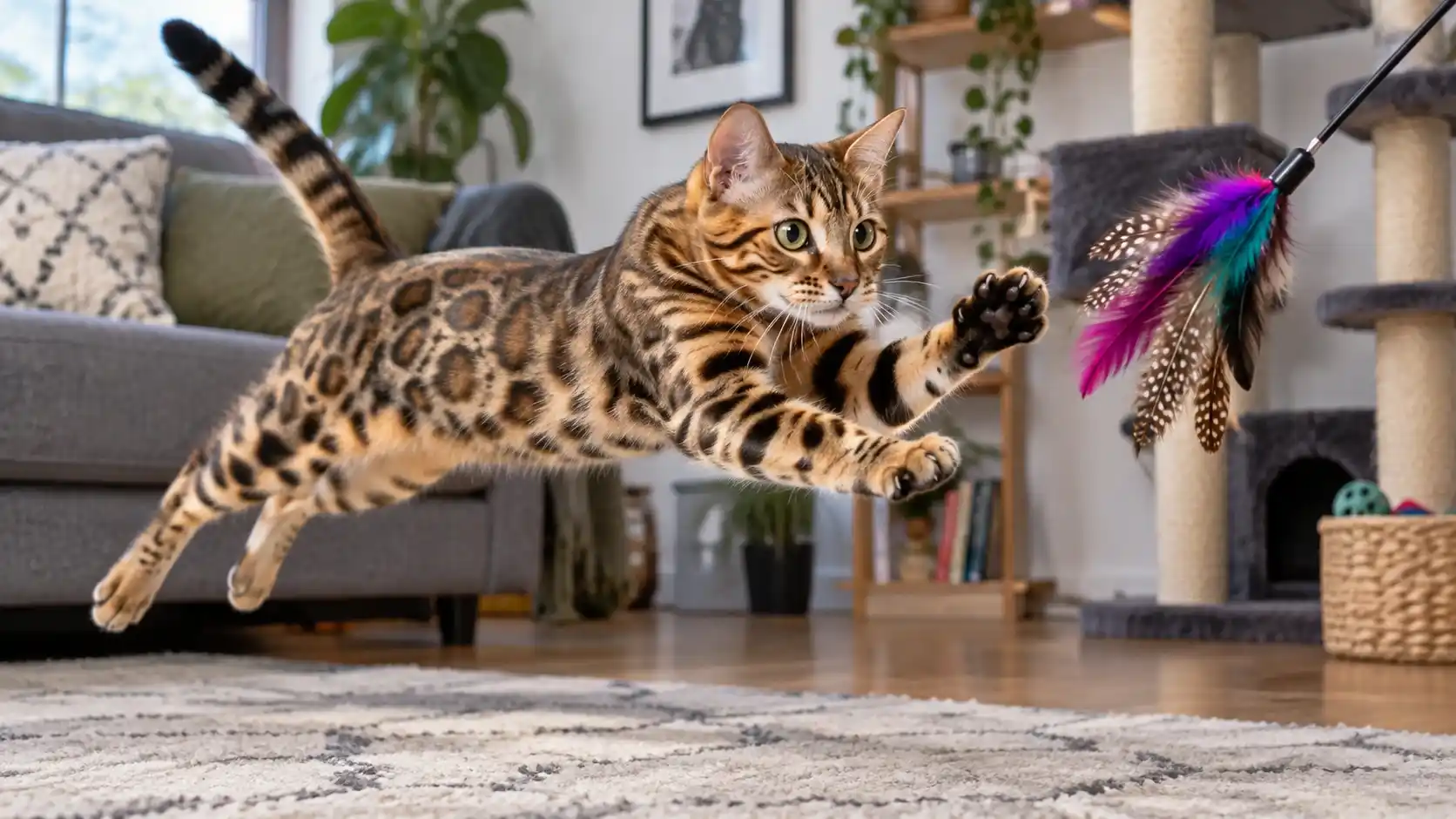
If you brought home a Bengal expecting a cat that naps all day and asks for nothing more than a sunny windowsill, you are probably a little surprised right now. Bengal cat care is a different game altogether. These cats come from a mix of domestic shorthairs and the Asian leopard cat, and that wild bloodline still shows up in how they move, think, and demand attention. They run, they climb, they open cabinets, and they watch everything you do with sharp curiosity.
This breed thrives in homes where someone is active, present, and willing to keep up. If your household already moves fast, with kids running around, a home gym in the corner, or someone who walks the dog twice a day, a Bengal can fit right in. This guide walks you through what real Bengal cat care looks like, from feeding to exercise to handling their more mischievous habits.
Understanding the Bengal Temperament First
Before you can care for a Bengal properly, it helps to understand what drives their behavior. Bengals are intelligent, alert, and almost dog-like in how they interact with their owners. They follow you from room to room, learn tricks quickly, and often figure out how to open doors or drawers on their own. This intelligence is a gift and a challenge at the same time.
A bored Bengal does not just sleep through the boredom. It gets creative, and not in a way you will appreciate. Torn curtains, knocked-over plants, and raided pantries are common complaints from Bengal owners who underestimated how much stimulation this breed needs. So the first rule of Bengal cat care is simple: keep their mind and body busy, every single day.
Daily Exercise Needs for Bengals
Bengals are among the most athletic cat breeds you will find. They need real physical activity, not just a few minutes of half-hearted play before bed. Most Bengal owners find that their cats do best with one to two hours of active play spread across the day, broken into shorter sessions rather than one long block.
Here is what that can look like in practice:
- Morning play session with a wand toy or feather teaser before you leave for work
- A puzzle feeder or treat-dispensing toy during the day to keep them occupied
- An evening session with a laser pointer, ball chase, or interactive toy once you are home
- Weekend time for climbing, exploring new spaces, or leash walks if your cat is trained for it
Many Bengal owners also invest in a cat treadmill or wheel, similar to what people use for high-energy dog breeds. It sounds unusual, but Bengals often take to it quickly once they learn how it works. If a treadmill is not for you, a tall cat tree with multiple levels gives them a place to climb and observe their territory from above, which Bengals genuinely enjoy.
Setting Up an Enriching Home Environment
Bengal cat care goes beyond scheduled play sessions. Your home setup matters just as much. These cats like height, movement, and things to investigate. A flat, quiet living room with nothing to climb will frustrate a Bengal faster than almost anything else.
Consider adding:
- Wall-mounted shelves or a floor-to-ceiling cat tree for vertical space
- Rotating toys so nothing gets stale, since Bengals lose interest in the same object quickly
- Window perches, since Bengals love watching birds, cars, and outdoor activity
- Puzzle feeders that make them work for treats or part of their meals
If your household already has an active layout, with open floor space or a yard visible through a window, your Bengal will naturally have more to engage with. Active households and Bengal cats tend to work well together because the energy in the home matches the energy of the cat.
Feeding Your Bengal Properly
Bengals burn a lot of calories given how much they move, but that does not mean you should overfeed them. A high-quality diet with real animal protein as the first ingredient supports their muscle tone and coat health. Many owners feed a mix of wet and dry food, with wet food helping keep them hydrated since some Bengals are not big water drinkers despite their famous fascination with running water.
A few practical feeding tips:
- Split meals into two or three smaller portions instead of one large bowl
- Choose food with limited fillers and grains, since Bengals tend to do well on protein-rich diets
- Keep fresh water available at all times, and consider a cat water fountain since many Bengals are drawn to moving water
- Watch their weight closely, since an inactive Bengal on a rich diet can gain weight fast
If you are unsure what diet suits your specific cat, a conversation with your vet about your Bengal’s age, activity level, and any health history will give you a clearer picture than guessing on your own.
Grooming and Coat Care
One thing that makes Bengal cat care easier than people expect is grooming. Their short, dense coat sheds less than many other breeds and rarely mats. A quick brush once a week is usually enough to keep shedding under control and to bond with your cat during a calmer moment of the day.
Bengals also tend to groom themselves well, so baths are rarely needed unless your cat gets into something messy. Nail trims every two to three weeks and regular teeth brushing round out the basic grooming routine. Check their ears occasionally for wax buildup, since this is common across most cat breeds and easy to manage with a gentle cleaning solution recommended by your vet.
Handling Bengal Behavior in a Busy Household
Active households often have a lot going on, kids, guests, other pets, deliveries at the door. Bengals generally handle this well if they are socialized early, but a few habits are worth watching.
Bengals can be vocal, using chirps, trills, and meows to communicate what they want. This is normal and part of their charm, but it also means they will let you know when they are bored or hungry, often loudly. Early training with positive reinforcement, using treats and praise rather than punishment, helps curb unwanted behaviors like counter surfing or nighttime zoomies.
If you have young children, teach them to play with Bengals using wand toys rather than hands, since Bengals can get overstimulated during rough play and may nip. With proper introductions, Bengals often do well with kids and other pets, especially if raised together from a young age.
Health Considerations Worth Knowing
Bengals are generally a healthy breed, but a few conditions show up more often in this bloodline, including hypertrophic cardiomyopathy, a heart condition, and progressive retinal atrophy, an eye condition. Reputable breeders test for these issues, so asking about health screening before adopting is a smart step. Regular vet checkups, ideally once a year for younger cats and twice a year as they age, help catch anything early.
Keeping your Bengal at a healthy weight through proper diet and daily exercise also reduces the risk of joint issues and diabetes later in life. Since Bengals are so active, weight problems are less common than in more sedentary breeds, but it is still worth monitoring.
more info: Siamese Cat Personality Traits Explained
Making Bengal Cat Care Work for Your Lifestyle
Bengal cat care asks more of you than caring for a laid-back breed, but for active households, that trade-off often feels natural rather than burdensome. If your days already involve movement, structure, and engagement, a Bengal simply becomes part of that rhythm. Feed them well, give them space to climb and explore, keep their minds busy, and stay consistent with grooming and vet visits. Do that, and you will have a companion that is as loyal and entertaining as any dog, just with a lot more personality packed into a smaller, spottier package.