
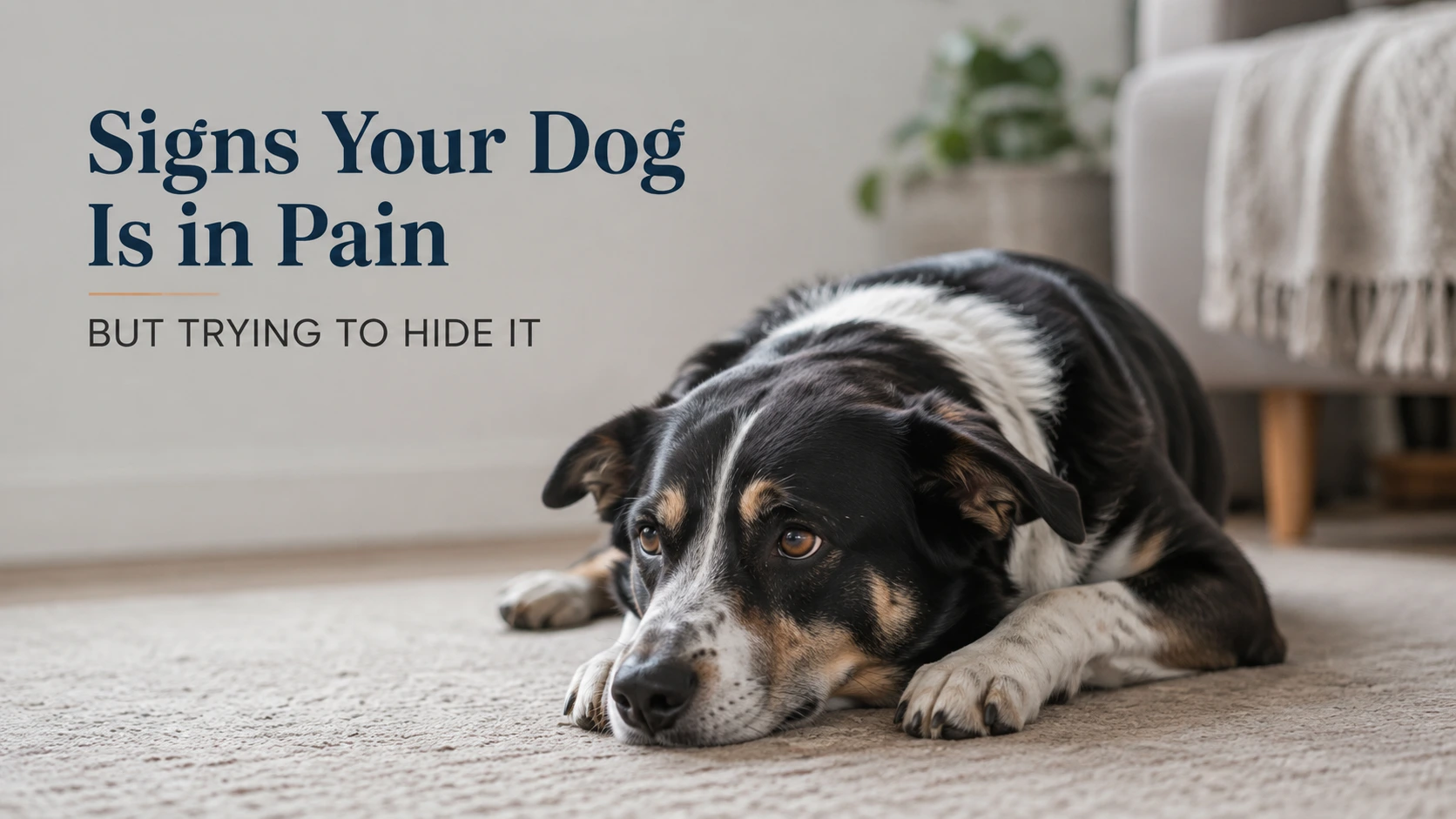
Learning the signs your dog is in pain but hiding it can genuinely save you from missing something serious. Dogs are not great at telling us when something hurts. Instead of yelping or limping right away, most dogs quietly push through discomfort until it becomes too much to hide. That instinct comes from their wild ancestry, where showing weakness could make an animal a target. Your dog still carries that same wiring today, even curled up safely on your couch. This checklist walks through the subtle and not so subtle signs to watch for, so you can catch pain early and get your dog the help she needs.
Why Dogs Hide Pain in the First Place
In the wild, an injured or sick animal becomes an easy target for predators or rivals within a pack. Dogs evolved to mask discomfort as a survival strategy, and that instinct never fully disappeared, even after thousands of years of domestication. Your dog is not trying to keep secrets from you. She simply does not know how to ask for help the way we would expect a person to.
This is exactly why so many pet owners miss pain until it becomes obvious. By the time a dog is limping badly or crying out, the discomfort has often been building for a while. Learning the quieter signals gives you a real head start.
Behavioral Changes That Signal Pain
Behavior often shifts before anything looks physically wrong. These changes can be easy to dismiss as your dog just having an off day, but a pattern over several days is worth paying attention to.
- Withdrawing from family interaction or seeking out quiet, isolated spots
- Increased irritability or snapping when touched in a certain area
- Becoming unusually clingy or seeking more comfort than normal
- Reduced interest in toys, walks, or activities she once loved
- Restlessness, especially trouble settling down or getting comfortable
- Pacing back and forth instead of resting
- Repeatedly getting up and lying back down
A dog who suddenly avoids being picked up, or who growls when a specific spot is touched, is often trying to protect an area that hurts. This kind of guarding behavior is one of the clearer signals, even in dogs that are usually easygoing.
Changes in Appetite, Thirst, and Sleep
Pain affects the basics of daily life more than people expect. Watch for shifts in how much your dog eats, drinks, or sleeps.
A dog in pain may eat less than usual, especially if the discomfort involves the mouth, teeth, or stomach. Difficulty chewing dry kibble or hard treats can point to dental pain specifically. On the other end, some dogs eat more or drink more when they are unwell, so any noticeable change in either direction is worth tracking.
Sleep patterns often shift too. Some dogs sleep far more than usual as their body tries to recover. Others struggle to get comfortable and end up sleeping less, tossing and turning or repositioning frequently through the night.
Physical Signs That Are Easy to Miss
Some physical signs of pain are subtle enough that they blend into everyday behavior unless you know what to look for.
- Excessive licking of one specific area, sometimes to the point of irritation or a bald patch
- Panting at rest, without heat or exercise as an obvious cause
- Shaking or trembling without an environmental trigger
- Drooling more than usual
- A hunched or tense body posture
- Holding the tail lower than normal
- Dilated pupils or a glazed expression during flare ups
Excessive licking is particularly worth noting. When a dog is hurt, her first instinct is often to clean and soothe the area herself, even if the pain is coming from somewhere internal that is harder to see.
Mobility Changes to Watch For
Pain related to joints, muscles, or old injuries usually shows up first in how your dog moves. These signs can develop slowly, which makes them easy to write off as your dog simply getting older or lazier.
- Limping or favoring one leg, even briefly
- Stiffness after resting, especially first thing in the morning
- Hesitating before jumping onto furniture or into the car
- Slower to rise from lying down, or groaning while doing so
- Reluctance to climb stairs
- Shorter walks than usual, or wanting to turn back early
- Difficulty finding a comfortable position
Groaning or grunting when standing up or lying down is a strong signal, especially in older dogs. Owners often assume this is just part of aging, but it usually means something is causing real discomfort that deserves a vet’s attention.
Unusual Aggression or Defensive Behavior
One of the most overlooked signs of pain is a sudden change in temperament. A dog who has never shown aggression before might snap, growl, or become defensive out of nowhere. This is not your dog becoming a different animal. It is often her way of protecting a painful area from being touched or bumped.
If your usually friendly dog becomes reactive during petting, grooming, or being lifted, take that seriously rather than assuming it is a behavior problem to correct. Pain related aggression tends to appear suddenly and target specific triggers, like a particular touch or movement.
Vocalization Changes
Not every dog in pain stays silent. Some become more vocal in ways that stand out from their normal behavior. This can include whimpering while settling down, yelping when touched in a certain spot, or low growling that seems to come from discomfort rather than aggression toward a person or another animal.
Pay attention if your dog vocalizes during specific movements, like standing up, lying down, or being picked up, since this often points directly to where the pain is coming from.
Chronic Pain Versus Acute Pain
It helps to understand that pain in dogs generally falls into two categories.
Acute pain comes on suddenly, usually from an injury, surgery, or a sudden illness. The signs tend to be more obvious since the change happens quickly.
Chronic pain builds gradually, often from conditions like arthritis. This type is far easier to miss because dogs slowly adapt to the discomfort over weeks or months. Owners frequently mistake chronic pain for their dog simply slowing down with age, when in reality, arthritis and joint pain are extremely common and very treatable with the right veterinary care.
Chronic pain affects a large percentage of dogs, especially as they get older, and it is consistently underdiagnosed simply because the changes happen so gradually that they blend into daily life.
When to Call the Vet
If you notice any combination of these signs lasting more than a day or two, it is time to schedule a vet visit rather than waiting to see if things improve on their own. Some situations call for more urgency.
Seek veterinary care right away if your dog shows:
- Sudden inability to stand or walk
- Crying out in obvious distress
- Visible swelling, bleeding, or injury
- Repeated vomiting alongside other pain signs
- Extreme lethargy or collapse
For less severe but persistent symptoms, a regular vet appointment is still the right move. Bringing a list of the specific changes you have noticed, including when they started and how often they happen, helps your vet get to the root cause faster.
Never try to manage your dog’s pain with human medication or leftover prescriptions from another pet. Many common over the counter pain relievers are dangerous, even in small amounts, for dogs. Pain management should always come from your veterinarian, who can identify the actual cause and recommend safe, effective treatment. more info: Why Is My Dog’s Nose Dry
Final Thoughts
Dogs are remarkably good at hiding pain, which means the responsibility falls on us to notice the quieter signals before they become serious. Watching for changes in behavior, appetite, mobility, and mood can help you catch problems early, when they are usually easier to treat. Trust your instincts if something feels off with your dog, even if you cannot point to one obvious symptom. A quick vet visit is always worth it for peace of mind, and it could make a real difference in how quickly your dog feels better.