
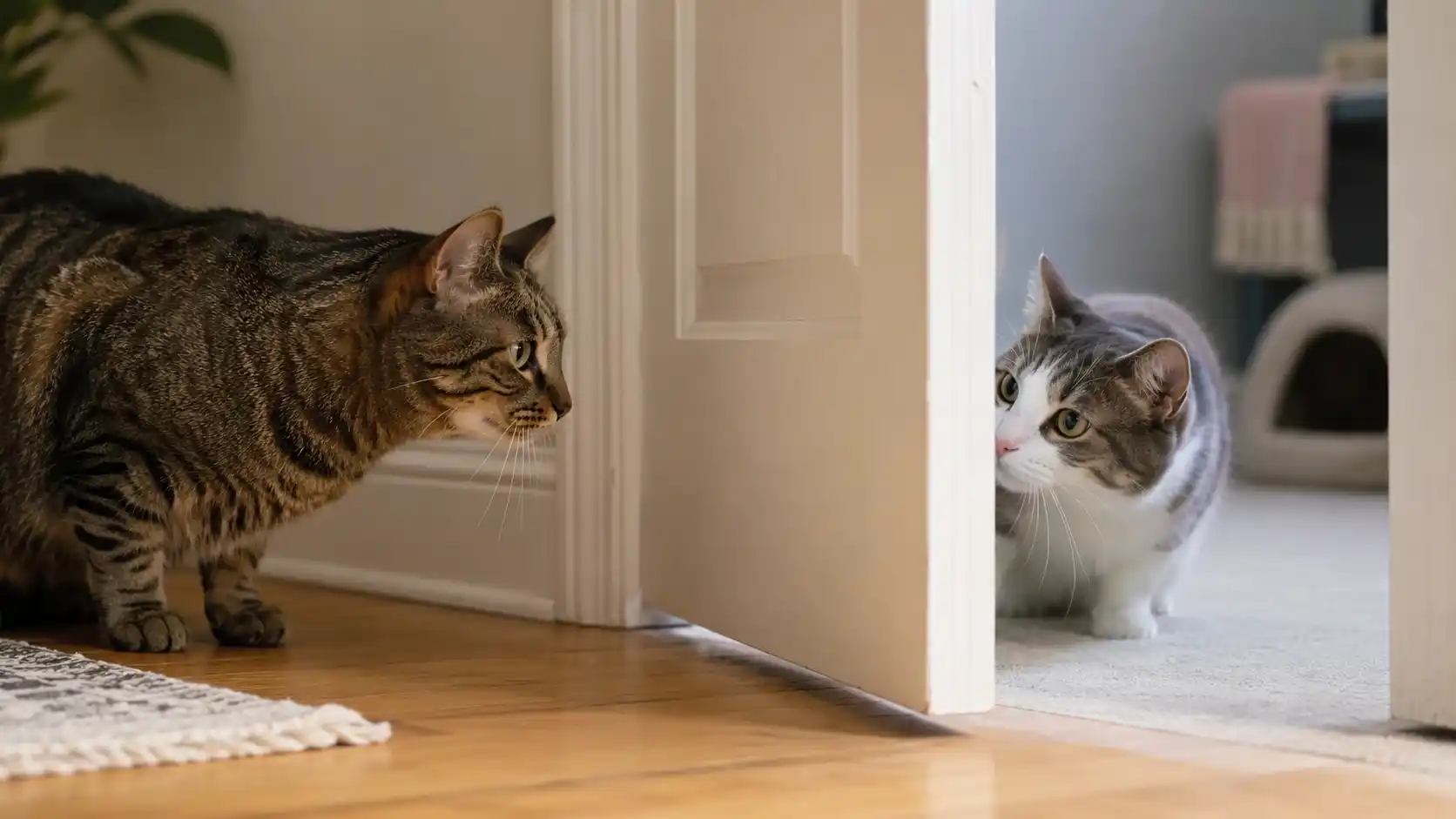
If you want to know how to introduce a new cat to a resident cat without fights, the short answer is that it takes patience, structure, and a lot of scent work before the two of them ever meet face to face. Cats are territorial by nature, and bringing a stranger into their home can feel like a real threat to them, even if you know they are going to be best friends eventually. Rushing this process is the number one reason introductions go wrong. Done right, most cats can learn to tolerate, and often genuinely enjoy, each other’s company. Here is exactly how to do it step by step.
Why Cat Introductions Go Wrong
Cats do not think about territory the way we do. To your resident cat, this is not just a house. It is her territory, complete with her scent, her resting spots, and her resources. When a new cat suddenly appears, her instincts tell her a stranger has invaded her space, and that can trigger fear, stress, or aggression.
Most fights between cats during introductions happen because things moved too fast. Owners often let the cats meet on day one, assume they will work it out, and then get surprised when hissing turns into a real fight. Slowing everything down is the single biggest factor in success.
Step 1: Set Up a Separate Room for the New Cat
Before your new cat even comes home, prepare a private room just for her. A spare bedroom, office, or bathroom works fine. This space should include:
- A litter box, away from food and water
- Food and water bowls
- A cozy bed or hiding spot
- A scratching post
- A few toys
When you bring your new cat home, take her straight into this room without letting her near your resident cat. Let her out of the carrier and leave her alone to explore at her own pace. She may hide for a while, and that is completely normal. Give her time to settle before expecting any interaction at all.
Keep the two cats fully separated for the first three to four days at minimum. Some cats need longer, especially if they are naturally timid.
Step 2: Let Them Smell Each Other First
Cats rely heavily on scent to understand their world, so this step matters more than most people expect. While the cats are still separated, start swapping scent between them.
Take a blanket or towel the new cat has slept on and place it near your resident cat’s favorite spot. Do the same in reverse, giving your resident cat’s bedding to the new cat. You can also swap food bowls so each cat begins to associate the other’s smell with something positive, like mealtime.
If either cat hisses at the item or avoids it completely, back off a little and try again the next day. The goal is for both cats to become neutral, or even curious, about the other’s scent before moving forward.
Step 3: Rotate Rooms
Once scent swapping feels calm, start rotating spaces. Let the new cat explore the main areas of the house while your resident cat spends time in the new cat’s room. This lets each cat pick up more of the other’s scent throughout the shared space, without any direct contact yet.
Do this rotation daily for a few days. It also gives your new cat a chance to get familiar with the layout of the house before she has to deal with another cat watching her every move.
Step 4: Allow Visual Contact Through a Barrier
This is where things start to get more interesting. Once both cats seem relaxed with the scent swapping and room rotation, you can introduce visual contact through a barrier like a baby gate, a cracked door, or a screen door if you have one.
Keep these sessions short, around ten to fifteen minutes, and always end them before either cat becomes tense. Watch closely for warning signs like:
- Hissing or growling
- Flattened ears
- Puffed up tails
- Prolonged staring
- Crouching low or trying to flee
If either cat shows strong stress signals, calmly separate them and go back to scent swapping for a few more days before trying again. Do not force interaction if either cat is clearly uncomfortable.
Step 5: Supervised Face to Face Meetings
Once visual contact through a barrier feels calm and boring for both cats, you can try a supervised meeting without the barrier. Keep the first sessions very short and low pressure.
Some tips that help this stage go smoothly:
- Use treats or favorite toys to create positive associations during the meeting
- Keep both cats at a comfortable distance from each other at first, at least several feet apart
- Have a towel or piece of cardboard nearby to gently separate them if tension rises
- Never pick up or hold either cat during a tense moment, since redirected aggression can happen fast
- End the session on a calm note, even if it is short
Repeat these short sessions daily, gradually increasing the time as both cats show relaxed body language, like slow blinking, normal ear position, or simply ignoring each other.
Step 6: Increase Freedom Slowly
As the cats grow more comfortable, you can start allowing longer periods together, eventually working toward full time coexistence. Continue watching their body language during this stage. Occasional hissing or a swat here and there is not unusual and does not always mean the introduction has failed. Genuine fights, chasing, or one cat constantly hiding are signs that you need to slow the pace back down.
Make sure your home has enough resources for both cats so they never feel like they have to compete. This includes:
- One litter box per cat, plus one extra
- Multiple food and water stations
- Separate resting areas
- Vertical space like cat trees or shelves, so each cat has room to retreat
Cats that have their own resources are far less likely to fight over them.
How Long Does This Process Take
There is no single timeline that works for every cat. Some pairs start getting along within a couple of weeks, while others take several months to fully settle into a comfortable relationship. Age, personality, past experiences with other cats, and how the first interaction went can all affect the pace.
The most important rule is to let their behavior guide the timeline, not the calendar. If things are going well, you can move faster. If tension keeps showing up, slow down and repeat an earlier step.
What to Do if a Fight Happens
Even with a careful process, an occasional scuffle can still happen. If a real fight breaks out, separate the cats safely using a towel, blanket, or a loud noise to interrupt them. Never reach in with your bare hands.
After a fight, check both cats for injuries like bite marks or scratches, since cat bites can become infected and may need a vet’s attention. Give both cats space to calm down, then return to an earlier step in the introduction process rather than trying to push forward again right away. Repeated fights usually mean the pace needs to slow down or that the home needs more separate resources. more info: Why Does My Cat Knead Me
Final Thoughts
Learning how to introduce a new cat to a resident cat without fights really comes down to patience and letting scent and gradual exposure do the heavy lifting before any face to face meeting happens. Rushing almost always backfires, while a slow and structured approach gives both cats the best possible chance at building a peaceful, and hopefully friendly, relationship. Every cat moves at her own pace, so let their comfort level guide each step rather than sticking to a strict deadline. With enough time and the right setup, most cats can learn to share a home without conflict.