
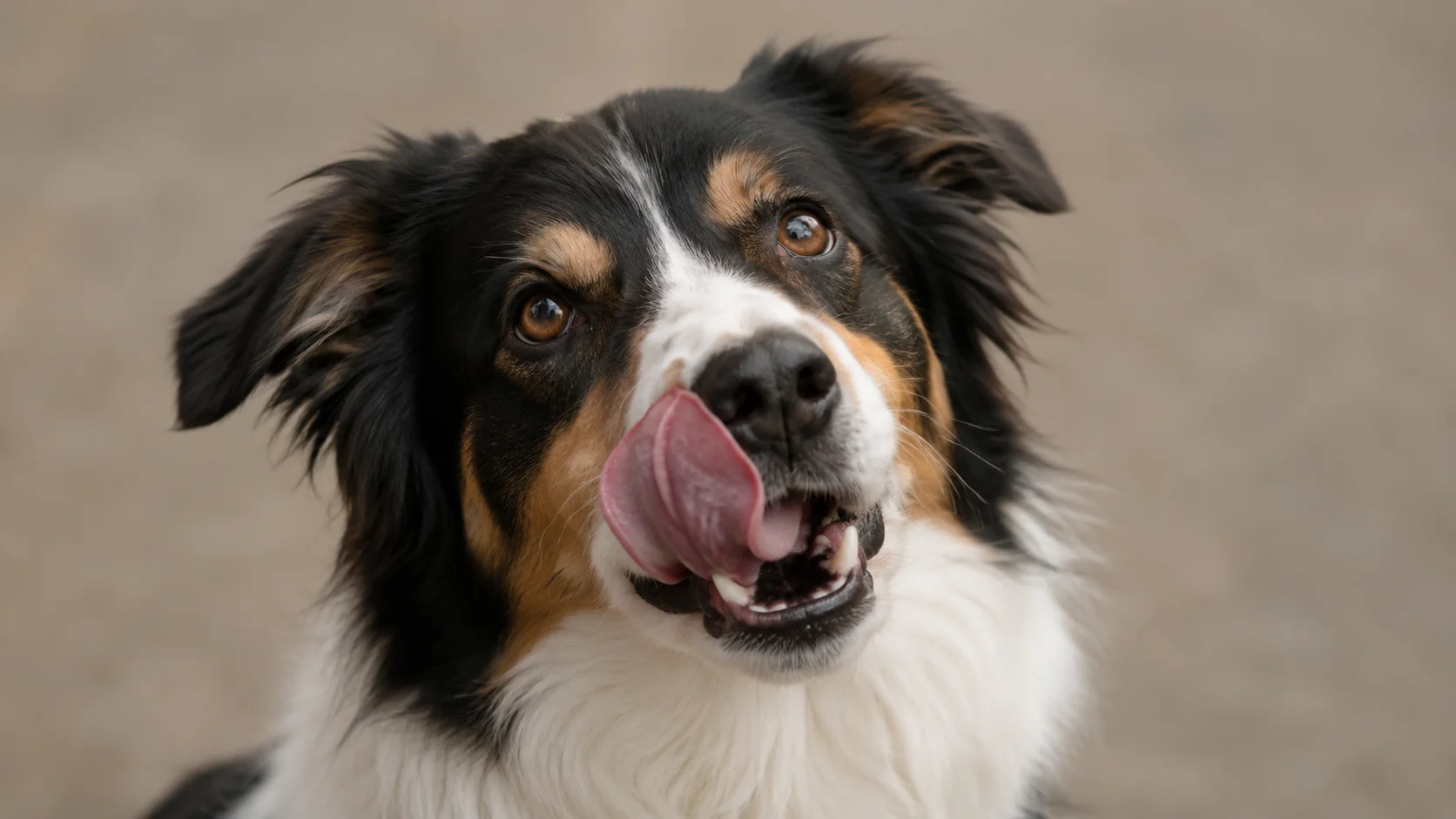
If you’ve caught your pup sitting there, tongue flicking at absolutely nothing, you’ve probably wondered what’s going on inside that furry head. Air licking looks strange to us, but for dogs, it’s actually a normal (and sometimes meaningful) way of processing the world or, occasionally, a signal that something needs your attention.
The truth is, dogs lick the air for a mix of reasons that range from completely harmless to genuinely medical. Some dogs do it because their nose and mouth work together in a way ours never could. Others do it because they’re anxious, nauseated, or dealing with a sore tooth. And in rare cases, it can point to something neurological.
Below, we’ll walk through the seven most common explanations vets and animal behaviorists point to, how to tell them apart, and when it’s time to stop guessing and book a vet visit.
1. Your Dog Is Boosting Their Sense of Smell
Dogs experience the world through their noses far more than we do their sense of smell is estimated to be tens of thousands of times more powerful than ours, thanks to hundreds of millions of scent receptors packed into their nasal passages.
But dogs have a secret weapon we don’t: the vomeronasal organ, also called Jacobson’s organ, tucked into the roof of the mouth. When a dog wants to analyze an especially interesting smell another dog’s urine, a strange scent on the sidewalk, a new visitor’s shoes they curl their lip, flare their nostrils, and lick the air to physically push scent particles up toward this organ. This is sometimes called the “flehmen response,” and it often comes paired with a bit of teeth chattering.
If your dog licks the air right after sniffing something intently, then goes back to normal, this is almost certainly what’s happening. It’s completely normal and nothing to worry about.
2. It’s a Sign of Anxiety or Stress
Air licking is also part of a dog’s body language toolkit for communicating discomfort. Dogs that feel nervous, overwhelmed, or unsure of a situation will often lick the air (or their lips) as a self-soothing or appeasement gesture the canine equivalent of a nervous habit.
This tends to show up around loud noises like thunderstorms or fireworks, unfamiliar visitors, vet waiting rooms, car rides, or big changes at home like a move or a new pet. You may notice it paired with other stress signals: yawning, pacing, lip licking, tucked ears, or avoiding eye contact.
If your dog only licks the air in specific stressful situations, try to reduce the trigger where possible, keep your tone calm and quiet, and give them a safe space to retreat to. If anxiety seems frequent or severe, talk to your vet about behavioral support or calming strategies.
3. Dental Pain or Something Stuck in the Mouth
One of the most common physical causes of air licking is a problem inside the mouth. A loose tooth, gum disease, a cracked tooth, or even a small tumor on the gumline can all change the way a dog’s bite feels, causing them to lick and smack at the air as they try to relieve discomfort or reposition their tongue.
Sometimes it’s simpler than that a piece of food, a splinter from a stick, or debris from a chew toy can get lodged against the roof of the mouth or between teeth, and the dog will lick at the air trying to dislodge it, much like you’d use your tongue to work out a stuck popcorn kernel.
Watch for other clues: bad breath, drooling, pawing at the face, reluctance to eat hard food, or sensitivity when you touch their jaw. Dental issues can be genuinely painful, so this is worth a vet check rather than a wait-and-see approach.
4. Nausea or an Upset Stomach
Just like humans, dogs often produce extra saliva and make repetitive swallowing or licking motions when they feel nauseated. Air licking is a very common early sign that a dog’s stomach is unsettled and it frequently shows up right before vomiting.
Nausea can be triggered by something as minor as eating too fast, motion sickness on a car ride, or getting into something they shouldn’t have. But it can also point to more ongoing digestive issues such as acid reflux, gastritis, food sensitivities, inflammatory bowel disease, or pancreatitis.
If the air licking is a one-off and resolves quickly, it’s usually nothing serious. But if you notice it alongside vomiting, diarrhea, drooling, grass-eating, or a drop in appetite especially if it keeps happening it’s time to get your vet involved.
5. Itchy Skin They Can’t Quite Reach
Dogs dealing with itchy skin whether from allergies, dry skin, or parasites like fleas usually scratch, bite, or lick the affected area directly. But if the itch is somewhere hard to reach, or if the dog has been scolded for licking or chewing themselves in the past, they may redirect that urge into licking the air instead, almost like they’re trying to “mentally” scratch the itch.
This is more likely if your dog also shows other signs of skin irritation: redness, hair loss, hot spots, frequent scratching elsewhere on the body, or visible fleas. A vet or groomer can help identify whether allergies, parasites, or dry skin are the underlying cause, and get your dog real relief.
6. Happiness, Anticipation, or Enjoyment
Not every instance of air licking is a red flag plenty of dogs do it purely out of excitement or pleasure. Some pups lick the air when they know a treat or favorite activity is coming, especially around mealtime or when they smell something delicious cooking. Others do it during an especially good belly rub or back scratch, almost like a happy little response to being touched in the right spot.
If your dog’s air licking shows up during clearly positive moments tail wagging, relaxed body, bright eyes and disappears once the excitement passes, there’s nothing to worry about. It’s simply their way of expressing enthusiasm.
7. A Neurological Issue, Such as a Partial Seizure
This is the reason that understandably worries pet owners most, but it’s also the least common. In some dogs, repetitive air licking sometimes described as “fly-biting,” where the dog snaps at the air as if catching an invisible insect can actually be a symptom of a focal or partial seizure rather than a behavioral quirk.
These episodes can look different from the dramatic, full-body seizures many people picture. Instead, a dog might repeatedly lick or snap at the air, appear briefly disoriented, stare blankly, or seem “out of it” for a few seconds to a couple of minutes, sometimes in clusters throughout the day.
If your dog’s air licking is sudden, doesn’t match any of the other explanations above, happens repeatedly in short episodes, or comes with disorientation or unresponsiveness, don’t wait it out. Record a video if you can and get your dog evaluated by a veterinarian, who may recommend bloodwork or a referral to a veterinary neurologist.
When Should You Actually Worry?
Most dogs lick the air occasionally, and in isolation, it’s rarely a reason for panic. The context is what matters most. Keep an eye out for these red flags:
- The licking is new, sudden, or increasing in frequency
- It’s paired with vomiting, diarrhea, drooling, or appetite changes
- Your dog seems disoriented, dazed, or unresponsive during episodes
- There are signs of oral pain, such as bad breath or pawing at the mouth
- Skin irritation, hair loss, or excessive scratching accompanies the behavior
- The behavior interferes with sleep, eating, or normal daily activity
Keeping a simple log of when the licking happens, how long it lasts, and what else you notice can make a huge difference when it’s time to talk to your vet. A short video of an episode is often more useful than any description you could give in words.
The Bottom Line
Air licking is one of those quirky dog behaviors that can mean almost anything from your dog simply enjoying a good scent to a signal that they need veterinary care. The key is paying attention to the pattern: how often it happens, what triggers it, and whether anything else seems off. Occasional, brief episodes tied to sniffing, excitement, or a good scratch are almost always harmless. Frequent, escalating, or unexplained episodes deserve a proper checkup.
When in doubt, your vet is always the best resource for turning “why does my dog do this weird thing?” into a real answer and real peace of mind.
Frequently Asked Questions
Is it normal for to dog licking the air?
Yes, occasional air licking is completely normal and is often tied to smelling something interesting, feeling excited, or enjoying a good scratch. It only becomes a concern when it’s frequent, sudden, or paired with other symptoms.
Why does my dog lick the air and then chatter its teeth?
This combination usually happens when a dog is investigating an intense scent through the vomeronasal organ. The licking pushes scent molecules upward, and the teeth chattering is part of that same scent-processing response, known as the flehmen response.
Can air licking be a sign of a seizure?
In some cases, yes. Repetitive air licking or “fly-biting” motions, especially when paired with disorientation or a blank stare, can indicate a focal or partial seizure and should be evaluated by a veterinarian.
Should I take my dog to the vet for licking the air?
If it’s an occasional, brief behavior with no other symptoms, it’s usually not urgent. But if it’s frequent, escalating, or accompanied by vomiting, drooling, appetite loss, or disorientation, schedule a vet visit.