
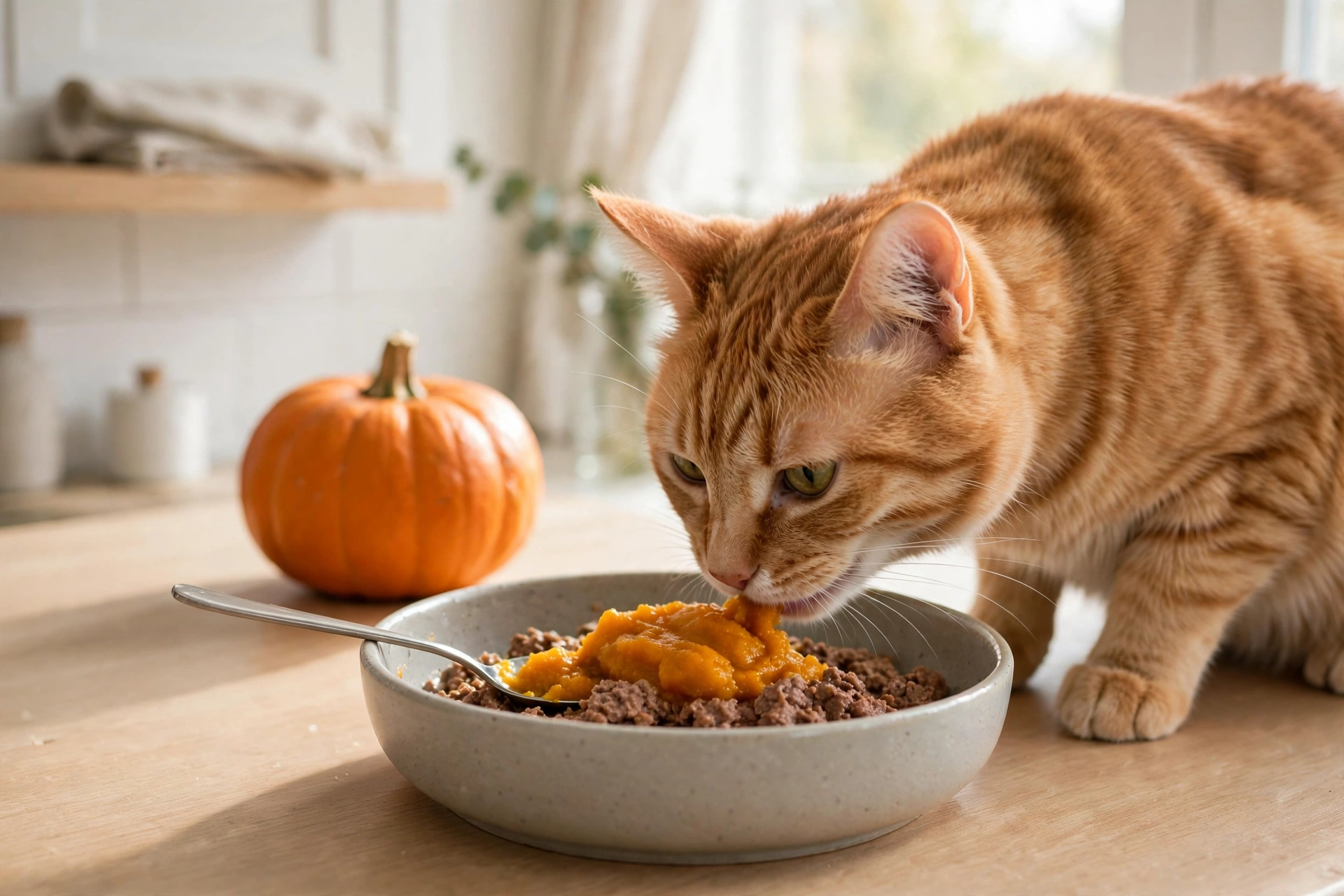
Quick answer: Yes, cats can eat pumpkin safely when it is plain and cooked. A teaspoon or two of plain pumpkin puree is the standard serving, and its soluble fiber is why vets often suggest it for mild constipation or loose stools. The trap is the can beside it: pumpkin pie filling carries sugar and spices like nutmeg that cats must never eat. Pure pumpkin, yes. Pie filling, never.
Can Cats Eat Pumpkin Safely?
Yes. Plain pumpkin is not toxic to cats, and it is one of the few vegetables vets actively suggest. Cats are meat eaters by design, so pumpkin will never be a staple, but as a small functional extra it has earned its reputation honestly.
So, can cats eat pumpkin in every form the season offers? The flesh, cooked and plain, yes. Raw pumpkin is hard for a cat to digest, the skin and stem are not food, and anything spiced, sweetened, or baked into a dessert is out. This guide covers the benefits, the serving routine, and the pie tin problem.
Why Pumpkin Can Help Cats
- Soluble fiber for both directions: Pumpkin’s fiber absorbs water, which can firm up loose stools, and it draws water into the gut, which can soften hard ones. That two way usefulness is why vets reach for it.
- Gentle on the stomach: Plain pumpkin is bland and easy on most cats, a rare quality in a vegetable.
- Hydration support: Pumpkin is mostly water, and a spoonful stirred into wet food quietly raises the water content of the meal, helpful for cats like the ones in our can cats drink milk guide who need their fluids from food.
- Weight friendly bulk: Fiber adds fullness for very few calories, so a spoonful can satisfy a cat on a careful diet.
- Vitamins A and C, plus potassium: Small supporting amounts, riding along with the fiber that does the real work.
One honest limit: pumpkin helps mild, occasional tummy trouble. It does not diagnose or treat constipation or diarrhea that keeps returning. That version belongs to a vet, a point the digestive advice in our can cats eat bananas guide makes for fruit as well.
How Much Pumpkin Can a Cat Eat?
Treats and extras should stay under 10 percent of daily calories, and pumpkin is served by the spoon, not the bowl. Start at the small end, because fiber introduced all at once can cause the very looseness it is meant to fix.
| Cat | Pumpkin per serving | How often |
|---|---|---|
| Kitten | 1/4 teaspoon mixed into food, only if weaned | Rarely, and check with your vet first |
| Healthy adult cat | 1 to 2 teaspoons of plain puree | Daily for a short stretch, or a few times a week |
| Larger adult cat | Up to 1 tablespoon | As above, once the smaller amount is tolerated |
| Senior cat or cat with kidney issues | Ask your vet first | Fluid and fiber changes matter more in these cats |
For an ongoing tummy problem, most vets suggest a few days of pumpkin while you watch the litter box. Improvement that never comes, or trouble that returns the moment you stop, is the signal to book the appointment instead of buying another can.
How to Serve Pumpkin to Your Cat (Step by Step)
- Buy the right can. The label must say 100 percent pumpkin, with pumpkin as the only ingredient. Cans live side by side, and pie filling looks almost identical. Read it twice.
- Or cook fresh. Bake or steam plain pumpkin flesh until soft, with no oil, salt, or seasoning, and mash it smooth.
- Start with a teaspoon or less. Stir it into wet food, where the flavour disappears into dinner.
- Skip the raw form. Raw pumpkin and raw skin or stem are hard to digest and can cause the stomach upset you are trying to avoid.
- Leave the seeds out, or grind them fully. Whole seeds are a choking risk. Plain roasted, unsalted seeds ground to a powder are the only version worth offering, and most owners sensibly skip them.
- Store the rest properly. Refrigerate the opened can for a few days, or freeze puree in an ice cube tray for ready made portions. A frozen cube, thawed, is also a fine addition to the treat ideas in our can cats eat watermelon guide on a hot day.
Risks and When Pumpkin Is Not a Good Idea
- Pumpkin pie filling: The headline hazard. It carries sugar and a spice blend that includes nutmeg, which is toxic to cats in quantity, along with cinnamon and other spices that irritate feline stomachs. Some fillings and desserts also hide xylitol. The ASPCA guide to people foods covers nutmeg and sweeteners among its warnings.
- Pumpkin spice anything: Lattes, cakes, and seasonal treats combine sugar, spices, and often chocolate or coffee. None of it is cat food.
- Too much fiber, too fast: A heaped serving can cause gas, cramping, or looser stools, the opposite of the plan.
- Roasted or soup pumpkin from your plate: Our versions carry oil, salt, onion, and garlic, all wrong for cats. Plain is a separate preparation, not a shared one.
- Masking a real problem: Pumpkin can smooth over symptoms for a few days while a blockage, parasite, or illness quietly continues. Recurring digestive trouble is a vet visit, not a subscription to canned pumpkin.
Warning Signs: When to See a Vet
Book a vet visit promptly if you notice:
- Constipation lasting more than 48 hours, or straining in the litter box with little or nothing produced (possible blockage, treat as urgent)
- Diarrhea lasting more than a day, or any diarrhea in a kitten
- Vomiting, appetite loss, hiding, or lethargy alongside digestive trouble
- Blood in the stool or black, tarry stool
- Any illness after your cat ate pumpkin pie, pie filling, or a pumpkin spice product
A soft stool that firms within a day or two of a small pumpkin serving is the plan working. Anything beyond that is the body asking for professional help.
Common Mistakes Pet Parents Make
- Grabbing the pie filling can. It sits beside the pure pumpkin, wears a similar label, and turns a healthy idea into a spiced mistake. This is the most common pumpkin error by far.
- Serving from their own plate. Roasted pumpkin with oil and onion seasoning is a human side dish, not a cat serving.
- Starting with a tablespoon. Fiber respects a slow introduction. A teaspoon writes a kinder first report.
- Using pumpkin instead of the vet. A few days for a mild case is reasonable. Weeks of pumpkin for a recurring problem is delay wearing a wholesome disguise.
- Forgetting the water bowl. Fiber works with water. A cat on pumpkin still needs fresh water available at all times.
FAQs
Can kittens eat pumpkin?
A tiny taste of plain puree will not harm a weaned kitten, but kitten stomachs are sensitive and their calories belong to growth food. For any kitten with constipation or diarrhea, call the vet rather than experimenting, because small kittens dehydrate quickly.
Can cats eat canned pumpkin?
Yes, and it is the most convenient safe form, provided the can is 100 percent pure pumpkin with no added ingredients. That single label check is the difference between the remedy and the hazard.
Can cats eat pumpkin seeds?
Only roasted, unsalted, and ground to a powder, and even then they add little. Whole seeds risk choking and are hard to digest. Skipping seeds entirely is the sensible default.
Can cats eat raw pumpkin?
It is not recommended. Raw pumpkin is hard for cats to digest and can cause stomach upset. Cooked and mashed is the form their systems handle well.
How long does pumpkin take to help a cat’s constipation?
For a mild case, owners often see softer, easier stools within a day or two. If nothing has improved within 48 hours, or your cat is straining and uncomfortable, stop waiting and call the vet, because blockages do not respond to fiber.
The Bottom Line
Plain pumpkin is a rare vegetable that earns its place in a cat’s bowl: gentle fiber, real digestive usefulness, and almost no downside at a teaspoon at a time. It asks only one thing of you, which is reading the can.
Pure pumpkin in the bowl, pie filling nowhere near it, and a vet for anything that persists. Follow that, and this autumn staple becomes a quiet little ally.