
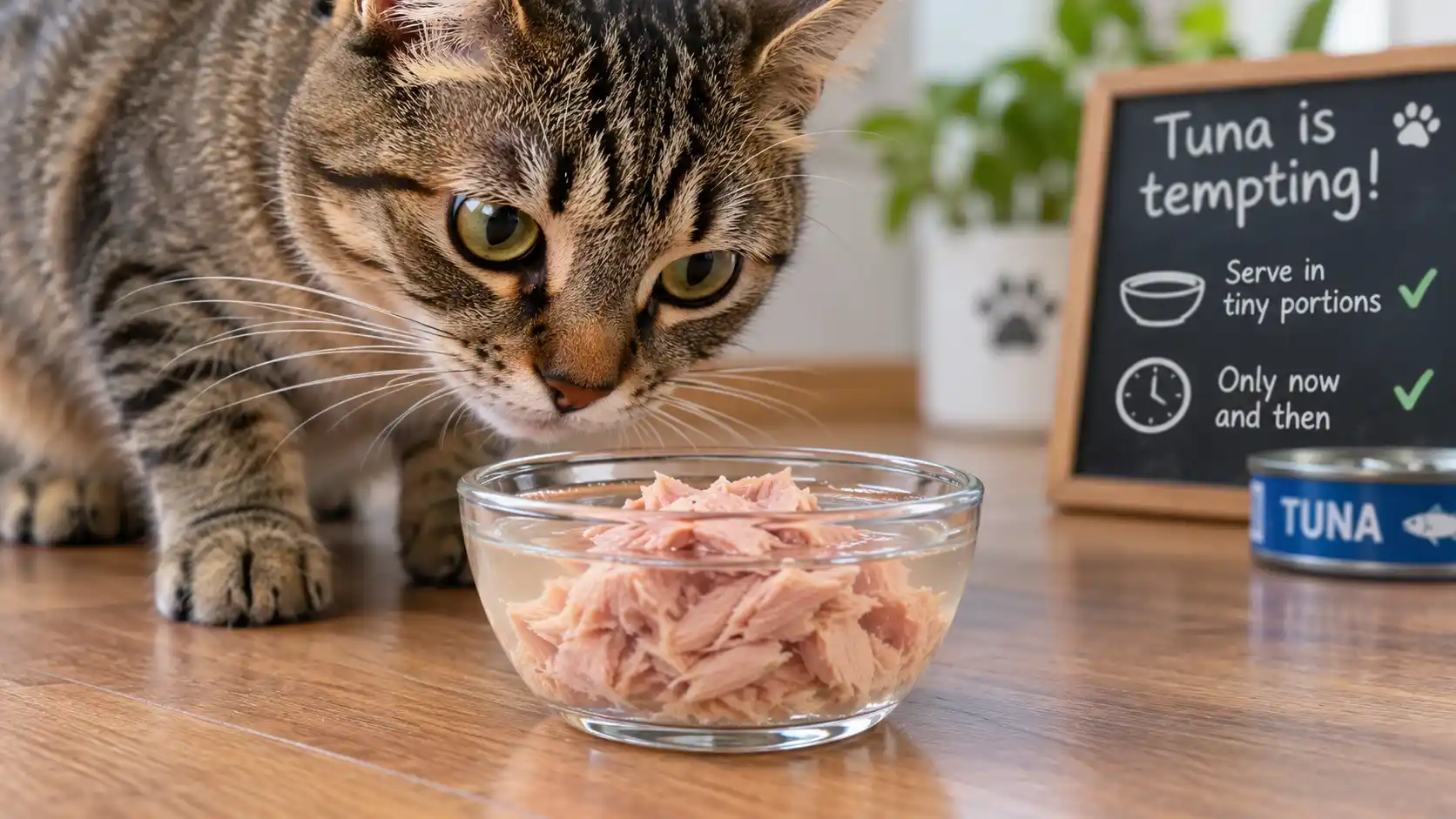
Can cats eat tuna? Yes, most healthy adult cats can have a little tuna once in a while. But that simple yes comes with some big conditions. Tuna smells amazing to a cat, and one lick of the juice can turn a calm pet into a loud, pushy beggar. That is exactly why so many owners end up giving too much.
The problem is that tuna is not a complete food for cats. Too much can lead to mercury buildup, painful fat inflammation, and a cat who refuses anything else. This guide covers the real benefits, the real risks, which tuna to buy, and how much is safe.
Can Cats Eat Tuna? The Short Answer
Cats can eat tuna, but only as a rare treat. It should never replace their regular meals. Veterinary nutritionists at Tufts University say occasional tuna treats are probably safe, but they advise against feeding tuna-based foods every day.
Think of tuna the way you think of cake. A small piece is fine. A whole plate every day is not.
Is Tuna Good for Cats? The Benefits
Tuna is not poison, and it does have a few things going for it. Here is what it offers when served the right way:
- High protein. Cats are obligate carnivores, so they need animal protein to thrive, and tuna has plenty.
- Low carbohydrates. Cats do not need carbs, and tuna has almost none.
- A strong smell and taste. This can help tempt a sick or picky cat to eat. If your vet is worried about your cat’s appetite, a small taste of tuna can help get things moving.
- Extra interest in water. A splash of juice from water-packed tuna in the water bowl can encourage some cats to drink more.
These benefits are real, but they are small. Your cat can get protein from much safer foods. So the main value of tuna is as a tasty treat, not as nutrition.
The Risks of Feeding Cats Tuna
This is where owners get caught off guard. Most problems do not show up after one can. They build slowly when tuna becomes a habit.
Mercury buildup
Tuna is a large, long-lived fish, so it collects mercury from the ocean. A cat has a small body, so the same amount of tuna means much more mercury per pound than it would for a person. Dr. Cailin Heinze, a veterinary nutritionist at Tufts, notes that a cat eating tuna as its main food takes in far more mercury for its body weight than a human, even a person who eats a lot of tuna.
Mercury poisoning in cats can cause poor balance and trouble walking. Those signs look like other illnesses, so it can be missed. The risk is mostly tied to frequent feeding, not a rare spoonful.
Yellow fat disease (steatitis)
Tuna is full of unsaturated fats but low in vitamin E. When a cat eats lots of tuna, those fats can damage body fat tissue, which then becomes inflamed. This is called steatitis, or yellow fat disease.
Affected cats often have lumpy, painful fat under the skin. They may not want to move, they may flinch when touched, and they may stop eating. PetMD describes it as rare today, since most cats eat commercial food with added antioxidants. The good news is that the outlook is usually good once the diet is fixed, though recovery can take weeks to months.
Thiamine deficiency and raw tuna
Raw fish contains an enzyme called thiaminase, which destroys thiamine, also known as vitamin B1. Cats cannot make thiamine on their own. Early signs of a shortage include poor appetite and vomiting. Later signs can include a wobbly walk, muscle weakness, and seizures.
This is one big reason to skip raw tuna. Raw fish can also carry parasites.
Missing nutrients
Tuna does not give cats everything they need. It is low in taurine, an amino acid that supports heart and eye health. It is also short on vitamin E, calcium, and several B vitamins. A cat living mostly on tuna will slowly run short on the basics.
Sodium, oil, and added flavors
Tuna made for people is not made with cats in mind. Look out for these problems:
- Tuna in oil adds extra fat and calories. It can upset the stomach and may raise the risk of pancreatitis or weight gain.
- Tuna in brine can be very salty, which is hard on a cat’s kidneys.
- Flavored tuna can include onion or garlic, both of which are harmful to cats.
Tuna addiction and picky eating
Many cats fall in love with tuna and then turn their nose up at regular food. They hold out, hoping the tuna will come back. Once that habit starts, it is hard to break.
Fish allergies and stomach upset
Some cats are sensitive or allergic to fish. Watch for vomiting, diarrhea, or itchy skin after a first taste. If you see any of these, stop feeding tuna and call your vet.
Which Type of Tuna Is Safest for Cats?
If you plan to share tuna, the label matters a lot. Here is a quick guide:
- Best choice: canned chunk light (skipjack) tuna packed in water, with no added salt or flavors.
- Use caution: albacore, also called white tuna. It has mercury levels almost three times higher than light tuna.
- Avoid: tuna in oil, tuna in brine, seasoned tuna, and tuna salad with mayonnaise.
- Avoid: raw tuna, because of parasites and thiaminase.
- Okay in tiny amounts: plain, fully cooked tuna with no seasoning.
Always read the ingredient list. If it says anything beyond tuna and water, put it back.
How Much Tuna Can Cats Eat?
Keep treats at 10 percent or less of your cat’s daily calories. That is the standard vets use for all treats, and it applies to tuna too.
Here is why the math matters. An average 10-pound neutered cat needs about 262 calories a day. One can of light tuna in water has around 191 calories. So a single can is almost a full day of food for your cat, and it is not balanced. Never serve a whole can in one sitting.
A good rule of thumb is about a teaspoon or a small spoonful, once or twice a week at most. Smaller is better.
Can Kittens Eat Tuna?
It is best to skip tuna for kittens. Their bodies are small and still growing, so they are more affected by mercury and by gaps in nutrition. Stick to kitten food made for their age, and ask your vet before adding any new treat.
Cats With Health Problems
Some cats need extra care or should avoid tuna completely:
- Cats with kidney disease, because canned tuna can be high in sodium.
- Cats with heart problems or those on low-sodium diets.
- Pregnant or nursing cats, since mercury can pass to kittens.
- Cats with a history of pancreatitis or digestive trouble.
If your cat has any medical condition, check with your vet before offering tuna at all.
How to Serve Tuna Safely
Follow these simple steps when you decide to share:
- Pick plain tuna in water with no added salt.
- Drain it well.
- Offer only a small spoonful.
- Mix it into regular food or serve it on its own as a treat.
- Keep leftovers in the fridge and use them within a day or two.
- Watch your cat for any stomach upset in the hours after.
Signs You Fed Too Much Tuna
Call your vet if your cat shows any of these after eating tuna:
- Vomiting or diarrhea
- Loss of appetite
- Weak legs, stumbling, or poor balance
- Seizures
- Pain when touched, especially along the back and belly
- Refusing regular food and demanding tuna
If your cat has been eating a lot of tuna for weeks, mention that to your vet. It helps them find the cause faster.
Healthier Treat Ideas Instead of Tuna
If your cat loves fish flavors, you have safer options:
- Tuna-flavored or fish-based cat food that is labeled complete and balanced
- Small bits of plain cooked chicken or turkey
- Fully cooked egg
- Freeze-dried meat treats made for cats
- Fish-based foods that use species lower in mercury, such as salmon
Complete cat foods with tuna in them are different from a can of human tuna. They are made with added vitamins, minerals, and taurine, which makes them much safer for daily meals. Even so, Tufts experts suggest rotating to lower-mercury fish when you can.
Quick Answers to Common Questions
Can cats drink tuna water?
Yes, in small amounts, if the tuna is packed in plain water with no salt or flavors. Never give the liquid from tuna packed in oil or brine.
Can cats eat tuna every day?
No. Daily tuna raises the risk of mercury buildup, vitamin deficiencies, and picky eating.
Can cats eat raw tuna?
It is best to avoid it. Raw tuna can carry parasites and contains an enzyme that destroys thiamine.
Can cats eat tuna from a sandwich or salad?
No. Mayonnaise, onions, and seasonings can upset your cat’s stomach or cause harm.
more info: Birman Cat Care and Feeding Guide: Everything You Need to Know
Final Thoughts
So, can cats eat tuna? Yes, a little, and only now and then. Choose plain tuna in water, keep the portion tiny, and let your cat’s balanced cat food do the real work. The benefits are small, while the risks grow quickly when tuna becomes a regular habit.
If you ever feel unsure, or your cat has a health condition, a quick chat with your vet is the safest move. Your cat will beg for more either way, but a healthy cat is worth the occasional “no.”