
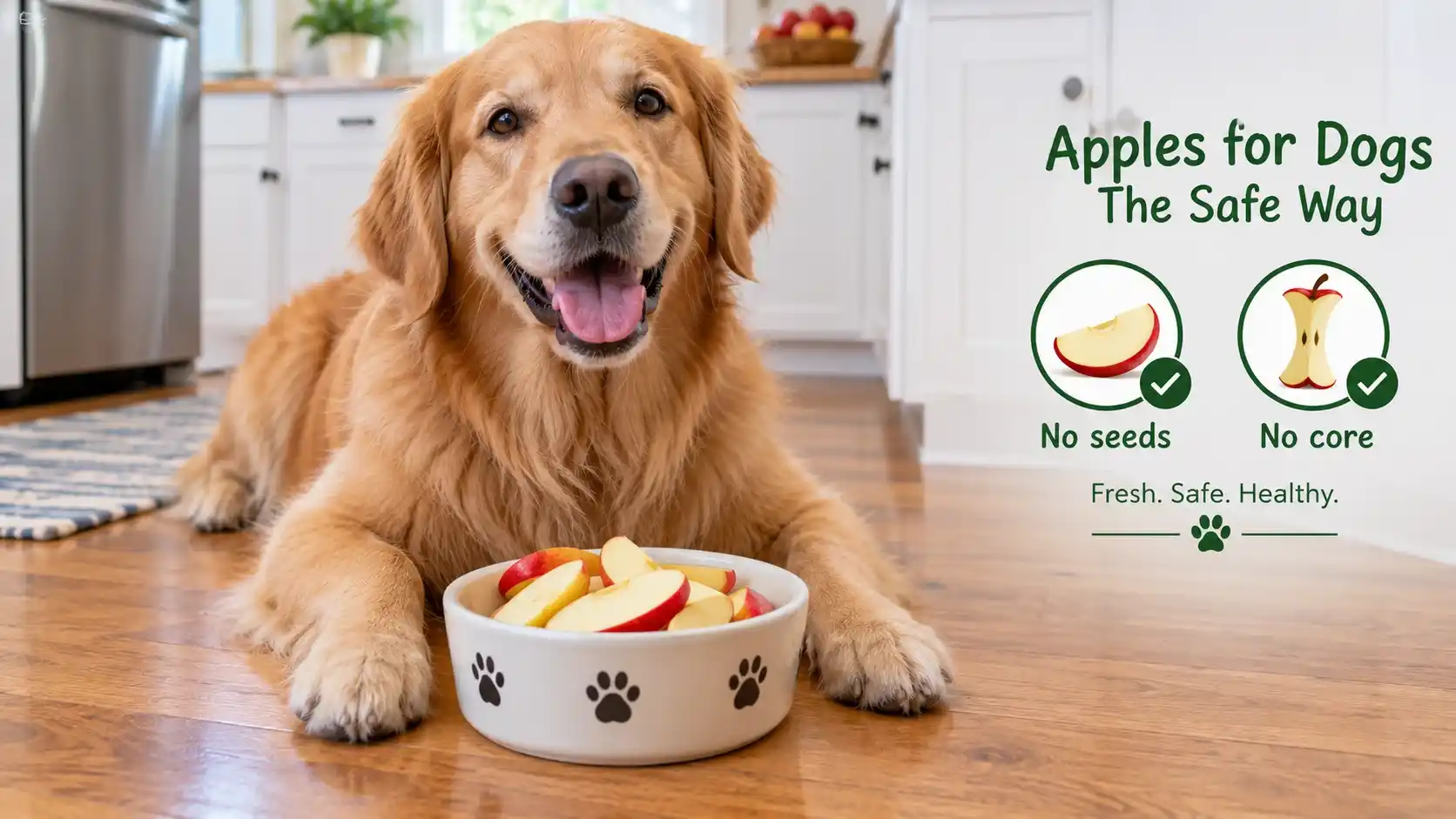
Can dogs eat apples? Yes, most dogs can. Plain apple slices are a safe, crunchy snack when you serve them the right way. The catch is in the details. The seeds, the core, and the way you prepare the fruit all matter.
This guide covers what is safe, what is not, how much to feed, and what to do if your dog grabs a core off the counter. It draws on advice from veterinary sources such as the American Kennel Club, PetMD, and the ASPCA.
Are Apples Safe for Dogs?
Apple flesh and skin are not toxic to dogs. Veterinary groups agree that apples work well as an occasional treat for healthy dogs. They are low in fat and lower in calories than many store-bought biscuits.
The risk comes from the parts most of us throw away. Apple seeds contain a compound that can release a small amount of cyanide when chewed. The core is tough and can cause choking, especially in small dogs. The stem is not much better.
So the short answer is yes, with rules. Serve the flesh, remove the rest, and keep portions small.
What Do Apples Offer Dogs?
Apples will not replace a balanced dog food, but they do add a few useful extras.
- Fiber, which supports healthy digestion
- Vitamin A, which helps with vision and skin
- Vitamin C, though healthy dogs already make their own
- Potassium and a bit of calcium
- A high water content that makes them a light, refreshing snack
Most of the appeal is practical. Apples are cheap, easy to find, and easy to cut up. Many dogs love the crunch, and chewing crisp food can be a fun change from soft treats.
Why Seeds and Cores Are the Real Problem
Apple seeds hold amygdalin. When a dog crushes the seeds by chewing, the body can turn this compound into cyanide.
Here is the reassuring part. A single seed is not a crisis. A dog would need to chew and swallow a large number of seeds to get sick. Whole seeds often pass through the body unchanged.
Still, there is no reason to take the chance. Seeds are also more dangerous when they are crushed, which happens in homemade baked goods or blended snacks made with whole apples.
Symptoms of cyanide poisoning can show up within about 15 to 20 minutes. Watch for:
- Fast breathing
- Drooling
- Vomiting or diarrhea
- Muscle twitching
- A racing heartbeat
- Watery eyes
If you see any of these signs, call your vet or an emergency clinic right away.
The core carries a different risk. It is hard to chew, and a big chunk can get stuck in the throat or the intestines. Small breeds and dogs that gulp their food face the highest danger.
How to Prepare Apples for Your Dog
Good prep takes about two minutes. Follow these steps every time.
- Wash the apple well. Store apples are often treated with pesticides or wax, so scrub the skin under running water.
- Cut the apple into quarters.
- Remove the core, the stem, and every seed.
- Slice the flesh into bite-sized pieces that fit your dog’s size.
- Peel it if your dog has a sensitive stomach. The skin is safe, but it can be harder to digest for some dogs.
Green apples, red apples, and yellow apples are all fine. Pick whatever you have at home. Dogs do not care about the color.
How Much Apple Can a Dog Eat?
Treats should make up no more than about 10 percent of your dog’s daily calories. Apples are healthy, but they still contain natural sugar, and too much can upset the stomach.
Use these rough guidelines as a starting point:
- Small dogs (under 20 pounds): 1 to 2 thin slices
- Medium dogs (21 to 50 pounds): 3 to 4 slices
- Large dogs (over 50 pounds): 4 to 6 slices
Give apples a few times a week, not at every meal. Start with one or two small pieces the first time. Then watch your dog for the next day. Loose stool, gas, or a gurgling belly means you should cut back or skip apples.
Every dog is different. Your vet can give you a better number if your dog is very small, very active, or on a special diet.
Can Puppies Eat Apples?
Yes, puppies can eat apples once they are eating solid food. Keep the pieces very small and introduce them slowly. Puppies have delicate stomachs, and a new food can cause diarrhea fast.
Some owners freeze thin apple slices for teething puppies. The cold feels good on sore gums. Just make sure the pieces are big enough that your puppy cannot swallow one whole.
Which Dogs Should Skip Apples or Ask the Vet First?
Apples suit most dogs, but a few need extra care. Talk to your vet before feeding apples if your dog:
- Has diabetes, since apples contain natural sugar
- Is overweight and on a strict diet
- Has had pancreatitis
- Has a history of stomach problems or food allergies
- Has trouble chewing or swallowing
In these cases, a vet can tell you whether apples fit into the plan and how much is safe.
Apple Products: What Is Safe and What Is Not
Not every apple food is a good idea. The fruit itself is fine. Many products made from it are not.
- Applesauce: Plain, unsweetened sauce is okay in small spoonfuls. Check the label for added sugar, spices, and xylitol, which is toxic to dogs.
- Apple juice: Skip it. It has a lot of sugar and none of the fiber.
- Apple pie: Avoid it. The sugar, butter, and crust are too rich, and some recipes include nutmeg, which can cause problems for dogs.
- Dried apple chips: Fine if they are plain and unsweetened, but the sugar is more concentrated, so give only a few. Watch for hard pieces that could choke.
- Baked goods with apple: Skip them. They often contain raisins, chocolate, or sweeteners that are dangerous.
If you want a homemade treat, bake thin, cored apple slices in a low oven until they turn crisp. Keep them plain.
Fun Ways to Serve Apples
Once you know the basics, you can mix things up a little.
- Freeze slices for a cool summer snack
- Mash a small amount into your dog’s regular food
- Stuff a spoonful of plain applesauce into a lick mat or a puzzle toy
- Add a slice or two to a frozen mix with plain yogurt
Keep the serving small each time. A treat should stay a treat.
What to Do If Your Dog Eats an Apple Core or Seeds
Stay calm. Most dogs that swallow a few seeds or a small core end up fine.
Start by taking away whatever is left. Then check what your dog actually ate. A whole core from a large apple is more worrying than a few seeds from a small one. Offer fresh water and watch your dog closely for the next 24 hours.
Call your vet if you notice:
- Choking, gagging, or coughing
- Repeated vomiting
- A swollen or painful belly
- Refusal to eat
- Trouble passing stool
- Any signs of cyanide poisoning listed above
If your dog is struggling to breathe, go to an emergency clinic right away. When you are not sure, a quick phone call to your vet costs nothing and gives you peace of mind.
more info: Can Dogs Eat Bananas? Benefits and Risks Explained
Quick Safety Checklist
Keep this list handy the next time you reach for the fruit bowl.
- Wash the apple
- Remove the core, stem, and every seed
- Cut the flesh into small pieces
- Feed only a few slices at a time
- Keep treats under 10 percent of daily calories
- Skip pie, juice, and sweetened products
- Watch for stomach upset after the first serving
Final Thoughts
So, can dogs eat apples? Yes. Plain, washed, seedless apple slices are a healthy and affordable treat that many dogs enjoy. The rules are simple. Take out the core and seeds, keep the portions small, and avoid sugary apple products.
Every dog has different needs. If your dog has a health condition or you are unsure about portions, ask your vet before adding apples to the menu. A few slices now and then can make snack time better for both of you.