
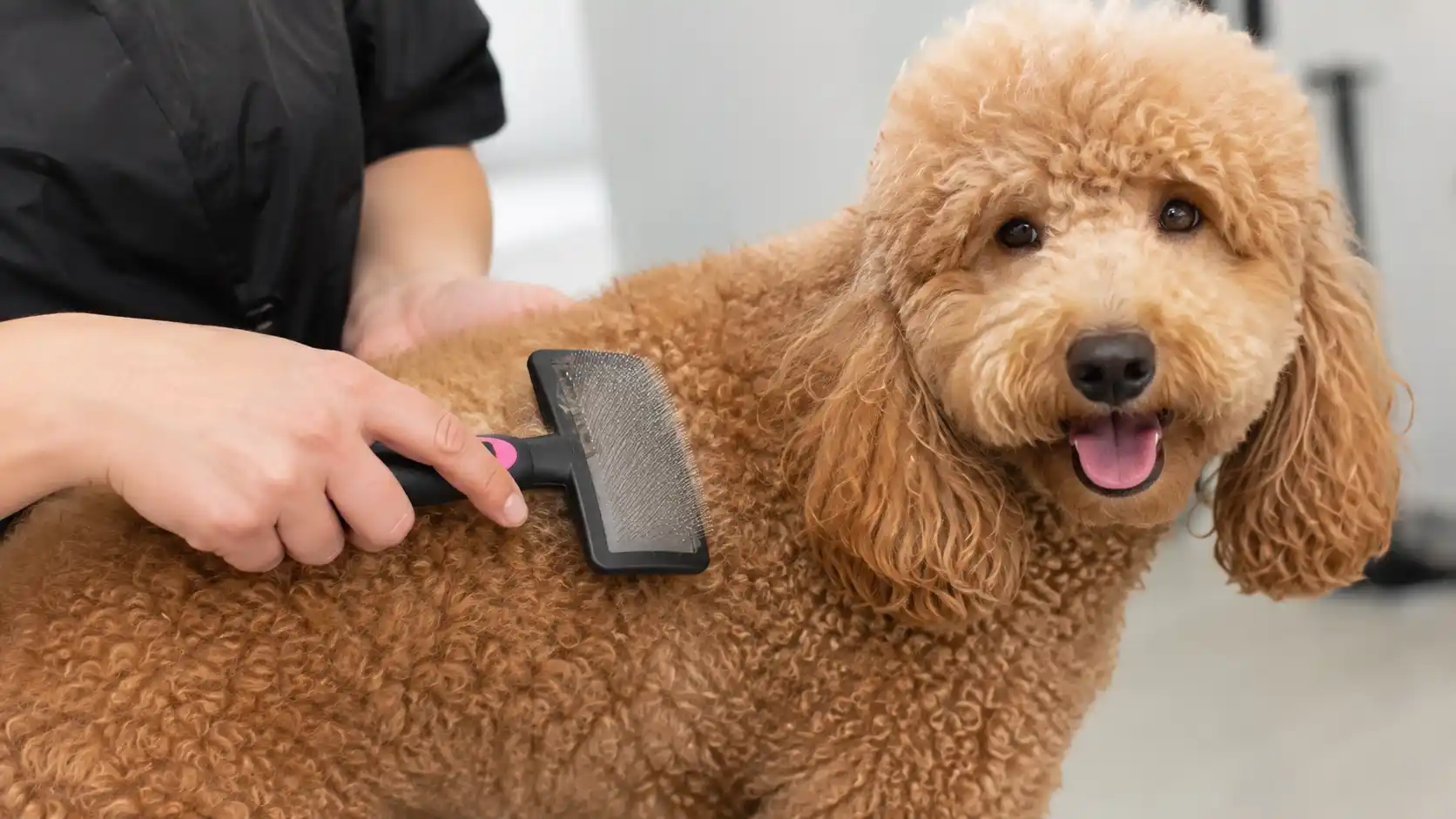
If you share your home with a poodle, you already know their coat is not like other dogs’ coats. It does not shed the way a Labrador’s does, and it does not lie flat like a beagle’s. It curls, it grows, and if you leave it alone for too long, it tangles into knots that are painful to remove. That is exactly why poodle grooming tips matter so much to owners who want a comfortable, healthy dog and not just a good looking one.
A poodle’s coat is closer to human hair than to typical dog fur. It keeps growing instead of shedding out on its own, which means loose hair and dead skin cells stay trapped inside the curls unless you get them out yourself. Skip a few weeks of care and you are not just dealing with a messy look. You are dealing with mats that pull on the skin, trap moisture, and can lead to irritation or infection underneath.
The good news is that healthy poodle grooming is not complicated once you understand the basics. It just needs to be consistent. This guide walks you through the tools, the routine, and the small habits that keep a poodle’s coat soft, clean, and mat free.
Why Poodle Coats Need Special Attention
Poodles have a single coat made of dense, curly hair. Unlike double coated breeds that blow their coat seasonally, a poodle’s hair keeps growing continuously, much like human hair. That is part of why poodles are considered a good choice for people with mild allergies. Less loose hair floats around the house.
But that same trait is what makes grooming non negotiable. Since old hair does not fall out on its own, it gets caught in the new growth. Add in normal daily movement, especially in spots where the legs meet the body or behind the ears, and you get friction. Friction plus trapped hair equals mats.
Left unchecked, mats do more than look messy. They pull tight against the skin, cut off airflow, and can trap moisture against the body. This creates the perfect setting for hot spots, skin infections, and sores that a vet or groomer has to treat. In more serious cases, tight mats can restrict blood flow to the skin entirely. Regular grooming is not about vanity. It is basic health care for this breed.
Brush Your Poodle the Right Way, Not Just Often
Brushing frequency gets a lot of attention, but technique matters just as much. A quick brush over the top of the coat can look tidy while mats are quietly forming underneath, closer to the skin.
The better approach is called line brushing. Instead of brushing the whole coat in one pass, you work in small sections.
- Part a small section of hair with your fingers or a comb.
- Brush that section from the skin outward, not just the tips.
- Move to the next section and repeat until you have covered the entire body.
- Pay extra attention to the ears, armpits, tail, and where the collar or harness sits.
This takes longer than a quick once over, but it is the only way to know you are actually reaching the mats before they set in. Most poodles need a full brushing session at least two to three times a week, and daily brushing is safer if your dog has a thicker or curlier coat, or if you keep the hair longer.
Always brush a dry coat, not a wet one. Wet hair stretches and can tighten existing tangles instead of loosening them. If the coat is damp from a walk in the rain, let it air dry first, then brush.
The Right Tools Make a Real Difference
You do not need a huge collection of grooming tools, but using the wrong ones will work against you. Two tools do most of the job for a poodle’s coat.
A slicker brush, which has fine, closely spaced pins, is good for lifting loose hair and breaking up light tangles before they turn into mats. A metal comb, on the other hand, is what tells you the truth about your work. After brushing, run the comb through the coat from skin to tip. If it glides through smoothly, that section is clear. If it catches or stops, there is still a tangle hiding underneath that the slicker brush missed.
Some owners also keep a detangling spray on hand. Spraying a small amount on a section before you brush reduces friction and makes it easier to work through curls without pulling on the skin or snapping the hair.
Whatever tools you buy, test them gently against your own skin first. If a comb or brush feels sharp or scratchy to you, it will feel worse to your dog, and that discomfort is often why poodles start to dread grooming sessions in the first place.
Bathing Without Drying Out the Skin
Poodles do not need daily baths, and bathing too often can actually strip natural oils from the skin and coat, leaving the hair dry and more prone to tangling. Most poodles do well with a bath every three to four weeks, though this can shift depending on activity level and coat length.
A few habits make bath time more effective:
- Always brush the coat thoroughly before a bath. Water tightens existing tangles, so getting them out beforehand saves a lot of trouble later.
- Use a shampoo made for dogs, ideally one formulated for curly or textured coats. Human shampoo can disrupt the skin’s natural pH.
- Rinse completely. Leftover shampoo residue is a common, overlooked cause of itchy or flaky skin.
- Follow with a light conditioner to keep the curls soft and easier to brush once dry.
Drying matters just as much as bathing. Air drying alone often leaves the undercoat damp near the skin, which can lead to matting and a musty smell. A blow dryer on a low, cool setting, combined with brushing as you go, helps straighten the curls slightly and get air all the way down to the skin. This is also a good time to check for early tangles while the coat is stretched out and easy to see through.
Do Not Overlook Ears, Nails, and Paws
Coat health gets most of the attention, but a full poodle grooming routine covers more than the hair on their back.
Poodles are prone to ear issues because their ear canals tend to be hairier than average, which traps moisture and wax. Check the ears weekly for redness, odor, or dark buildup, and clean them gently with a vet approved solution on a cotton ball. Avoid cotton swabs, since they tend to push debris further into the canal instead of removing it.
Nails should be trimmed regularly, roughly every three to four weeks, so they stay short enough that you cannot hear them click on hard floors. Overgrown nails can change how a dog walks and put strain on their joints over time.
The paw pads and the hair between the toes deserve a quick trim too. Long hair here traps dirt, ice, and small debris, and it can make floors slippery under your poodle’s feet.
Set a Grooming Schedule You Can Actually Keep
Most poodles benefit from professional grooming every four to six weeks, depending on how long you keep the coat and how quickly it grows. Between those appointments, your job at home is to maintain what the groomer set up.
A simple weekly routine looks something like this:
- Two to three full line brushing sessions, more often for thicker coats
- A quick daily check of friction zones like the ears, armpits, and collar area
- Weekly ear checks and cleaning as needed
- Nail trims every three to four weeks
- A bath every three to four weeks, or sooner if your poodle gets muddy or smelly
Choosing a shorter clip, sometimes called a puppy cut or a sport cut, can also make home maintenance far easier if you are short on time. Shorter hair means less surface area for tangles to form, without sacrificing your poodle’s comfort.
more info: Bulldog Care Guide for First-Time Owners
A Healthy Coat Is a Sign of a Healthy Dog
Grooming a poodle is genuinely a bit more work than caring for a short haired breed, and there is no way around that. But once you build the habit of regular line brushing, proper bathing, and quick checks on the ears and nails, it stops feeling like a chore and becomes part of your normal routine together. It also becomes a good chance to bond, since calm, gentle handling teaches your poodle to trust you and relax during grooming instead of dreading it.
A well maintained coat tells you a lot about your dog’s overall health too. It gives you a reason to look closely at their skin every week, which means you are far more likely to catch small problems, like a hot spot, a tick, or a patch of dry skin, before they turn into something bigger. Stick with a consistent routine, use the right tools, and your poodle’s coat will stay soft, clean, and mat free for years to come.