
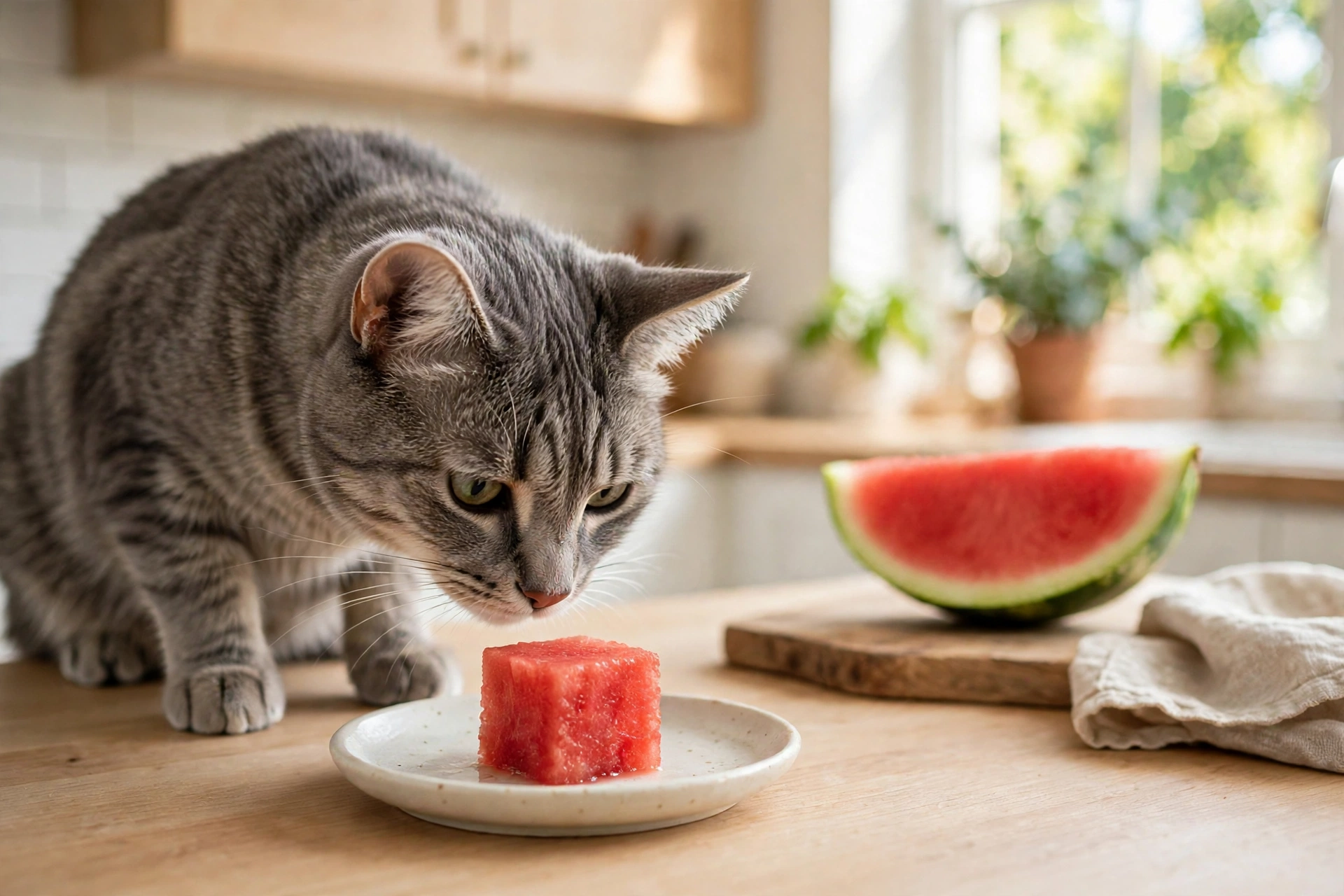
Quick answer: Yes, cats can eat watermelon flesh in small amounts. Serve it seedless, with every bit of rind removed, cut into tiny pieces. Watermelon is about 92 percent water, so a few bites make a hydrating summer treat. It is never a food cats need, and diabetic or overweight cats should skip it because of the natural sugar.
Can Cats Eat Watermelon Safely?
Yes, the red flesh is safe. Watermelon is not toxic to cats, and plenty of cats are curious about it the moment it is cut open on a hot day. The cool smell, the juice, and the texture all invite investigation.
So, can cats eat watermelon as freely as we do? No. The flesh is fine in small pieces. The seeds and the rind are where the trouble lives, and the portion matters because a cat’s calorie budget is tiny. This guide keeps the three parts separate.
Why Watermelon Appeals to Cats (and What It Offers)
- Hydration: Watermelon is roughly 92 percent water. For cats who drink little, a few juicy bites on a hot day are a pleasant top up, though never a replacement for fresh drinking water.
- Vitamins A and C: Small amounts that support normal immune function, in a body that gets its real nutrition from meat.
- Lycopene and antioxidants: Present in the red flesh, in amounts too small to change a cat’s health, but harmless.
- Low calories for a fruit: A few small cubes carry only a handful of calories, far less than banana or mango.
- Novelty: Cats cannot taste sweetness, so the draw is moisture, smell, and the fun of stealing something from your plate.
That last point matters. Watermelon is a treat for curiosity, not nutrition. A cat who ignores it completely is missing nothing.
How Much Watermelon Can a Cat Eat?
Treats should stay under 10 percent of a cat’s daily calories, and watermelon is an occasional extra, a few times in the summer rather than a daily habit.
| Cat | Watermelon per serving | How often |
|---|---|---|
| Kitten | A tiny taste of mashed flesh, only if weaned onto solids | Rarely, and only with your vet’s okay |
| Healthy adult cat | 2 to 3 small seedless cubes, or about a tablespoon of flesh | Once a week at most in warm weather |
| Senior cat | A small cube or two, finely diced | Occasionally |
| Overweight or diabetic cat | None | Skip it entirely |
If it is your cat’s first taste, offer one small cube and wait a day. Loose stool is the usual sign that fruit does not agree with a particular cat.
How to Serve Watermelon to Your Cat (Step by Step)
- Wash the outside first. Rinse the rind under running water before cutting, so the knife stays clean as it passes through.
- Cut away every bit of rind. The white and green rind is tough, hard to digest, and the part most likely to cause a blockage or an upset stomach.
- Remove all seeds. Pick out black and white seeds alike. Seeds can lodge in a small throat or irritate the gut, and seedless varieties make this step far easier.
- Dice the flesh small. Tiny cubes or a light mash suit a cat’s small mouth.
- Serve it plain and fresh. Room temperature or lightly chilled. A frozen cube can entertain a cat on a hot day, served small and supervised.
- Take the leftovers away. Fruit left in a bowl spoils fast and teaches nobody good habits.
Cats who enjoy sharing snacks usually do better with the meat based options in our guides to can cats eat tuna and can cats eat chicken, and our fruit reality check in can cats eat bananas explains why cats and fruit will always be a casual friendship.
Risks and When Watermelon Is Not a Good Idea
- Seeds: A real choking and gut irritation risk in a small animal. This is the step owners skip, and the one that matters most.
- Rind: Tough and fibrous, the rind can cause vomiting, diarrhea, or in the worst case a blockage that needs surgery.
- Too much fruit: Even gentle fruit ferments in a carnivore’s gut. Gas, bloating, and loose stools are the usual bill.
- Diabetic and overweight cats: Watermelon is lower in sugar than many fruits, but it still carries sugar, and these cats should not have it without a vet’s approval.
- Watermelon flavored products: Candies, drinks, and ice lollies made for people can carry sweeteners like xylitol, which is extremely toxic to cats. The fresh fruit is the only shareable version.
Warning Signs: When to See a Vet
Call your vet promptly, or an emergency clinic after hours, if you notice:
- Choking, gagging, or trouble breathing, especially after rind or a large piece (treat as an emergency)
- Repeated vomiting, straining, hiding, or refusing food after your cat ate rind (possible blockage)
- Diarrhea lasting more than a day
- Any illness after your cat ate a watermelon flavored product, especially a sugar free one (possible xylitol exposure, treat as an emergency)
One loose stool after a first curious taste usually passes quietly. Offer water, return to normal food, and call your vet if things do not settle within 24 hours.
Common Mistakes Pet Parents Make
- Dropping a wedge, rind and all. It looks like a fun serving style. For a cat, the rind is the dangerous part of the fruit.
- Trusting “seedless” without looking. Seedless watermelons still carry small white seeds. Check each piece before it reaches the bowl.
- Leaving a fruit bowl out all day. Cut fruit spoils, draws flies, and invites rind chewing when nobody is watching.
- Assuming hydration problems are solved. Watermelon is a bonus, never a water plan. A cat who drinks too little needs a vet conversation, not just fruit.
- Feeding it daily through summer. Occasional is the whole point. Daily fruit quietly becomes daily sugar.
FAQs
Can kittens eat watermelon?
A tiny taste of mashed, seedless flesh will not harm a weaned kitten, but kittens need their calories pointed at protein and growth. Keep kitten treats meaty, and let fruit wait for adulthood.
Can cats eat watermelon seeds?
No. Pick them all out. Seeds can choke a small cat and irritate the digestive tract, and they offer nothing in return. Seedless watermelon, checked piece by piece, is the easy answer.
Can cats eat watermelon rind?
No. The rind is the part to keep away completely. It is hard to digest, a common cause of stomach upset, and a blockage risk if a chunk is swallowed.
Why does my cat love watermelon if cats cannot taste sweet?
Because sweetness was never the attraction. The moisture, the cool texture, the smell, and the simple fact that you are eating it make watermelon interesting to a cat. Curiosity, not flavour, does the work.
Can cats eat frozen watermelon?
Yes, in tiny pieces. A small frozen cube can be a fun, cooling lick on a hot day. Keep it seedless, keep it small, and supervise, because frozen fruit is hard and slippery.
The Bottom Line
Watermelon flesh, seedless and rind free, is a safe and hydrating little treat for a curious cat. Served in a few small cubes once in a while, it hurts nothing and hydrates a bit.
Just keep the seeds and rind out of the story, and summer fruit stays a pleasant footnote in your cat’s life, not a chapter.