
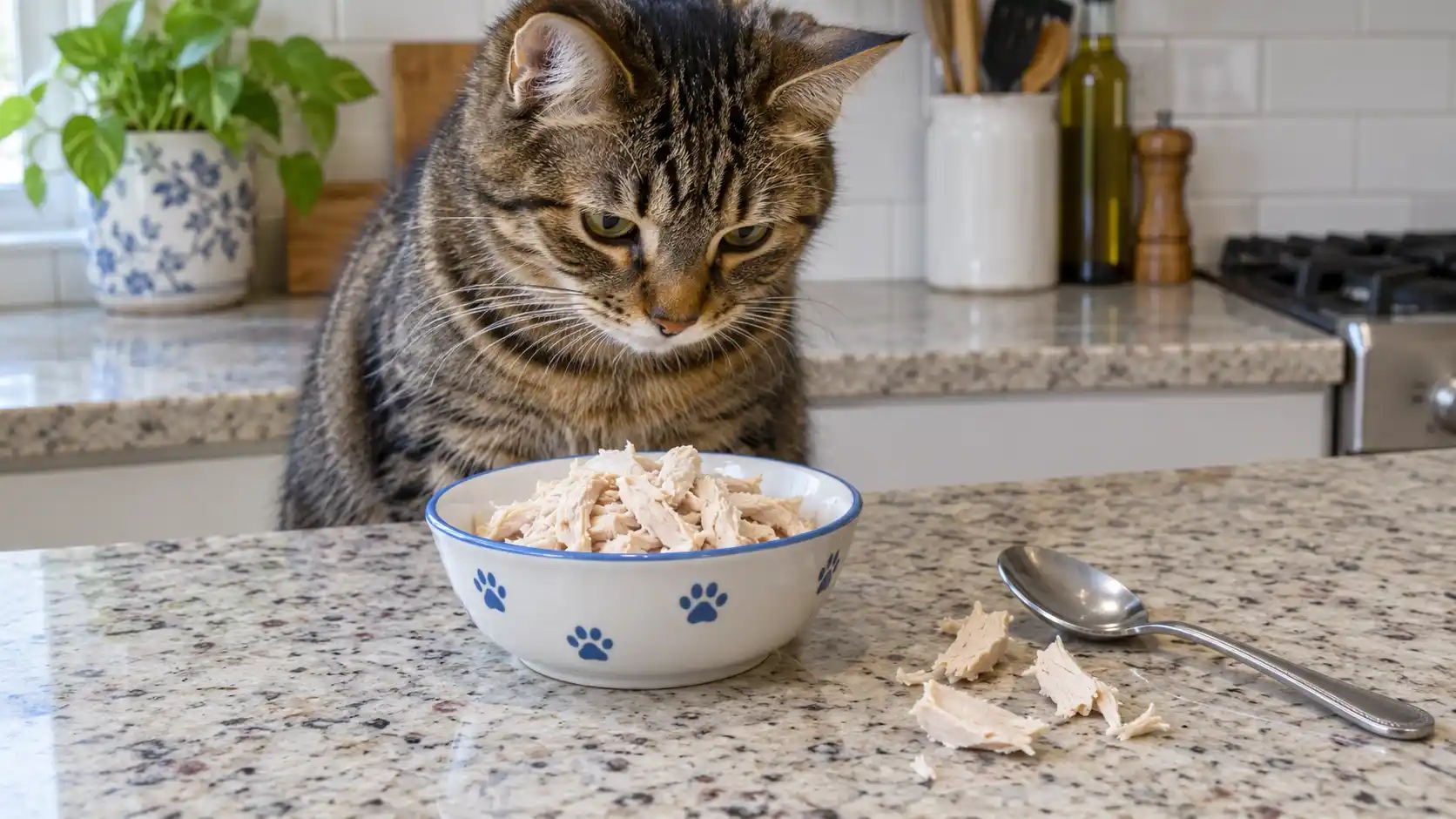
Can cats eat chicken? Yes, they can, and most cats will happily steal a piece right off your plate. Plain cooked chicken is safe for cats and gives them the animal protein their bodies need. The real question is whether a cat can eat chicken every day. A small amount is fine for most healthy cats. A diet made only of chicken is not. This guide explains why, how much is safe, and how to serve it the right way.
Can Cats Eat Chicken Safely?
Yes, when it is plain, fully cooked, and boneless. Cats are obligate carnivores, so they are built to eat meat, and chicken fits that need well. It is also gentle on the stomach, which is why vets often suggest it for cats that are sick or picky. petmd
Chicken is probably already in your cat’s regular food. Many commercial cat foods list it as a main ingredient. So when you add extra chicken, you are adding on top of a diet that may already contain plenty of it.
Why Cats Do So Well With Chicken
Chicken has a lot going for it as a cat food. Here is what makes it a good choice:
- It is high in protein, which supports muscle, skin, and coat.
- It contains essential amino acids that cats cannot make on their own.
- It is lean, especially the breast meat.
- It smells strong and tastes good, so it tempts cats that have lost interest in their food.
- It is easy to cook at home with no special skills.
That last point matters for cats recovering from illness or stress. A few shreds of warm chicken on top of their usual food can get them eating again.
Can Cats Eat Chicken Every Day?
Yes, a small amount of chicken every day is fine for most healthy adult cats. Think of it as a topper or a treat, not a meal.
The problem starts when chicken replaces your cat’s complete food. Relying on plain chicken as a main food can slowly lead to nutritional deficiencies. The damage is quiet at first. Your cat may look fine and act normal for weeks or months while gaps build up. webvet
A simple rule works well. The bulk of your cat’s daily calories should come from a food labeled “complete and balanced.” Chicken can sit on top of that, in a small portion.
Why a Chicken-Only Diet Is a Problem
Plain chicken meat is missing key nutrients. Cats need a precise mix of vitamins, minerals, and amino acids, and chicken breast alone does not supply it.
Here are the main gaps:
- Taurine: This amino acid protects your cat’s heart and eyes. Taurine deficiency most often leads to a serious heart condition called dilated cardiomyopathy. The good news is that healthy cats fed a commercial diet with a statement of nutritional adequacy get all the taurine they need. The risk appears when you swap that food for home-cooked meat. vetstervetster
- Calcium: Cooked chicken meat has very little calcium. Without bones or a supplement, a cat can develop weak bones over time.
- Vitamins and minerals: A complete cat food adds vitamins and minerals that muscle meat does not provide in the right amounts.
A published veterinary case report shows how bad this can get. A kitten fed only raw chicken before adoption developed bone disease and damage to the retina. The kitten recovered after moving to a complete kitten food with taurine support. That is an extreme case, but it shows why balance matters. bioone
Too much chicken also adds calories. Cats that eat extra chicken on top of full meals can gain weight quickly.
How Much Chicken Can a Cat Eat Per Day?
Use the 10 percent rule. Treats should make up no more than 10 percent of your cat’s daily calories. A cat that weighs eight to ten pounds needs roughly 200 to 250 calories a day, so treats should stay at about 20 to 25 calories. tuftscatnip
Chicken is easy to measure. One tablespoon of diced, boiled or baked chicken breast is about 15 calories. That means one to two tablespoons covers the daily treat budget for an average cat. PetMD suggests up to 2 tablespoons a day for cats over six months old and up to 2 teaspoons for kittens under six months. tuftspetmd
Keep these tips in mind:
- Weigh the chicken at first. Spoon measures can fool you.
- Cut back your cat’s regular food a little on days they get extra chicken.
- Smaller or less active cats need less than the average amounts above.
- Spread the chicken across the day if your cat likes to beg.
How to Cook Chicken for Your Cat
Cooking chicken for a cat is simple. Plain is the goal.
- Pick fresh, boneless chicken breast or thigh. Remove the skin and extra fat.
- Boil, poach, or bake it with nothing added. Baking it plain or boiling it works well. petmd
- Cook it all the way through until no pink remains.
- Let it cool, then shred or dice it into small pieces.
- Store leftovers in the fridge for a day or two and toss anything older.
Skip the oil, butter, salt, and spices. Your cat does not need them, and some can cause harm.
Can Cats Eat Raw Chicken?
Cats hunt and eat raw prey in the wild, so raw chicken seems natural. Most vets still advise against it for pet cats, and the reasons are solid.
The CDC, FDA, and Canadian Veterinary Medical Association all state that raw food is potentially dangerous to cats, other pets, and owners. Raw chicken can carry Salmonella and Campylobacter. Cats can pass these germs to people even when the cat shows no signs of illness. That matters most in homes with babies, older adults, or anyone with a weak immune system. vcahospitals
There is also a newer concern. In early 2025, indoor cats in Colorado got sick with bird flu after eating raw chicken or turkey. Cooking kills these germs, which is one more reason to cook the chicken. preventivevet
Homemade raw diets also tend to miss key nutrients, just like cooked chicken-only diets do. If you still want to feed raw, talk with your vet first and choose a diet that carries a statement of nutritional adequacy.
Chicken Bones, Skin, and Seasoning
How you serve chicken matters as much as how much you serve. Watch for these:
- Bones: Cooked bones splinter easily. They can cause choking or a serious internal blockage. Remove every bone. webvet
- Skin and fat: These are rich and can upset digestion or lead to weight gain.
- Garlic and onion: Garlic and onions are toxic to cats. Leftovers from your dinner often contain both. chewy
- Fried or breaded chicken: These are high in fat and salt and often seasoned.
- Rotisserie and deli chicken: These usually carry heavy seasoning and salt. Skip them.
- Canned chicken: It is fine as an occasional treat or emergency meal, but not an everyday food.
- Chicken broth: It can work if you make it plain, with no salt, onion, or garlic.
If your cat eats heavily seasoned chicken and you cannot reach your vet, the Pet Poison Helpline can help at 855-764-7661. chewy
When to Skip Chicken or Call Your Vet
Chicken is not right for every cat. Check with your vet before offering it if your cat:
- Eats a prescription diet. Extra foods can interfere with the treatment.
- Has kidney disease, diabetes, or another ongoing condition.
- Has a history of skin problems or stomach trouble.
Chicken allergies are uncommon, but they do happen, and they can cause itchy skin or stomach upset. Stop feeding chicken and call your vet if you see repeated vomiting, diarrhea, constant scratching, or a drop in appetite after your cat eats it. hepper
Quick Answers About Cats and Chicken
Can kittens eat chicken?
Yes, in tiny amounts of plain, cooked chicken. Kittens grow fast and need a complete kitten food as their main diet.
Is chicken breast better than thigh?
Both are safe when plain and cooked. Breast is leaner. Thigh has more fat, so use less of it.
Can I feed my cat chicken as a meal?
Only as a short-term fix, like a day or two when your cat will not eat. For regular meals, use a complete and balanced cat food.
Can cats eat chicken every day for years?
A small topper every day is fine for many healthy cats, as long as the main diet is complete and the portion stays small.
more info: Can Cats Eat Tuna? Benefits and Risks
Final Thoughts
So, can cats eat chicken every day? Yes, a spoonful or two of plain, cooked, boneless chicken is a safe daily extra for most healthy adult cats. It is not a replacement for a complete cat food, and it should never be raw, seasoned, or served with bones. Keep the portion small, watch your cat’s weight, and check with your vet if your cat has any health issues. Done right, chicken is one of the easiest ways to treat your cat and keep mealtime exciting.