
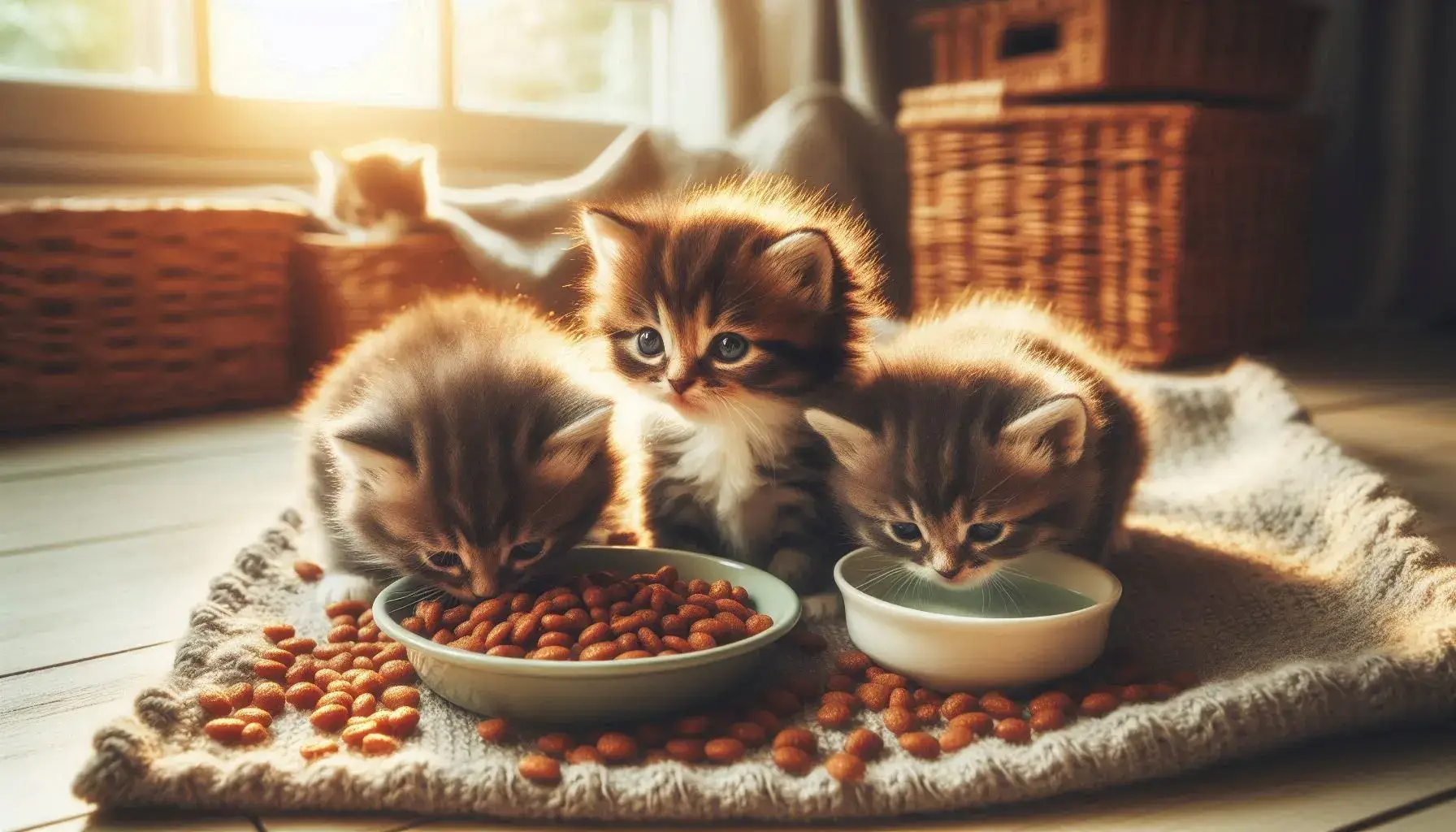
When do kittens begin eating food and drinking water?
When you have ever been the mother of a litter of kittens stumbling about like small drunken bears, you must have asked yourself when the milk-only stage is ever reached. How old are kittens when they begin to feed and take water independently? It is an ordinary question, and most of the new pet owners get it a bit wrong.
My experience with vets, breeders, and foster families has shown that the confusion is typically a by-product of mixed timelines online. Three weeks, some say, six. The reality lies somewhere in the middle, and it all depends on the kitten.
We had better have it in plain English—no floundering, no fright tactics.
Table of Contents
- The Infancy Period: First Milk.
- When do kittens begin to eat?
- At What Age Do Kittens Start Drinking Water?
- Weaning Process Explained (Week by Week).
- Frequent feeding errors between new owners.
- FAQs About Kitten Feeding
- Concluding Remarks and Advice to Action.
- The Newborn Phase: Milk Comes First
And before we discuss solid food, it is better to know where kittens begin.
The Infancy Period: First Milk.
In the first weeks, kittens are completely dependent on the milk or the kitten food. This milk is a source of hydration, calories, antibodies, and other nutrients, all in a single shot. There are no food dishes or water bowls required.
Nursing of most kittens ends at the age of about three to four weeks. Their digestive system just is not prepared at that time to receive anything different.
It is here that patience is needed.
When Do Kittens Start Eating Food?
The majority of kittens start to show interest in food at the age of 3 to 4 weeks, but it does not imply that they are ready to be fed a full meal.
You can find them sniffing the bowl of their mom, pawing at mushy food, or stepping into it by accident. The first sign that weaning can commence is that curiousness.
What It Looks Like to Eat Food in the First Place.
Premature feeding is sloppy and irregular. Expect:
- Licking rather than chewing
- Tiny bites, then walking away
- Food on faces, paws, and even ears.
At this age, kittens are not substituting milk but experimenting.
The majority of vets suggest the use of wet cat food combined with warm water or formula to form a gummy texture. Dry food comes later.
When Do Kittens Begin to Drink Water?
This surprises many people. Kittens do not tend to drink water on a regular basis until about age 4 to 5 weeks, sometimes as late as 6 weeks of age. Milk and moist food remain the primary sources of hydration till that time.
Provide a shallow water dish early, but do not worry, they may disregard it; that is normal. After having eaten more solid food, their bodies naturally demand an additional fluid intake, and you will frequently find them beginning to lap water soon after eating.
Weaning Week by Week (Explained).
Weaning is not an event but a transition.
Weeks 3‑4: Curiosity Stage
This is where most individuals question about the age at which kittens begin consuming food; the question is at what age? The answer starts here.
- Present mushy soft kitten food.
- Ongoing nursing or bottle-feeding.
- You will find more mess than progress.
Weeks 4‑5: Learning Stage
- Kittens start feeding in small portions.
- The consumption of milk gradually falls.
- there may be a slight thickening of food texture.
- Bowls of water can be offered.
Weeks 5‑6: Transition Stage
– Confidence builds.
– Kittens eat wet food daily.
– Nursing becomes occasional.
– Water drinking becomes more widespread.
Weeks 6‑8: Independence Stage
Most kittens have been weaned by this time.
– Solid food is the predominant source of nutrition.
– Water intake is regular.
– Milk is no longer necessary.
Personally, my experience has shown that taking things at a slow pace is much better than rushing.
Mistakes New Kitten Owners Make When Feeding.
Most people mean well. Even minor slip-ups would result in tummy trouble.
- Switching Too Fast
- When milk is substituted immediately with solid food, diarrhea is likely to occur. Subtle change of texture is important.
- Offering Cow’s Milk
- Kittens may develop stomach upsets when fed on cow milk. In case of need of milk, stick to kitten formula.
- Using Adult Cat Food
- Kittens require more calories and nutrients. Food must always be marked explicitly with kittens.
- Forgetting Water Access
- Water must always be available even when they do not consume much at the moment.
FAQs About Kitten Feeding:
Eat dry food at an early age?
Not safely. Dry food must be moistened with water and it should be introduced after 5 to 6 weeks.
What if a kitten refuses food?
This is common early on. Attempt to make the food warm or place it on your finger. In case the refusal takes over a day, consult with a vet.
How often should kittens eat?
Small meals are eaten at a frequent rate by young kittens. It is not odd to have four or five times a day in the weaning.
Is it okay to leave food out?
Yes, for kittens. They burn calories fast. Free feeding at the young age is not a problem.
At what age should milk be completely discontinued?
The majority of the kittens wean on their own at six to eight weeks.
Conclusion: When Do Kittens begin eating food and drinking water?
Then, when can kittens begin eating food and taking water? Majority of them start to taste food at 3 to 4 week, then water at 8 weeks later and completion at 8 weeks.
The biggest takeaway? Each kitten runs at its speed. Pushing too hard doesn’t help. Observation, modification and maintaining at low pressure tends to be the easiest to achieve.
And a quick visit to the vet can save you a multitude of second-guessing, just in case you have doubt.
Click Here: Cat Training Tips And Tricks
Want More Kitten Care Tips?
If you have or are raising kittens, hang around. Sign up to get additional guides that have been vetted by the veterinarian, or discuss your stories about your kitten in the comments, or read our recent articles about kitten nutrition and early development.
Those tiny paws grow fast. It helps to get the fundamentals down at the beginning.